ByYelena Alpert,Photography byPolina Pigulevsky
PublishedMay 3, 2026 7:00 AM EDT
We may earn revenue from the products available on this page and participate in affiliate programs.
Sign Up for Domino's Newsletter
By signing up, you confirm you are 16+, will receive newsletters and promotional content and agree to ourTerms of Useand acknowledge the data practices in ourPrivacy Policy. You may unsubscribe at any time.
When a couple relocated from London to Amelia Island, Florida, after a decade abroad, they chose a site near a scrubby marsh preserve and built a two-story home inspired by the low-country coastal aesthetic of the late 1800s. The clients enlisted Troy Spurlin Interiors to weave together elements evocative of the Cotswolds while honoring a distinctly Southern sensibility.
The wife, a poet, had a specific romantic vision for the house and encouraged an imaginative design approach. "She sees the world through a deeply romantic lens," says interior designer Troy Spurlin. Inspired by European kitchens that celebrate the architecture of separate rooms—rather than an open plan—the clients gravitated toward DeVOL Kitchens for its curated, collected sensibility. The objective was to cultivate warmth through layered textures and classic elements while integrating the conveniences of modern living.
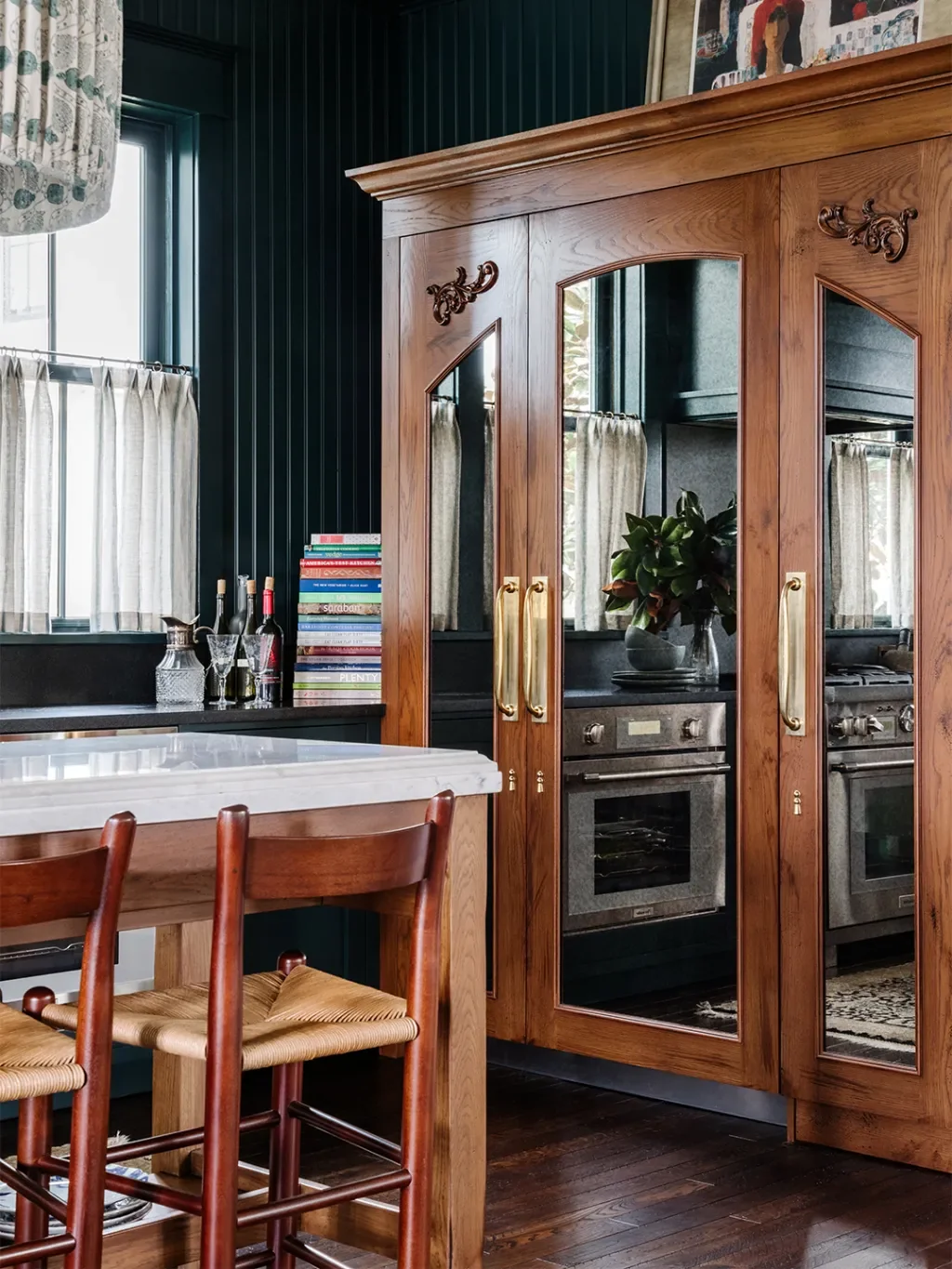
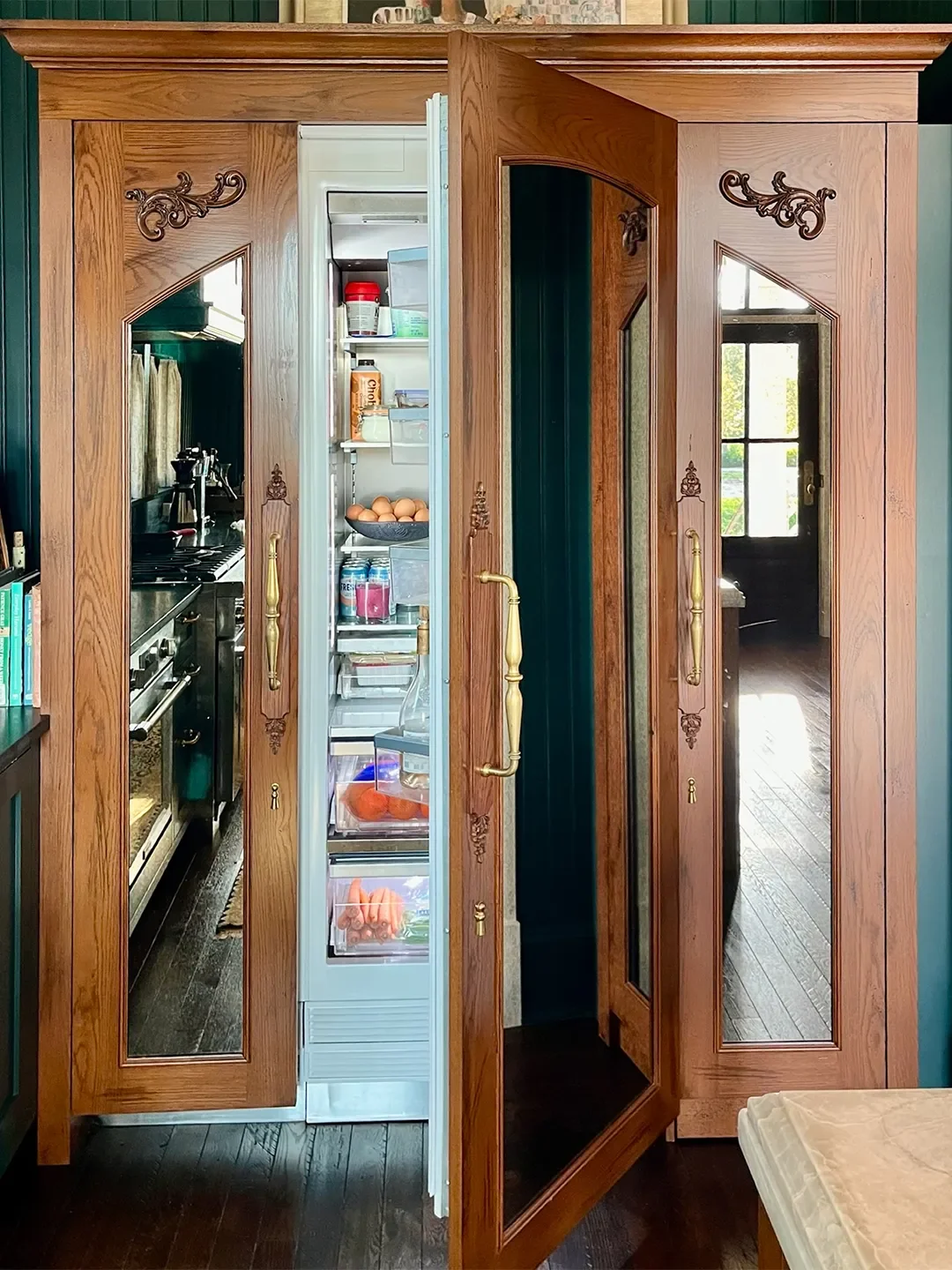
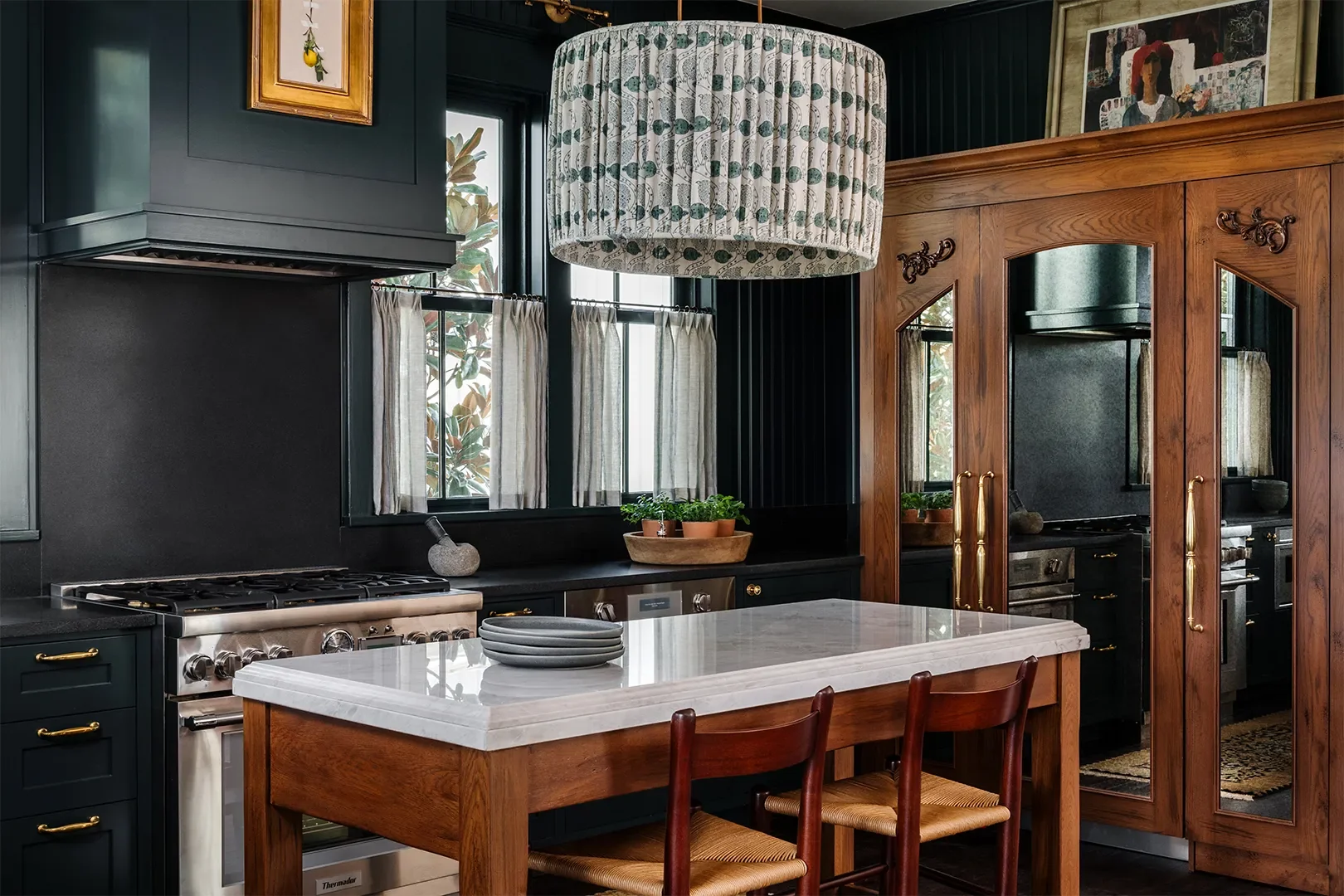
Confronted with the challenge of integrating necessary contemporary appliances, the team conceived a cabinetry piece that would house the refrigerator while incorporating a concealed passageway to the pantry—that's where the triple-door design was born. Contrasting with the flat-front cabinetry elsewhere, the armoire would serve as the room's statement piece. "It really became our guiding compass," Spurlin recalls.
The aim was to evoke the spirit of an antique English cottage kitchen from an era when people relied on furniture-style pieces like food safes for storing and preserving provisions. "Icebox dimensions were minuscule by today's standards. We started asking ourselves: if we were building a cupboard for this room, what might it have resembled in the 1920s?" says creative director Alex Gebicke. "Could we, within this invented narrative, have repurposed an armoire for food storage?"
The team needed to do more than simply conceal the Sub-Zero refrigeration system—accessing the awkward, narrow gap leading to the hidden pantry posed its own puzzle. "Translating this furniture concept from drawings to an installation that incorporated a hallway to the pantry alongside refrigerator and freezer columns was extraordinarily complex," Gebicke explains. "We needed the armoire to read as pure furniture, which demanded exhaustive on-site measuring, multiple CAD revisions, and meticulous selection of trims, moldings, and hardware."
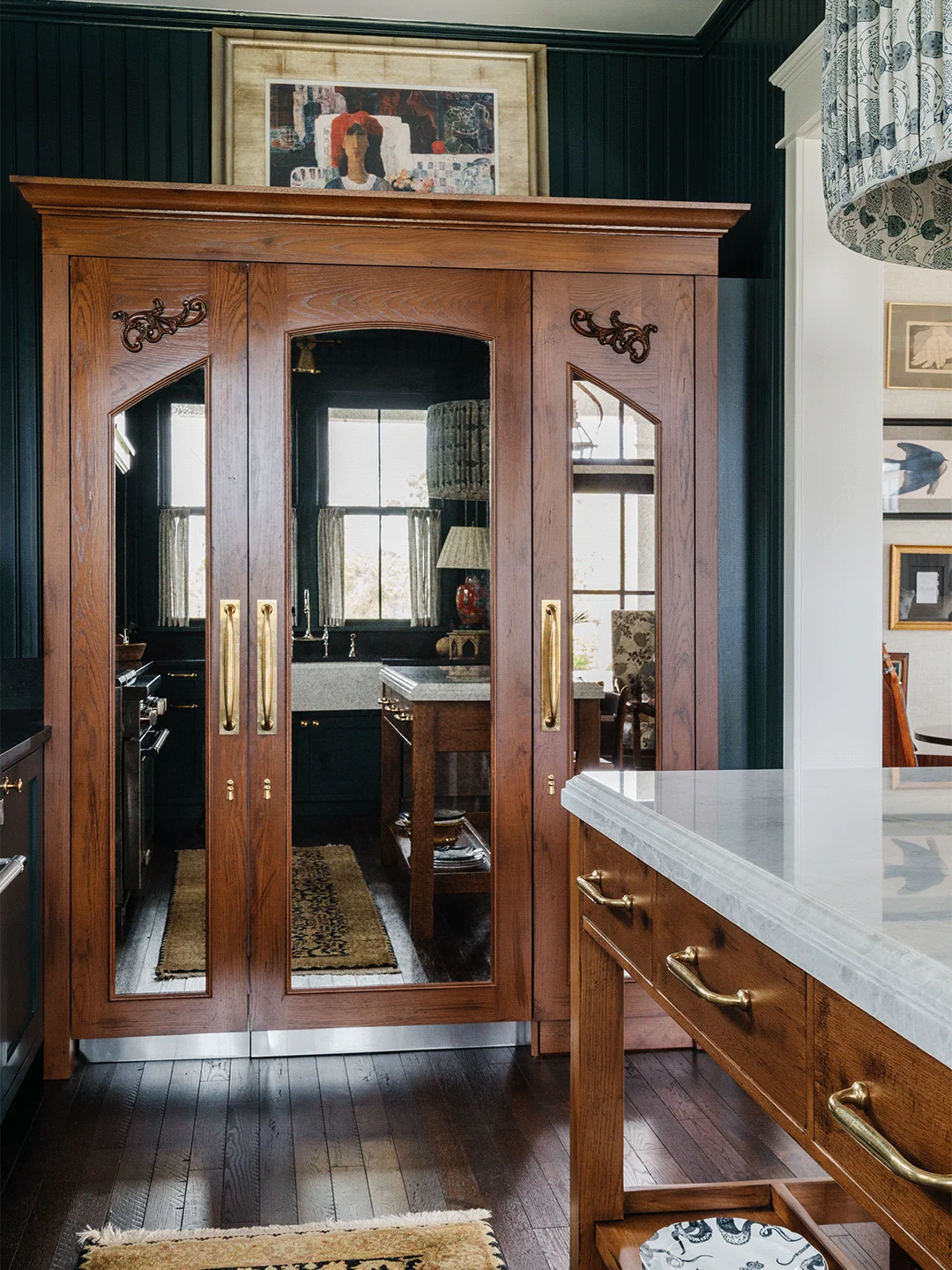
The designers immersed themselves in research, studying images of vintage armoires, experimenting with carved molding appliques from Van Dyke's Restorers, and selecting custom hardware from Classic Brass—all in pursuit of historical authenticity. "It's straight out of The Lion, the Witch and the Wardrobe—complete with antique mirrors and working keyholes," adds project photographer Polina Pigulevsky.
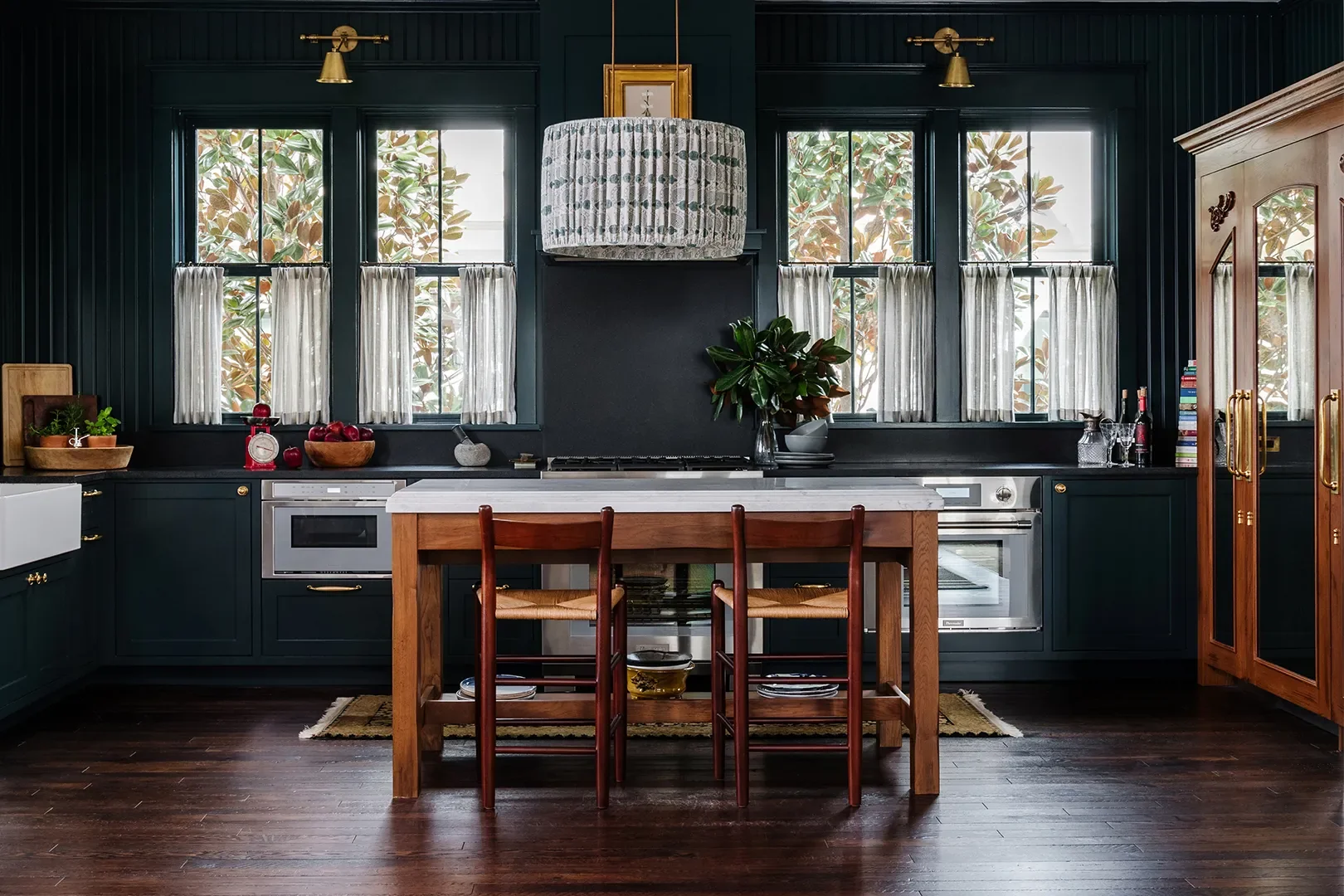
A local furniture maker solved the geometric puzzles, crafting a custom surround of stained oak panels that harmonize with the bespoke island topped in Calacatta Gold marble and the adjustable pendant light, all nodding to cottage provenance. The golden warmth of the natural oak tempers the deep, near-black green of Benjamin Moore's Salamander paint on the walls and beadboard.
Every element served a narrative of nostalgia. The clients insisted on no visible modern convenience—even the vintage-style kitchen scale lacks a cord or buttons. "They wanted this historical sensibility to extend beyond aesthetics and into the daily rituals of using the kitchen," Spurlin explains.
A newly constructed home doesn't have to feel predictable. Standing before the armoire in person, you'd never suspect it's anything other than a freestanding piece of furniture. "Visitors are always astonished that this American oak armoire masks a sequence of clever surprises that inject whimsy into an otherwise refined and deeply European space."
Learn more about Domino.comEditorial Standards
More from this layout
 FM-5981
 · Other
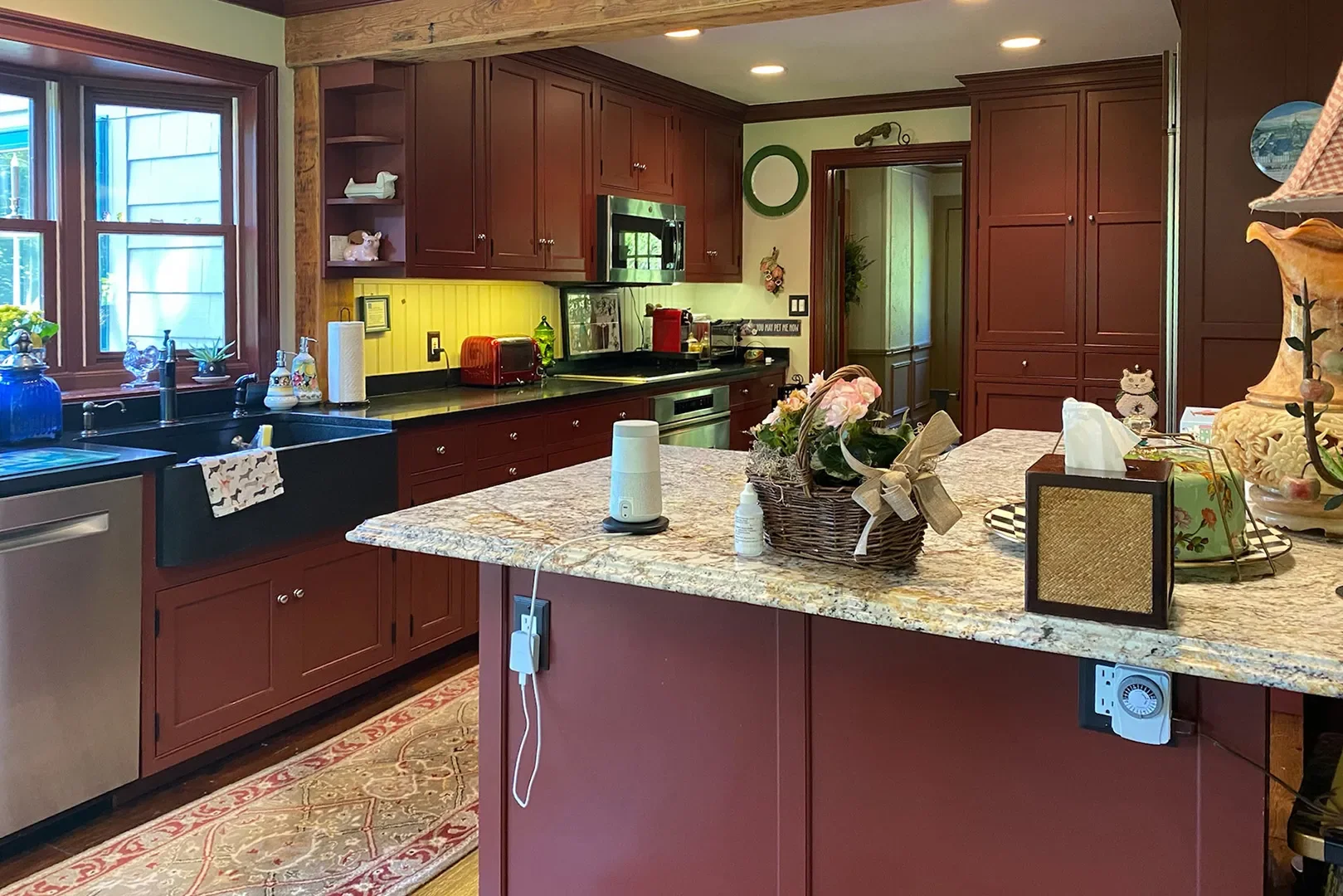
Before & After: Curated Auction Finds and Timeworn Brass Give This Connecticut Kitchen Its Soul
FM-5981
FM-5981 · Other
Before & After: Curated Auction Finds and Timeworn Brass Give This Connecticut Kitchen Its Soul
 FM-4543
 · Other
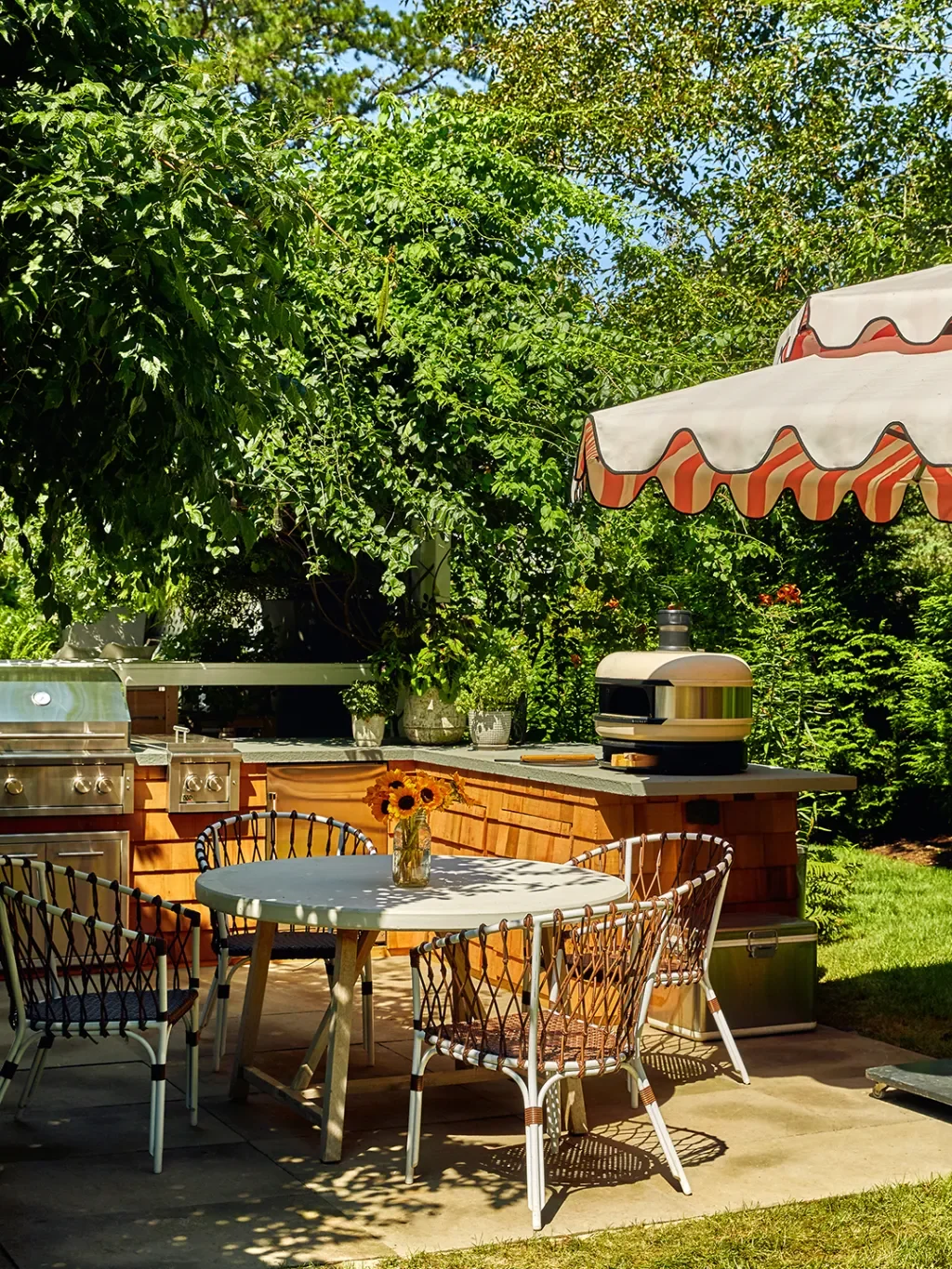
The Alfresco Kitchen Has Finally Come Into Its Own This Season
FM-4543
FM-4543 · Other
The Alfresco Kitchen Has Finally Come Into Its Own This Season
 CU-3573
 · Other
Why Freestanding Furniture Could Be the Kitchen Upgrade You Didn't Know You Needed
CU-3573
CU-3573 · Other
Why Freestanding Furniture Could Be the Kitchen Upgrade You Didn't Know You Needed