BySamantha Weiss-Hills,Photography byCharlie Schuck,Portrait byDani Case
PublishedMay 10, 2026 4:50 AM EDT
We may earn revenue from the products available on this page and participate in affiliate programs.
Sign Up for Domino's Newsletter
By signing up, you confirm you are 16+, will receive newsletters and promotional content and agree to ourTerms of Useand acknowledge the data practices in ourPrivacy Policy. You may unsubscribe at any time.
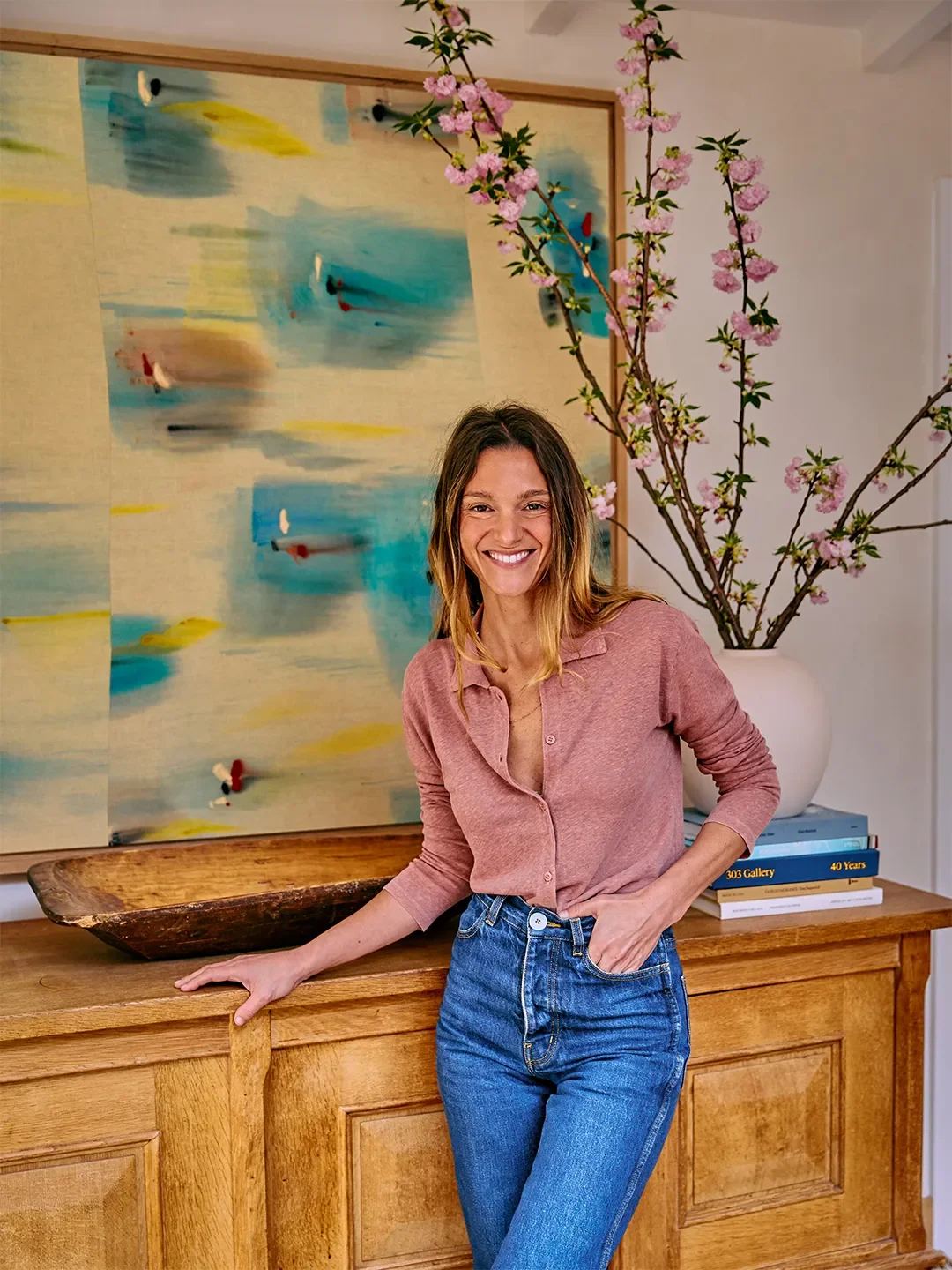
Creative minds have long been seduced by the otherworldly light in Springs, New York, a pocket of East Hampton that has shaped generations of artists in pursuit of their vision. The sun has enchanted painters like Lee Krasner, Helen Frankenthaler, and Elaine de Kooning—all of whom spent formative time in this particular coastal corner. It has also captivated textile designer and artist Caroline Z Hurley, who made the enclave her home in 2023 with her husband Alex Crane, a menswear designer, and their two daughters. "The dunes and ocean atmosphere of the Northeast coastline have always been part of my identity; I've never been able to resist it," Hurley, a Rhode Island School of Design graduate, reflects. "There's something about the luminosity here, the way sunlight refracts off the water, that feels genuinely enchanted."
Her search in the area began as a business proposition. Yearning for a space where clients could immerse themselves in the worldview of her eponymous brand, Hurley placed an offer on a modest bungalow. When that deal collapsed, she and Crane pivoted toward something more personal. Within months, they'd closed on a 1,600-square-foot 1960s house overlooking Three Mile Harbor. "Every window frames the landscape as though the interior were a gallery and the outdoors were the artwork."
After six months of inhabiting the space as-is, Hurley had cataloged where the family congregated, which direction the prevailing winds blew, when the trees threw their shade, and—most critically—how light migrated through every room across the day. That's when the couple turned to their friend Michael Yarinsky, co-founder of Office of Tangible Space, who had designed Hurley's original Greenpoint store back in the 2010s. Together, they reimagined a more intentional layout that would sustain the family through year-round living rather than brief seasonal stays.
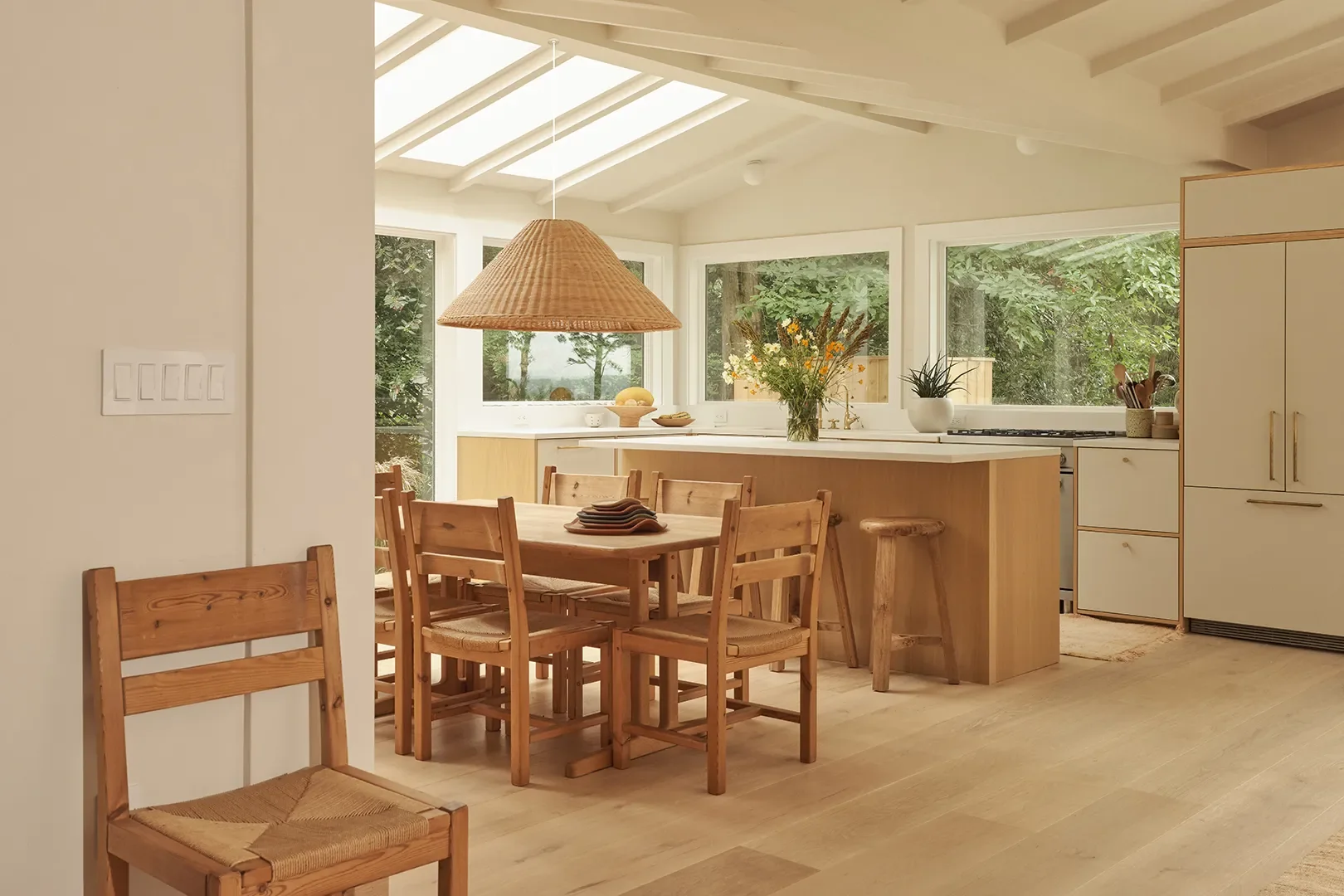
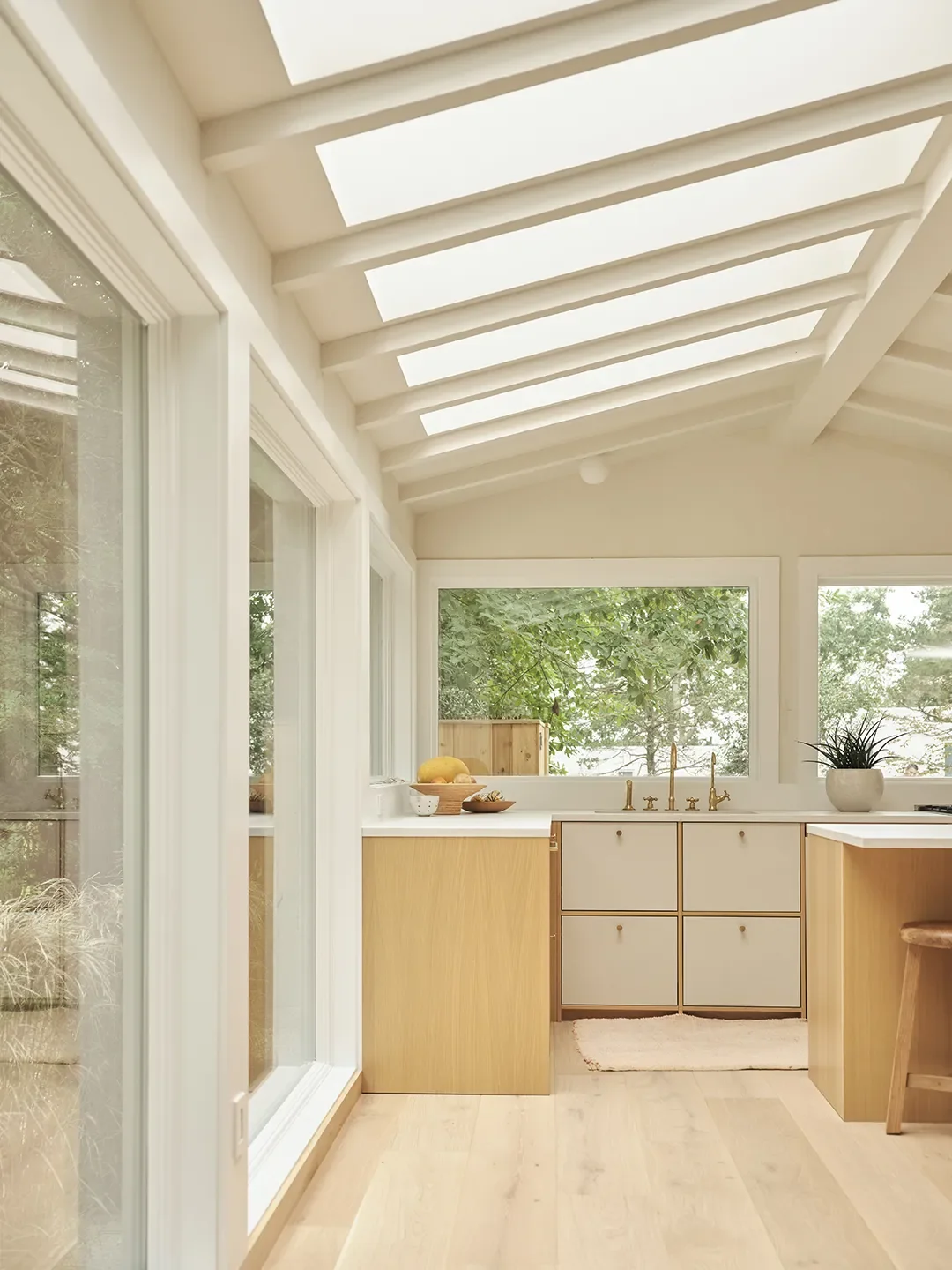
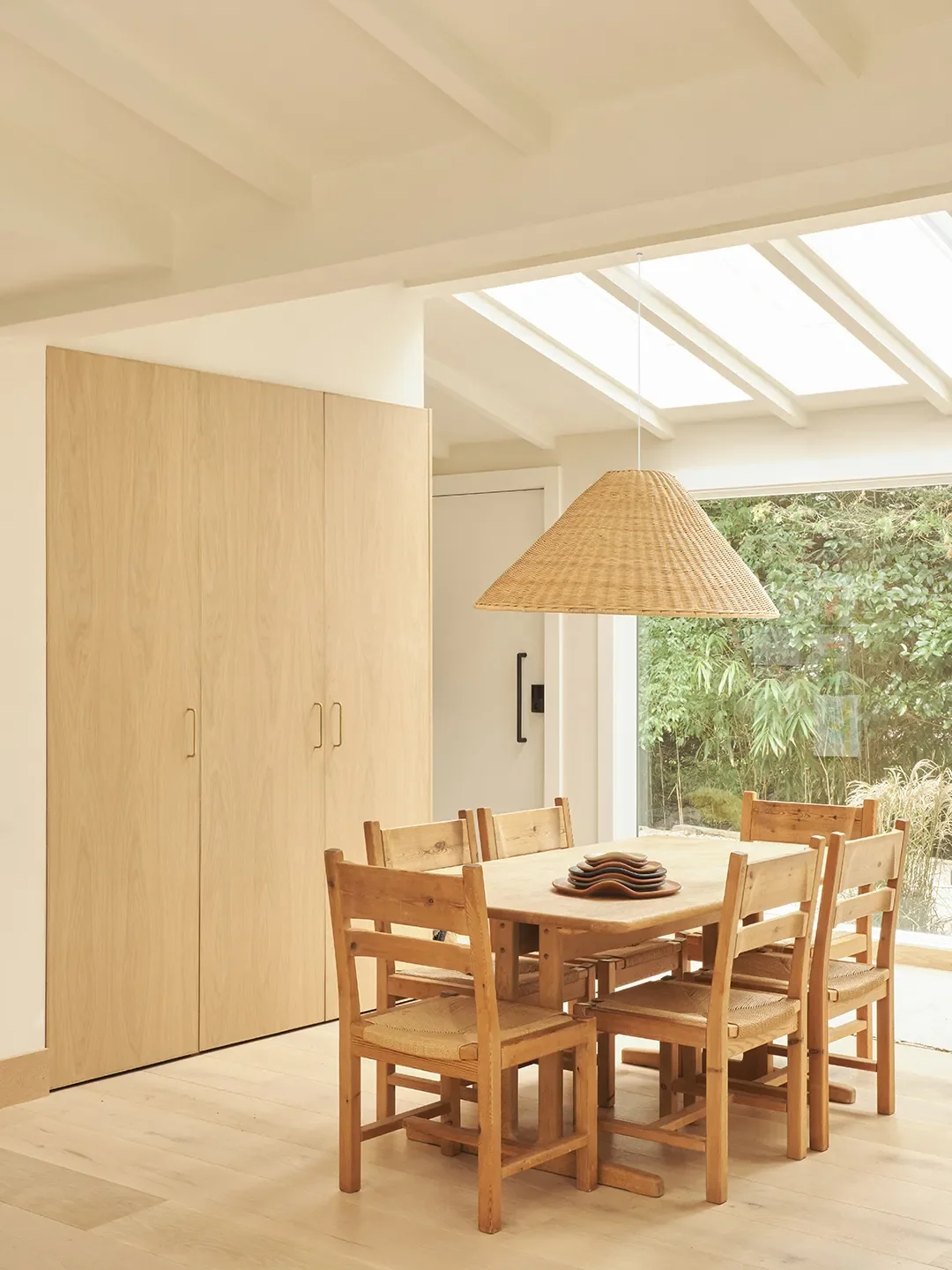
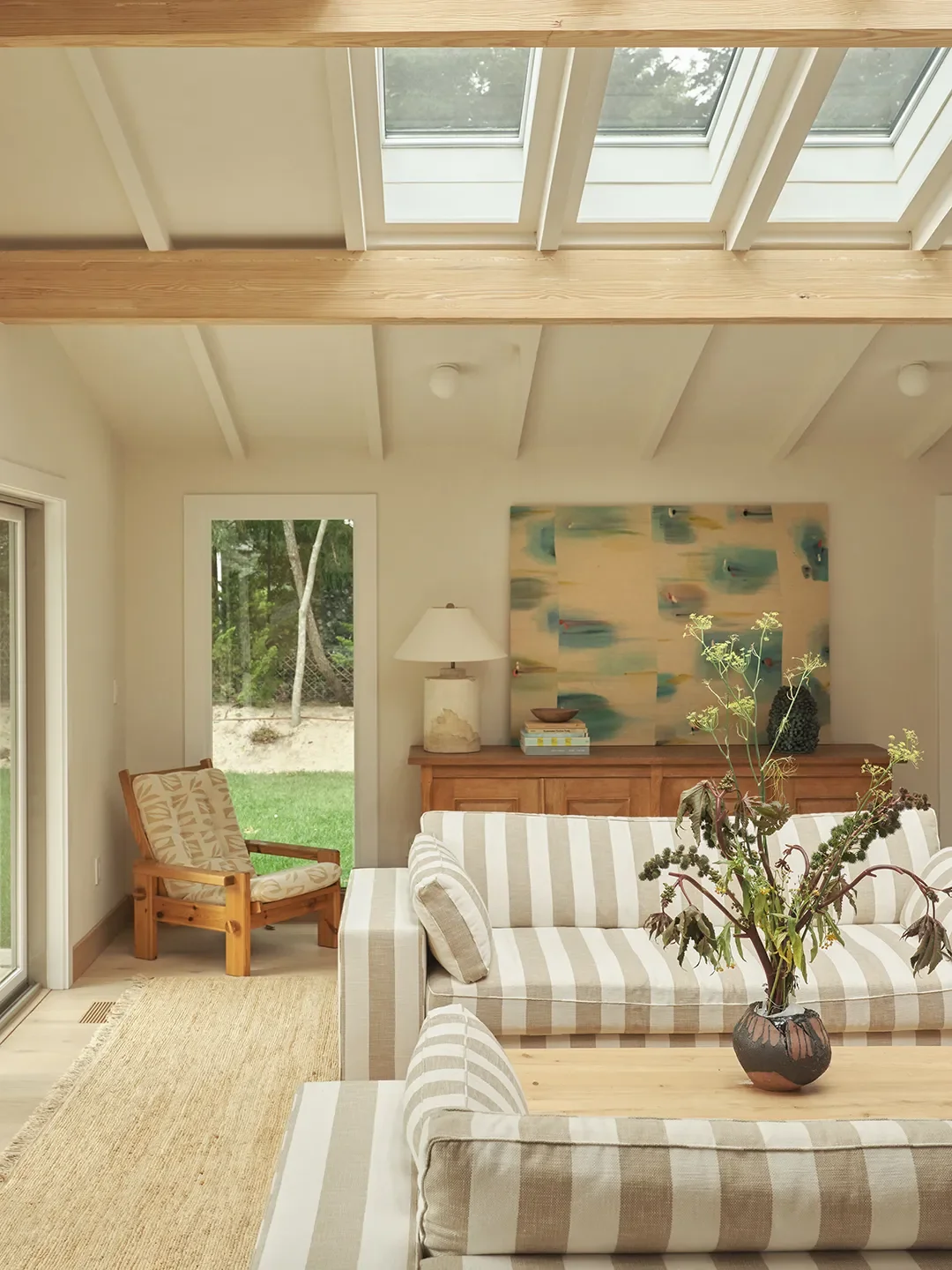
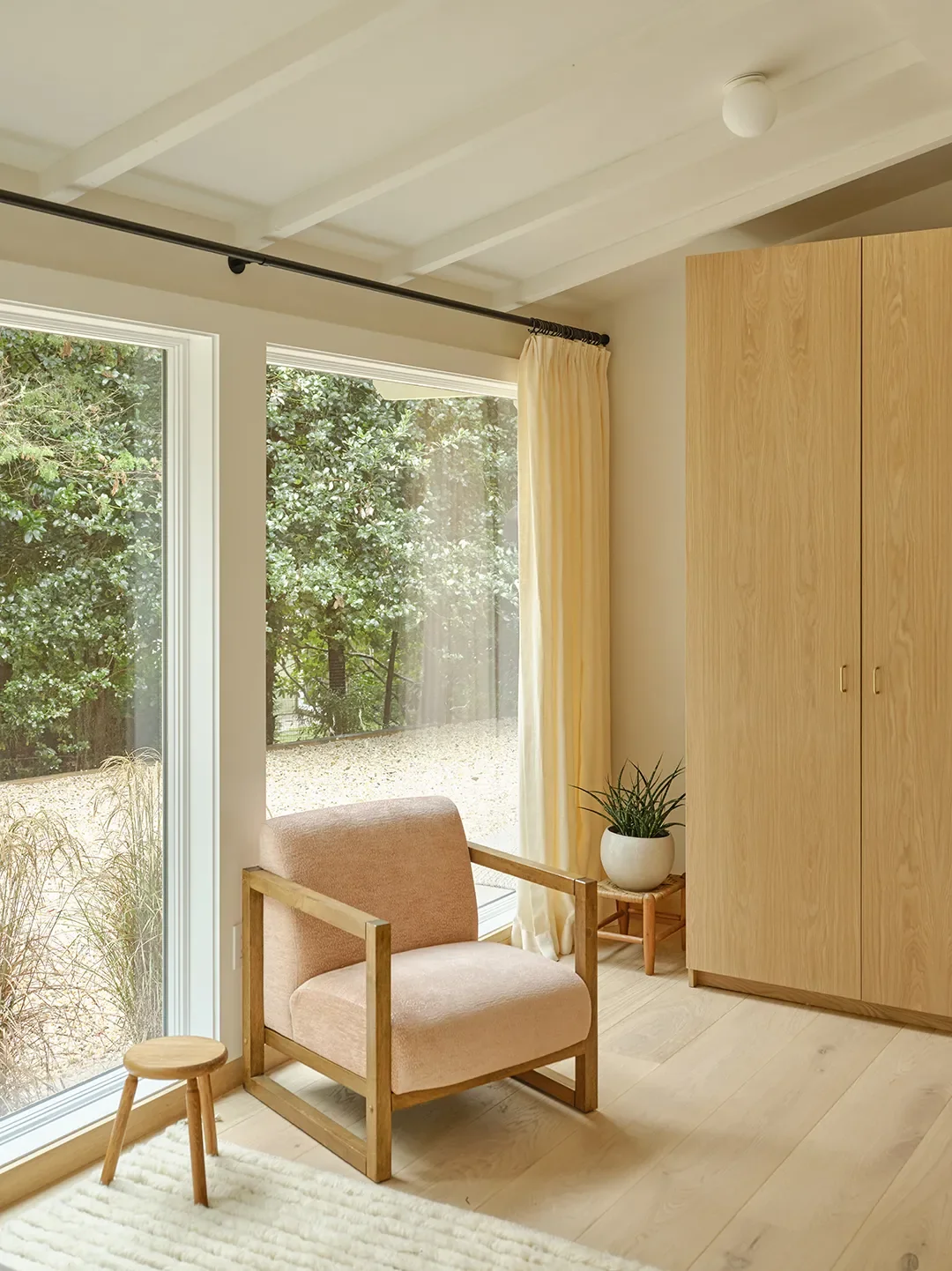
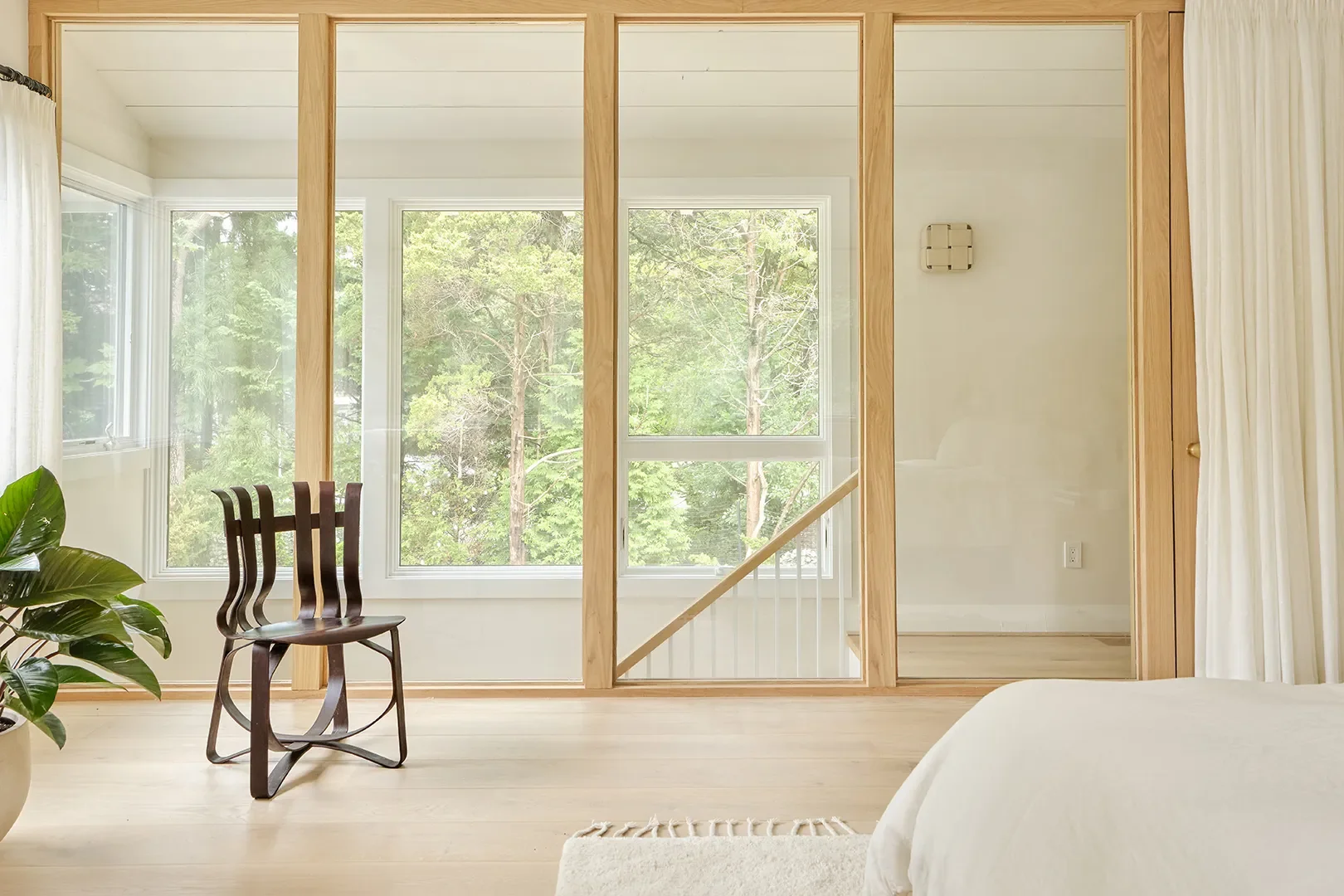
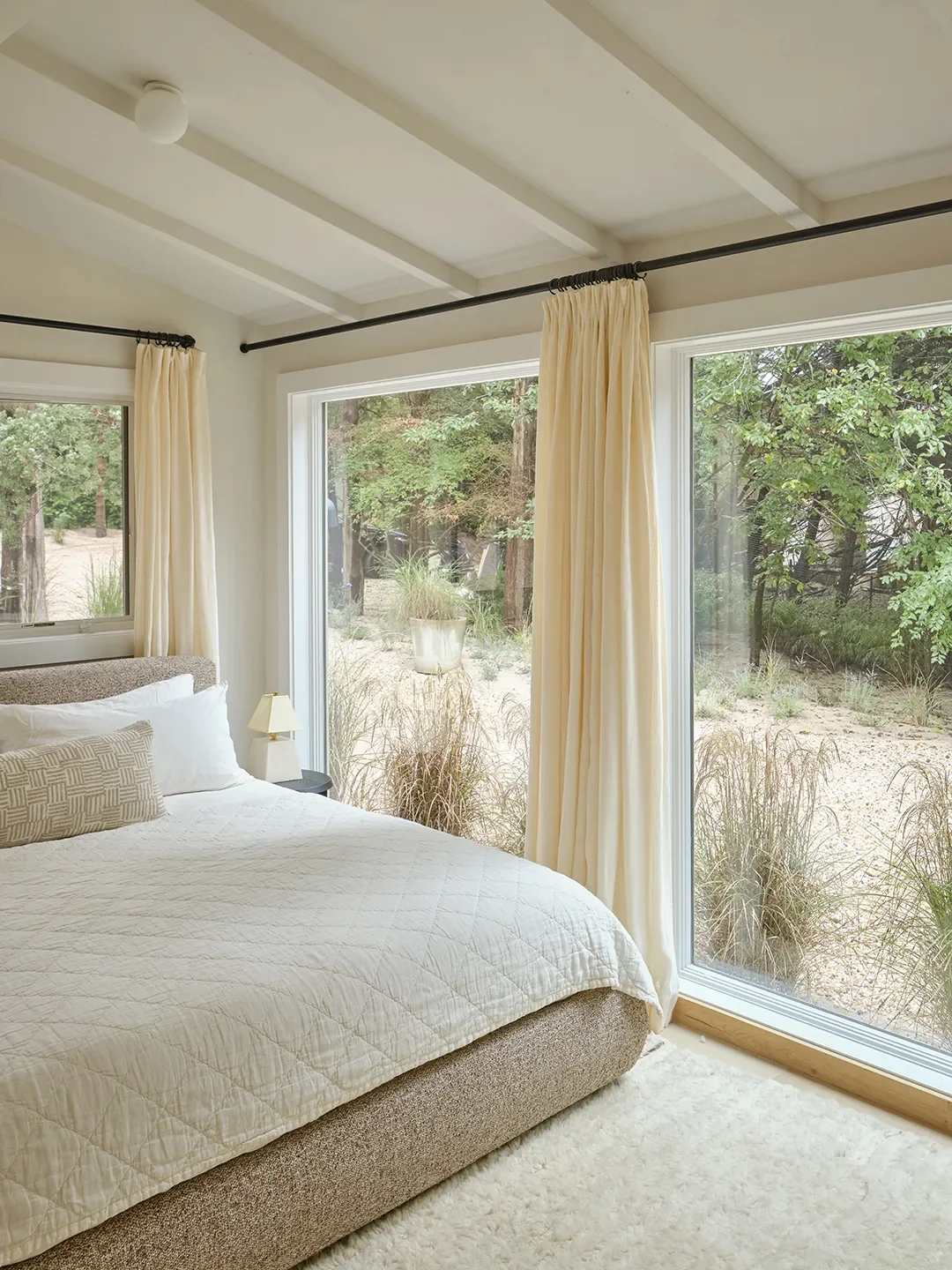
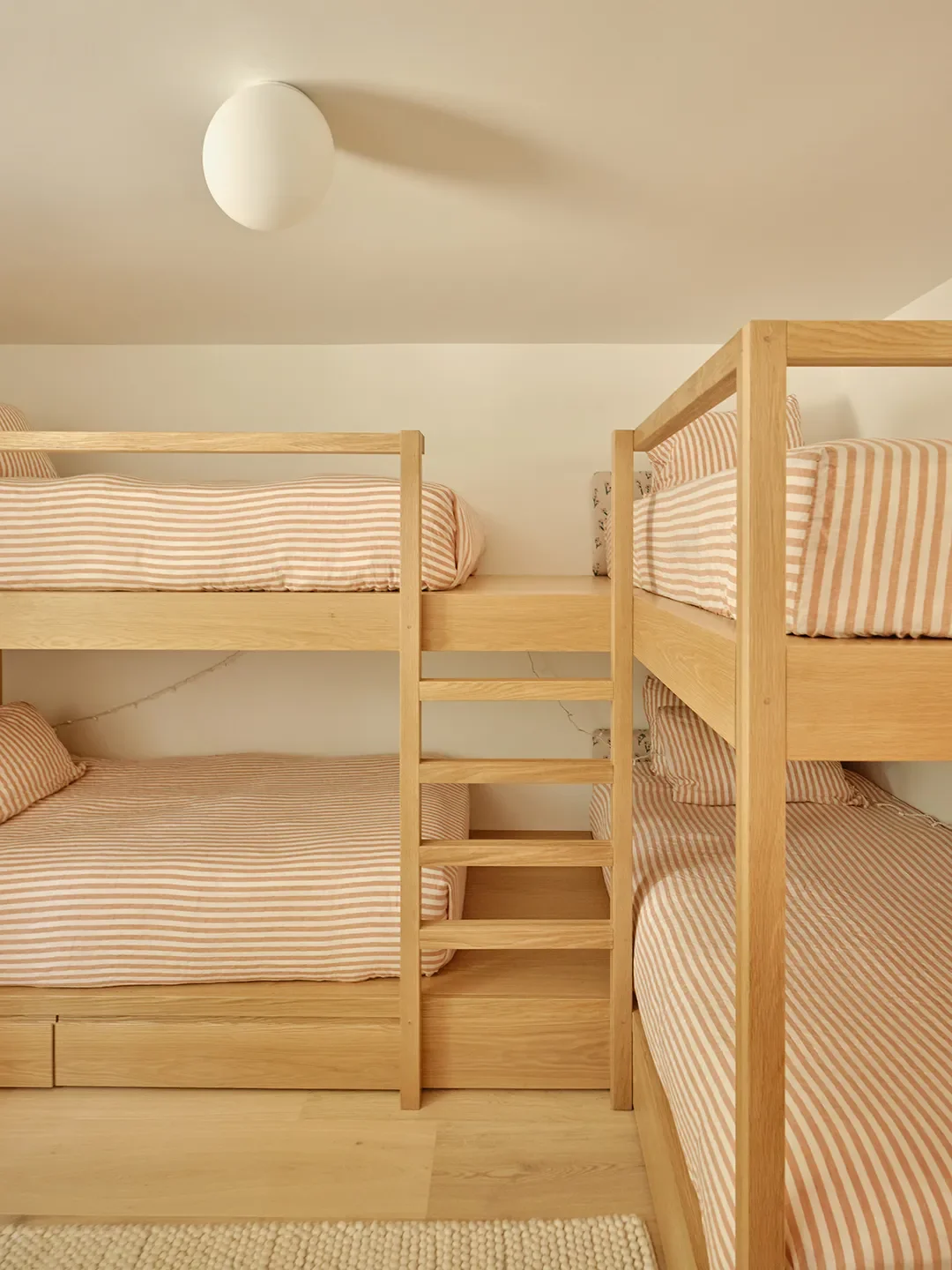
Initially, the priorities were straightforward: add square footage, banish dark corners, and create a more generous kitchen. But the scope expanded into a nine-month gut renovation, giving Hurley, Crane, and Yarinsky the freedom to fundamentally rethink how the family would inhabit the house. To enlarge the three-bedroom, two-bath footprint, the team added 500 square feet to accommodate a new kitchen, an additional bathroom, and a third bedroom. "Caroline and Alex wanted this house saturated with light," Yarinsky says, so expansive skylights were cut into the living room and kitchen ceilings. Upstairs, the primary suite shed a partial wall in favor of floor-to-ceiling glass panels that channel northern daylight deep into the room. "You're practically outdoors. You don't need a single light switched on for most of the day," he adds.
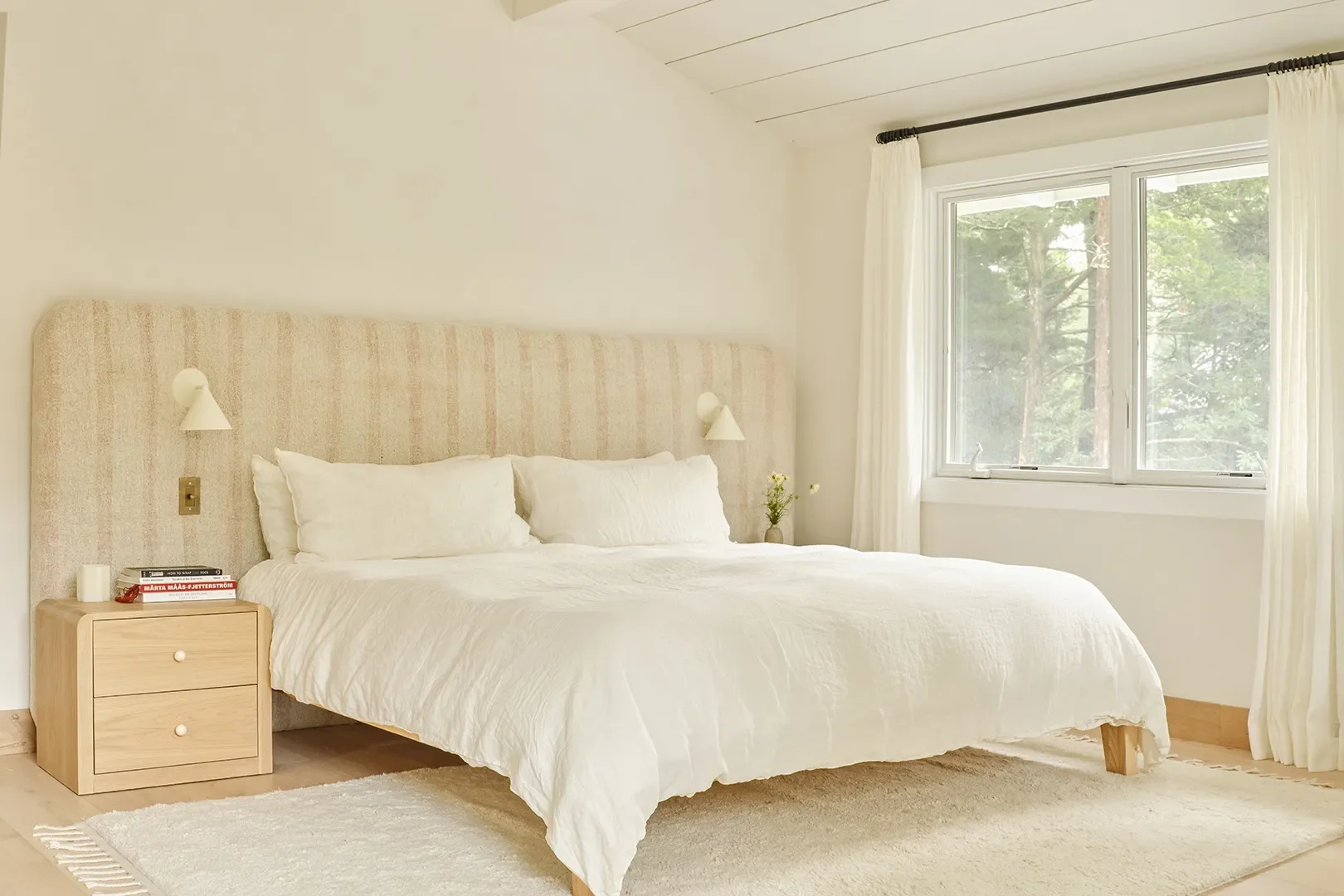
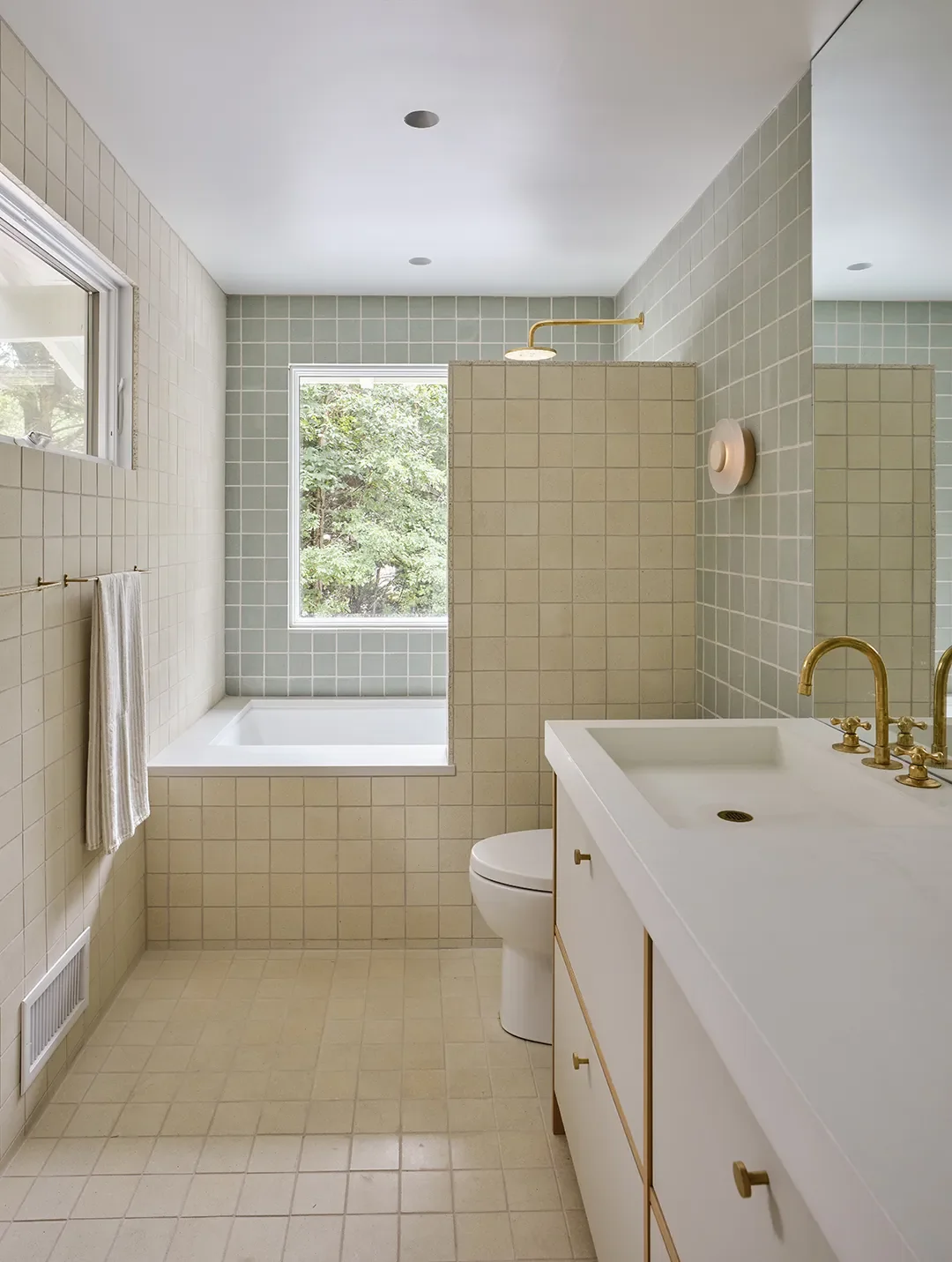
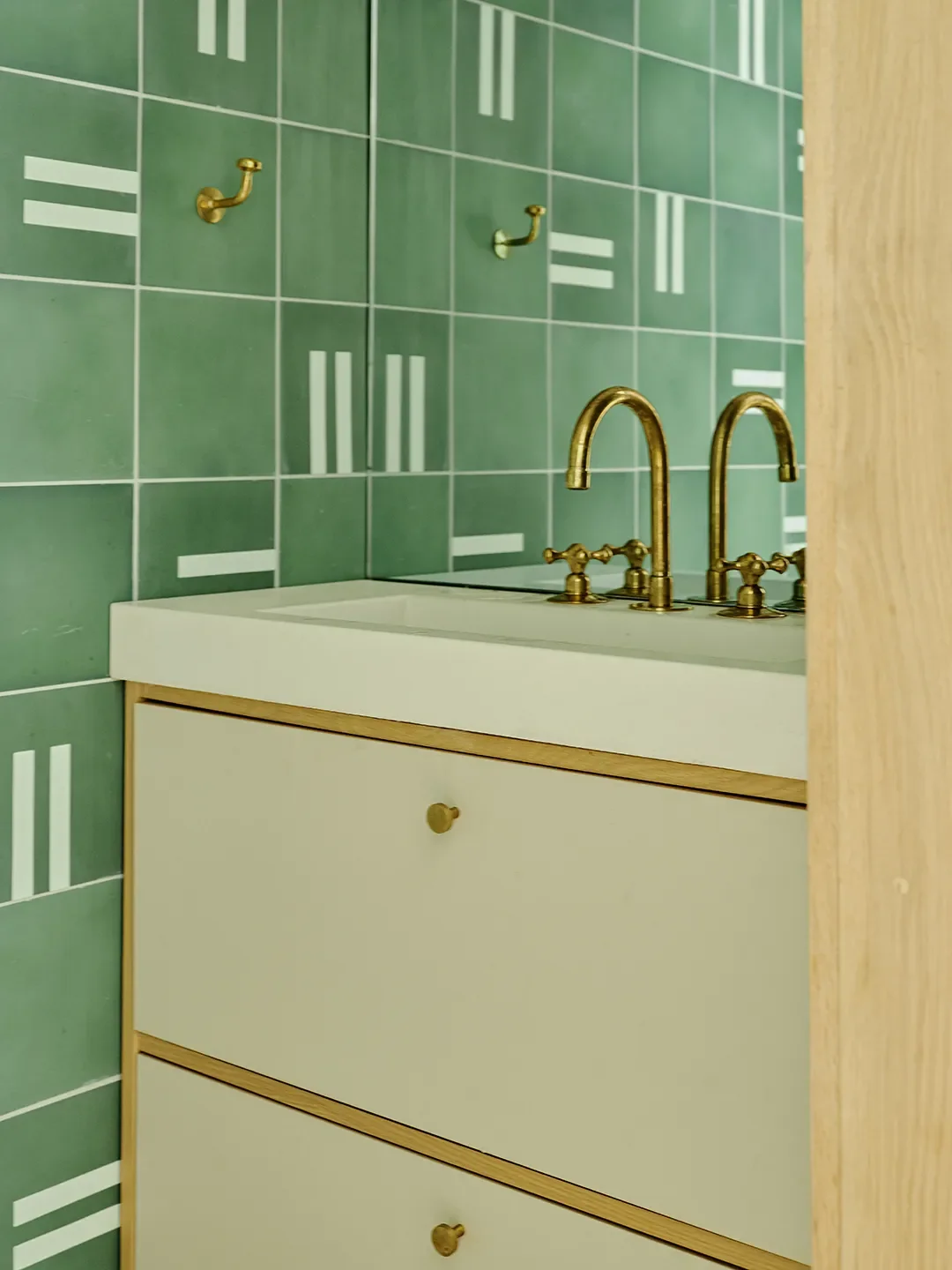
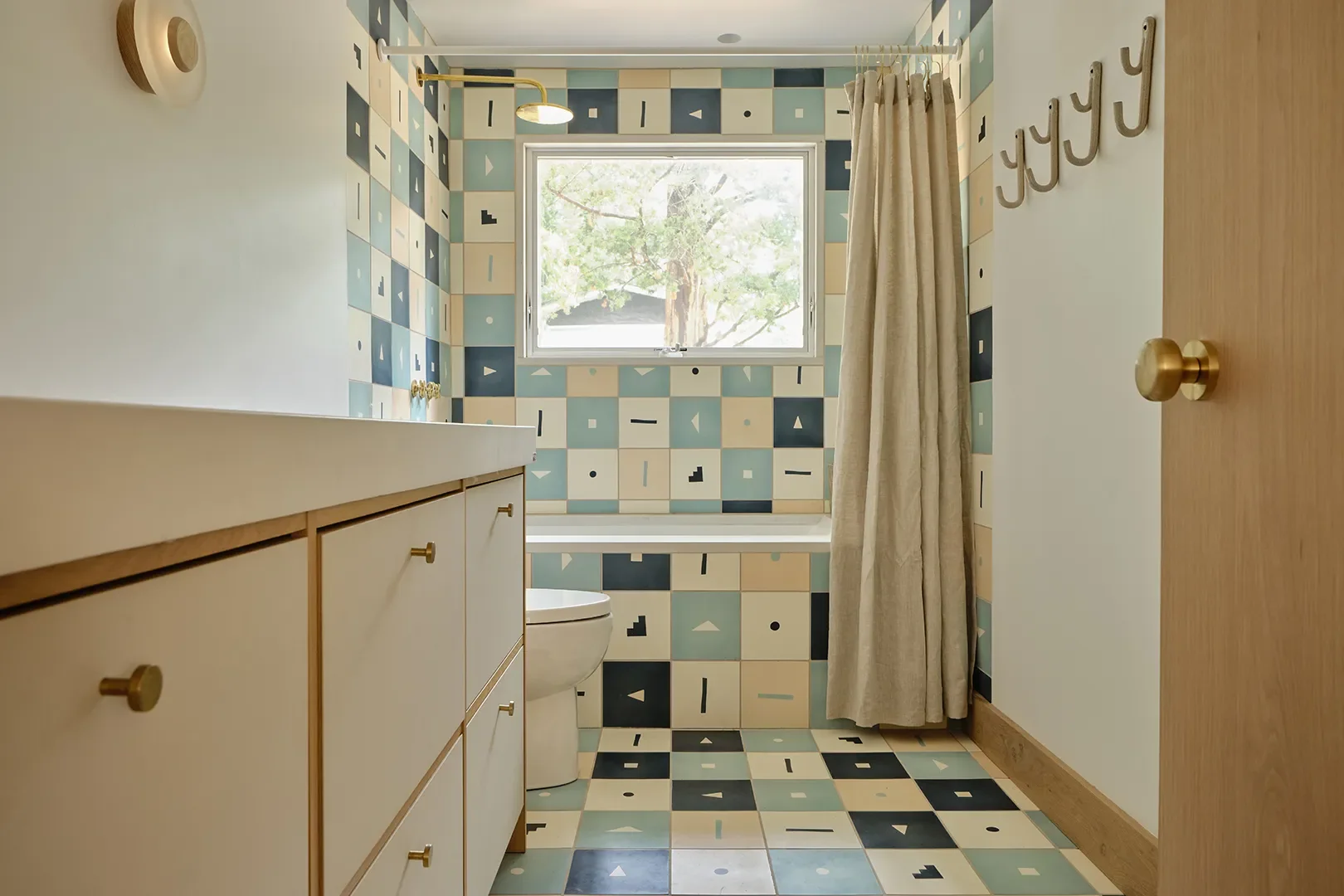
In the great room, the team removed an X-shaped brick partition—one that carved the space into a fireplace nook, den, cramped kitchen, and sliver of a bathroom—to make way for a single sweeping column that does far more than radiate heat. Plumbing lines, ductwork, drainage, and electrical conduit for the solar array all travel invisibly through the structure, which wears a stucco-and-plaster skin that blends seamlessly with the warm white walls. In the new kitchen and dining zone, cast-concrete countertops bring weight and texture atop custom oak millwork and natural linoleum cabinet fronts. Color-blocked concrete tiles anchor every bathroom, two of the three patterns designed by Hurley herself.
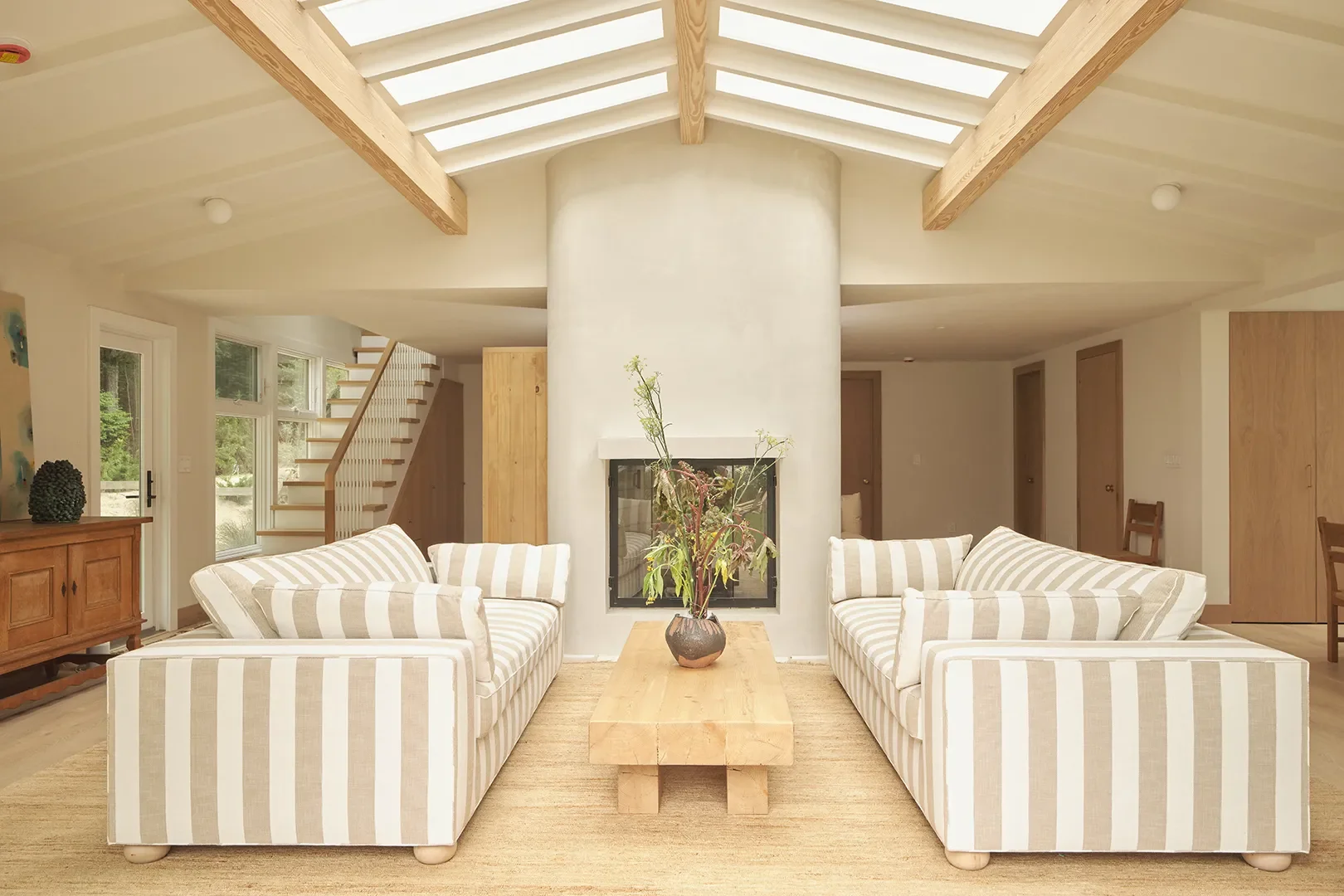
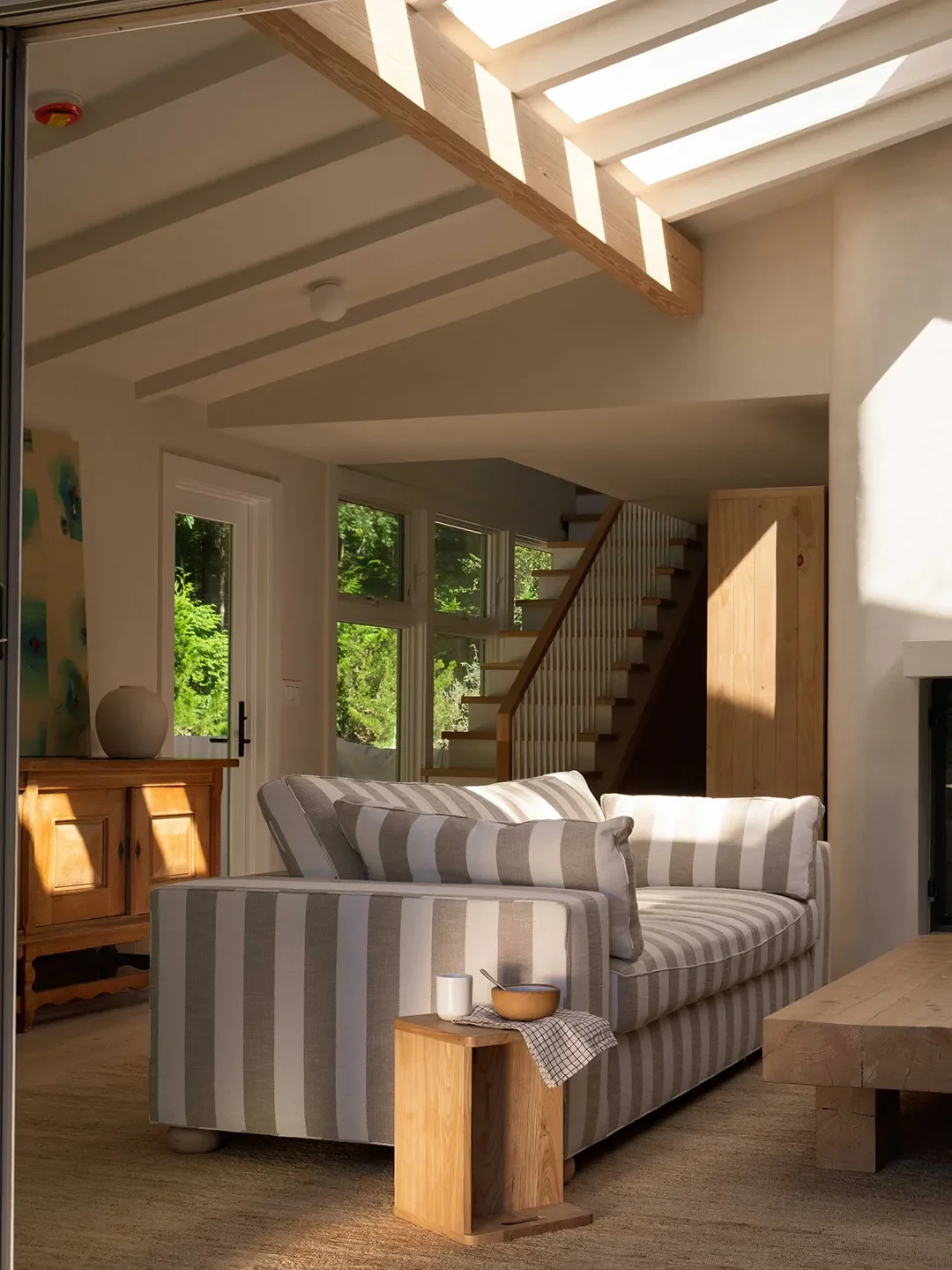
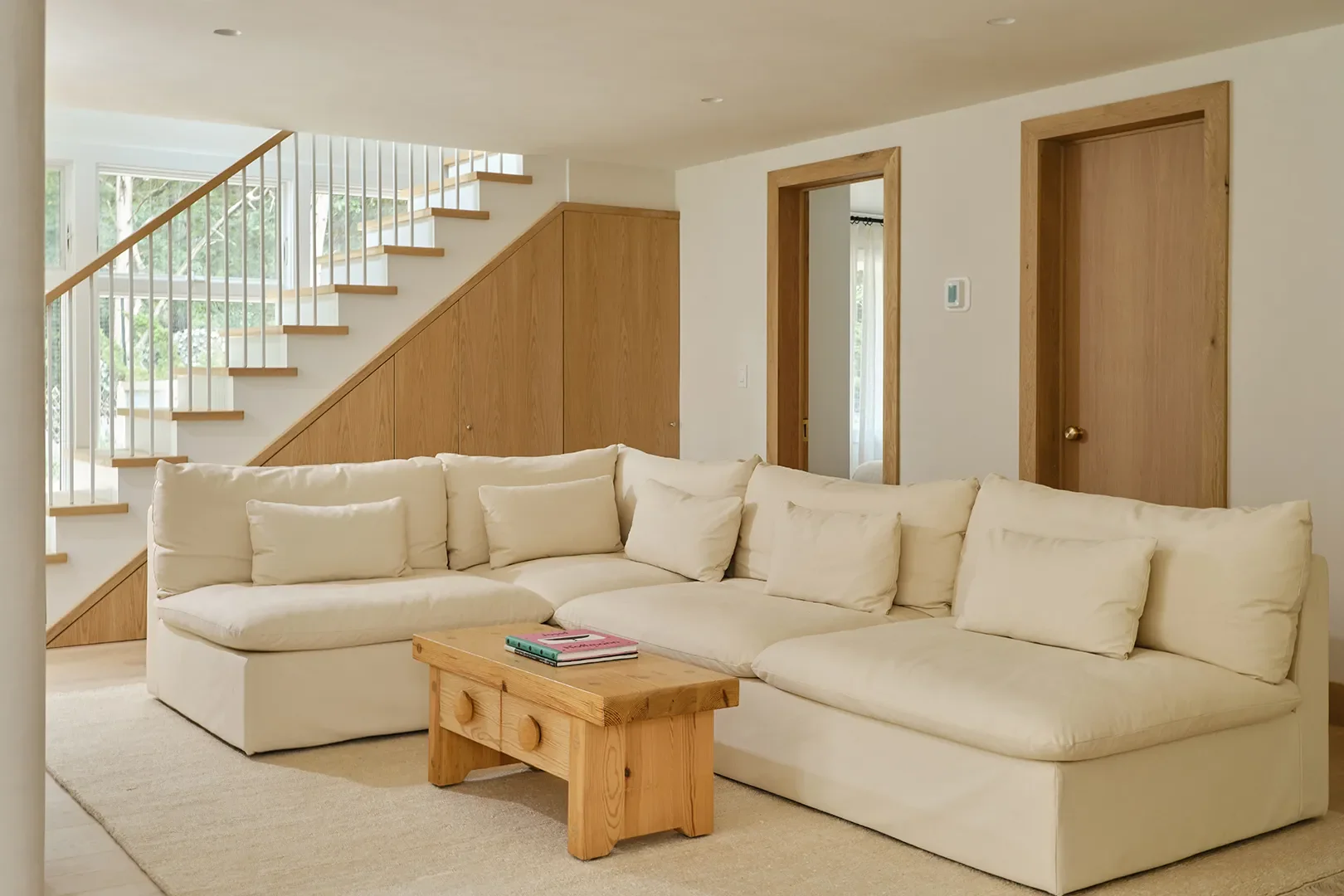
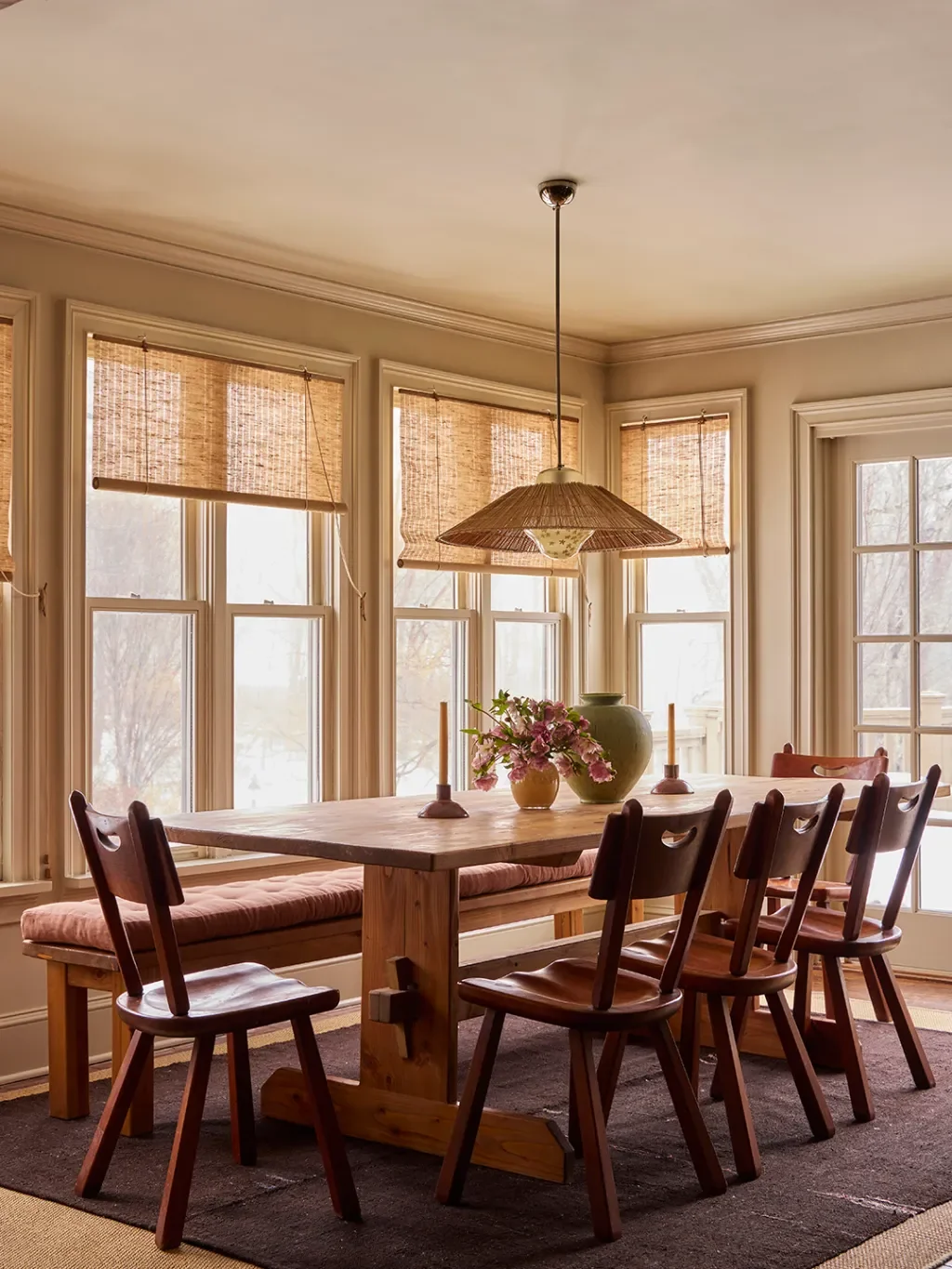
Hurley took the lead on furnishing while Yarinsky and his team sourced fixtures and fabricators. "The colors I chose were meant to serve as a vessel for the light to fill," she says. The artist reupholstered sofas and a lounge chair in her own textile collections; sourced vintage fabric on Etsy for headboards and bed frames; and combed Live Auctioneers and 1stDibs for a credenza near the entry, a coffee table in the family room, and the dining table and chairs. Naturally, the project wasn't without its hurdles. The couple had to completely rebuild the basement, install a new septic system, and employ costly steel beams to support the addition. The fireplace was originally designed to be wider, but was tightened in service of better circulation.
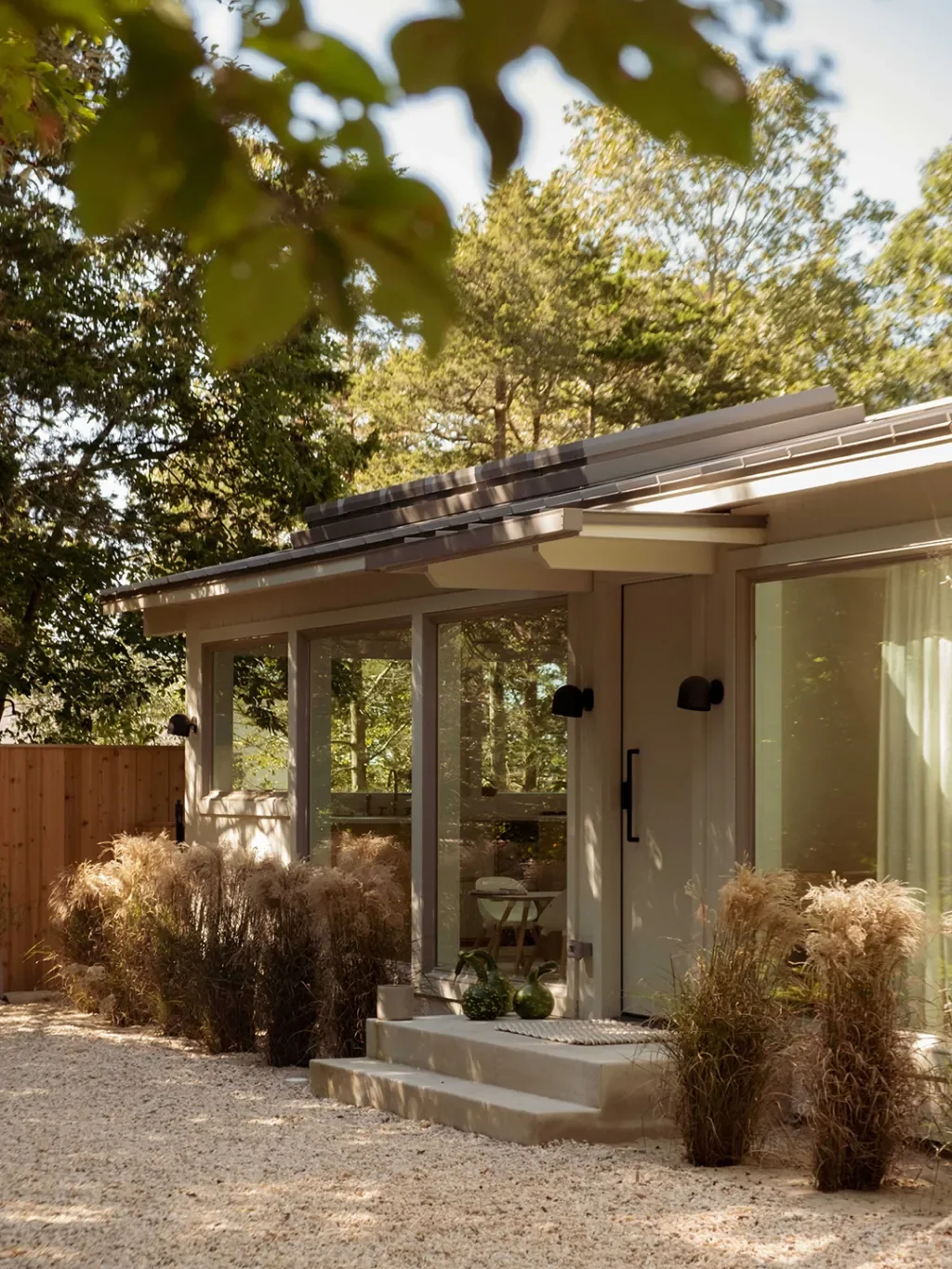
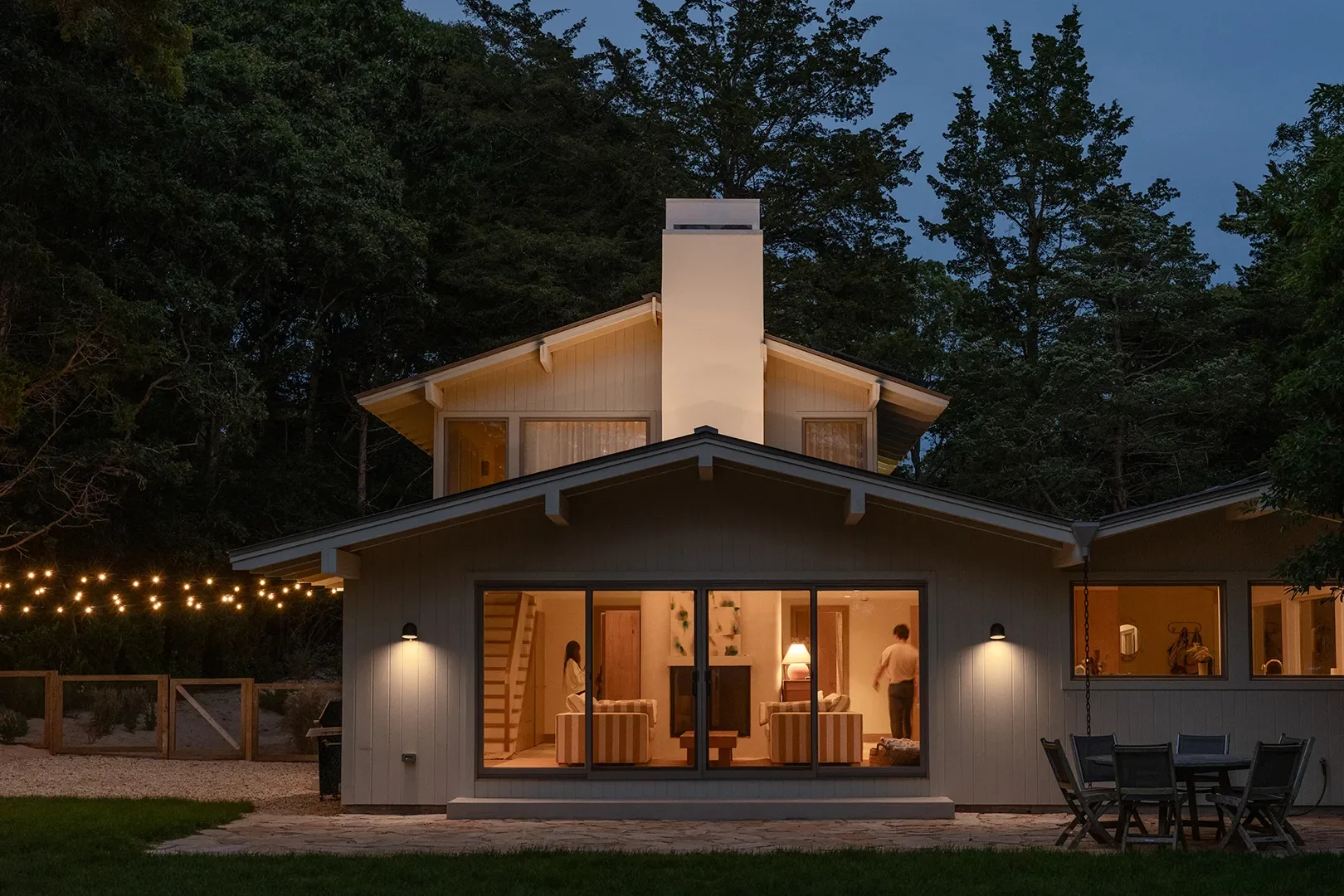
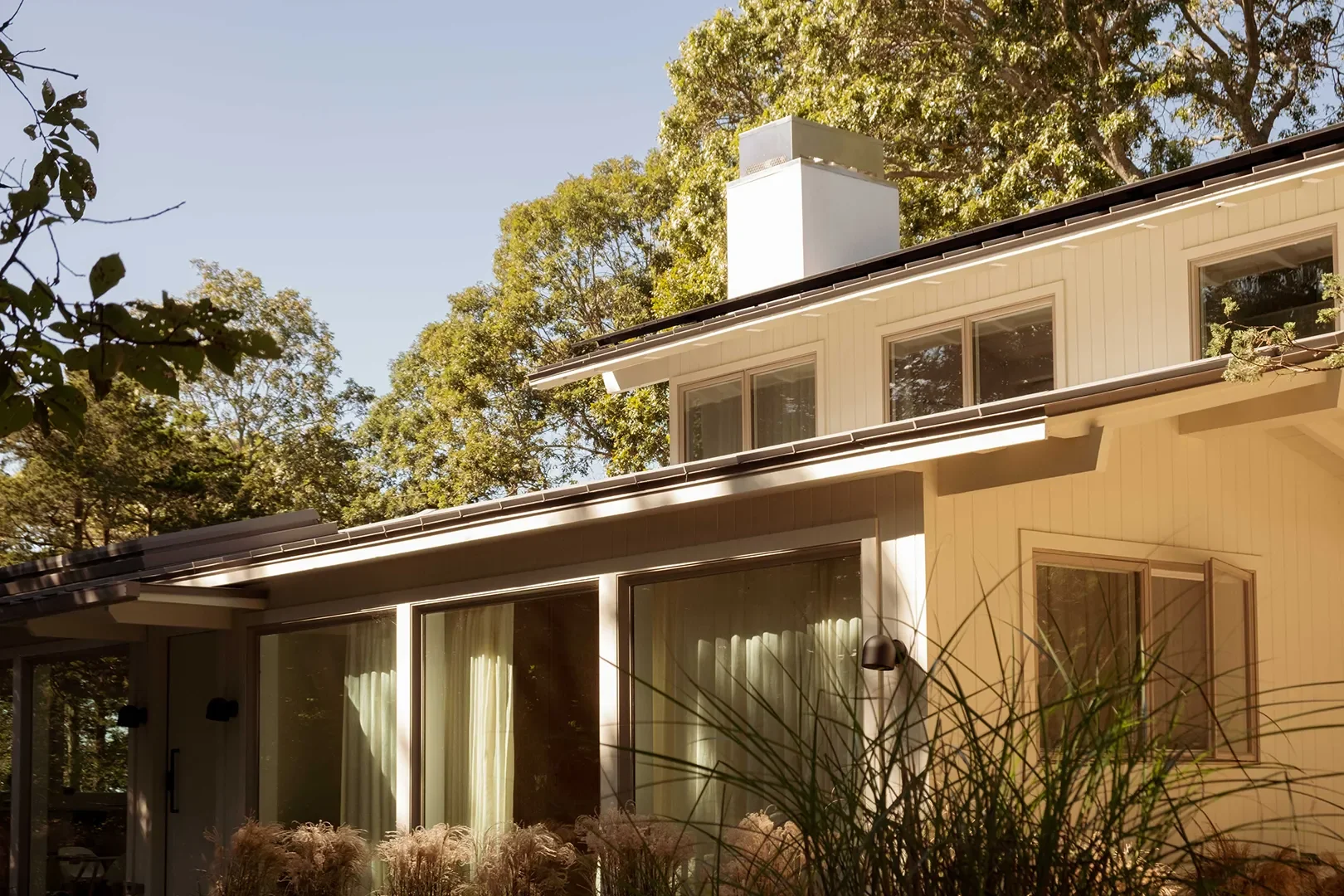
Outside, vertical wood siding and a new metal roof brought the exterior into dialogue with the region's architectural vernacular. Previously, the home lacked a discernible entry, so Yarinsky created a deliberate garden path leading to the front door. With its two-step stoop, sheltering canopy, and porch lights, the way in is now unmistakable.
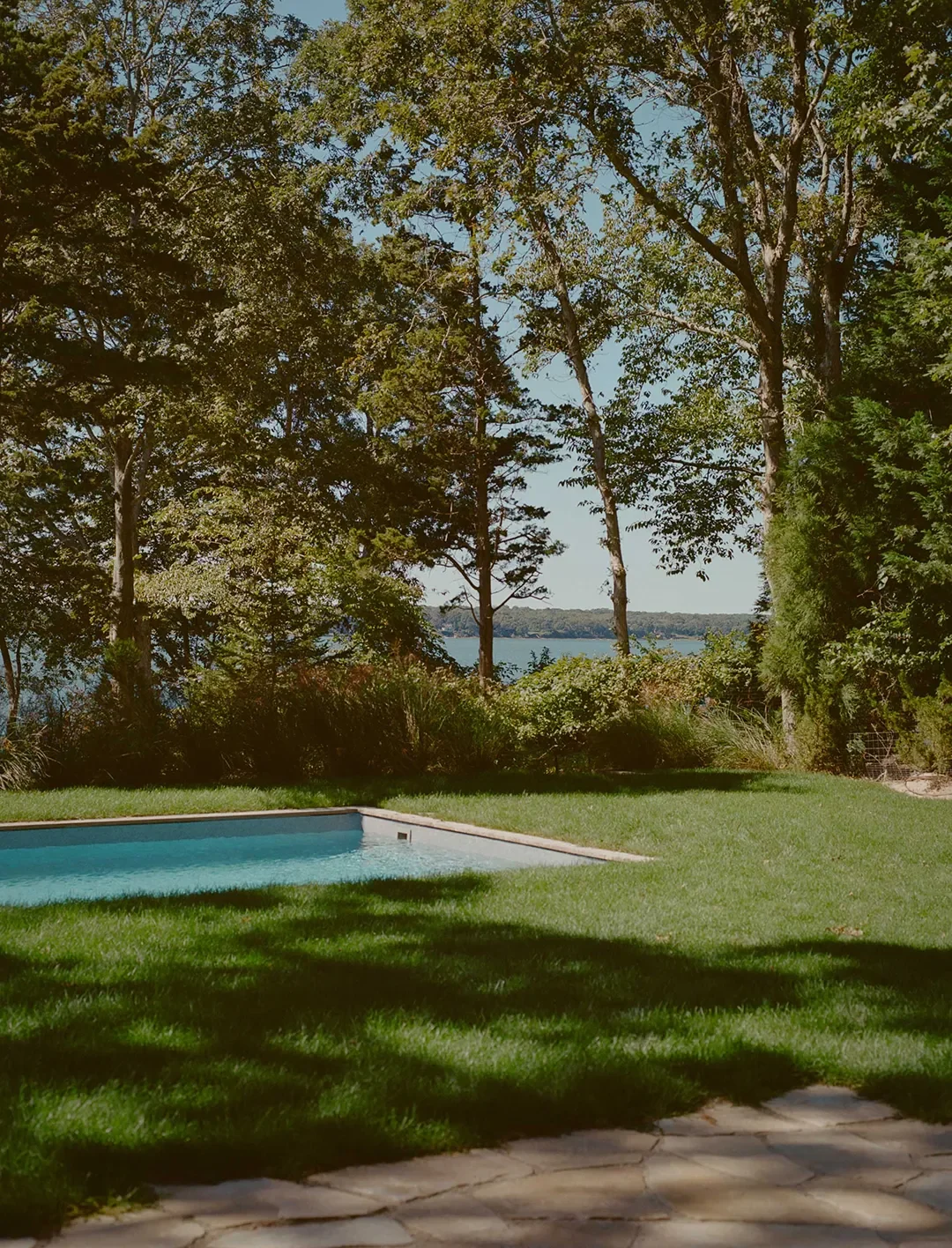
As for the landscape, "Alex would return from runs in the dunes and say, 'That's the feeling I want our house to evoke,'" Hurley remembers. They replaced rigid, formal hedging and container plantings with some of his native discoveries to complement the towering pines and rare monkey-puzzle tree already on the property. A bluestone terrace extends toward a grassy clearing and swimming pool—where long summer afternoons unfold—with views across the bay.
After two decades of New York City life, this chapter has been an intentionally slower rhythm for the family. "We never planned to live here full time, but I'm so grateful we do," Hurley says, noting that she rents a small studio nearby for her creative practice. "Walking the beach each morning, then coming to my studio to paint in these luminous colors—it feels far more aligned with who I truly am." That, and the transcendent light.





Samantha Weiss-Hills is the managing editor for Domino. She edits and writes home tours and features, and she's the friend who everyone texts for glassware, sofa, and sheet recommendations. She lives in Brooklyn with her husband, Alex, and their beagle-corgi, Elsa.
Learn more about Domino.comEditorial Standards
More from this layout
 FM-9316
 · Retreat
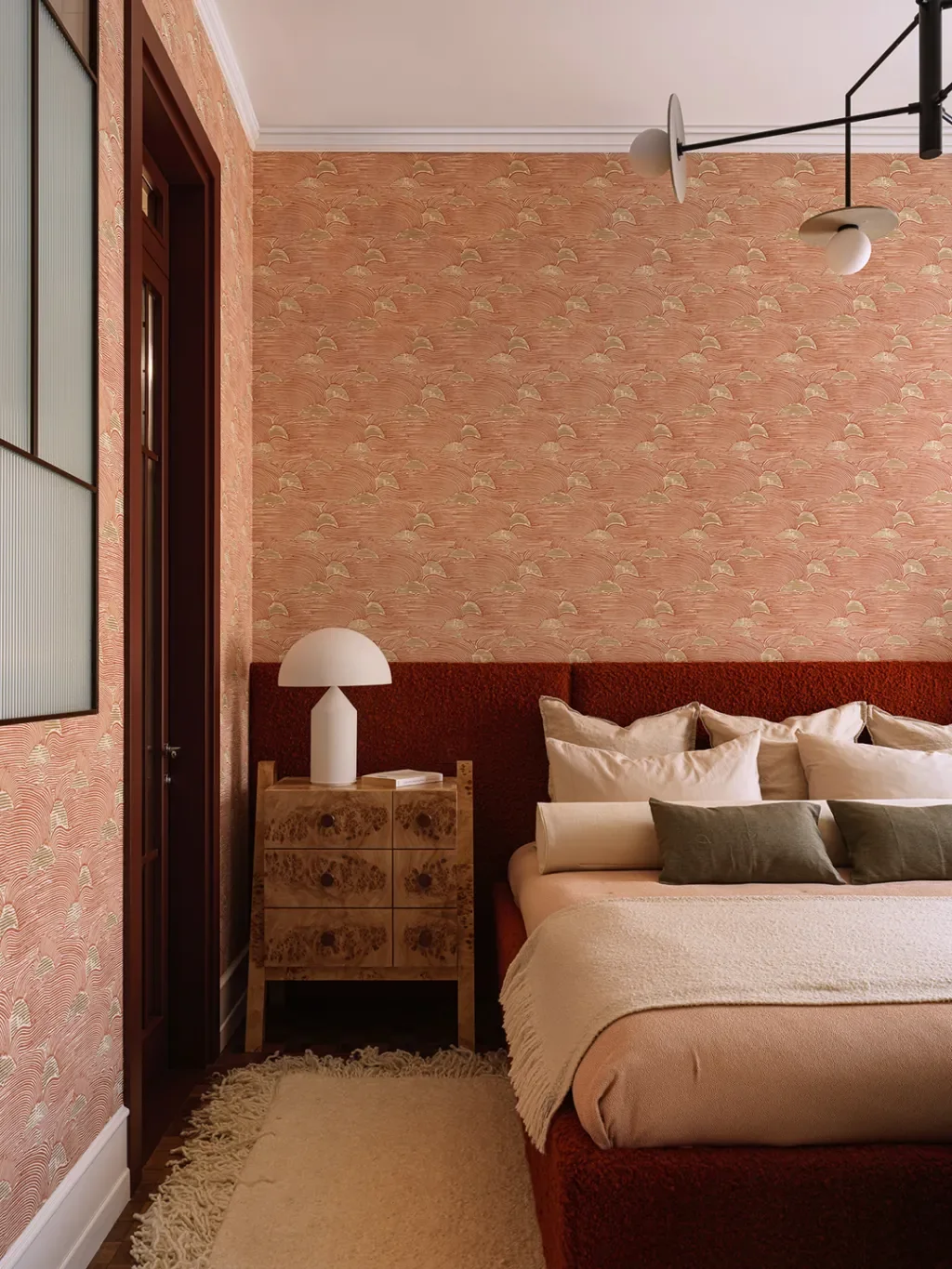
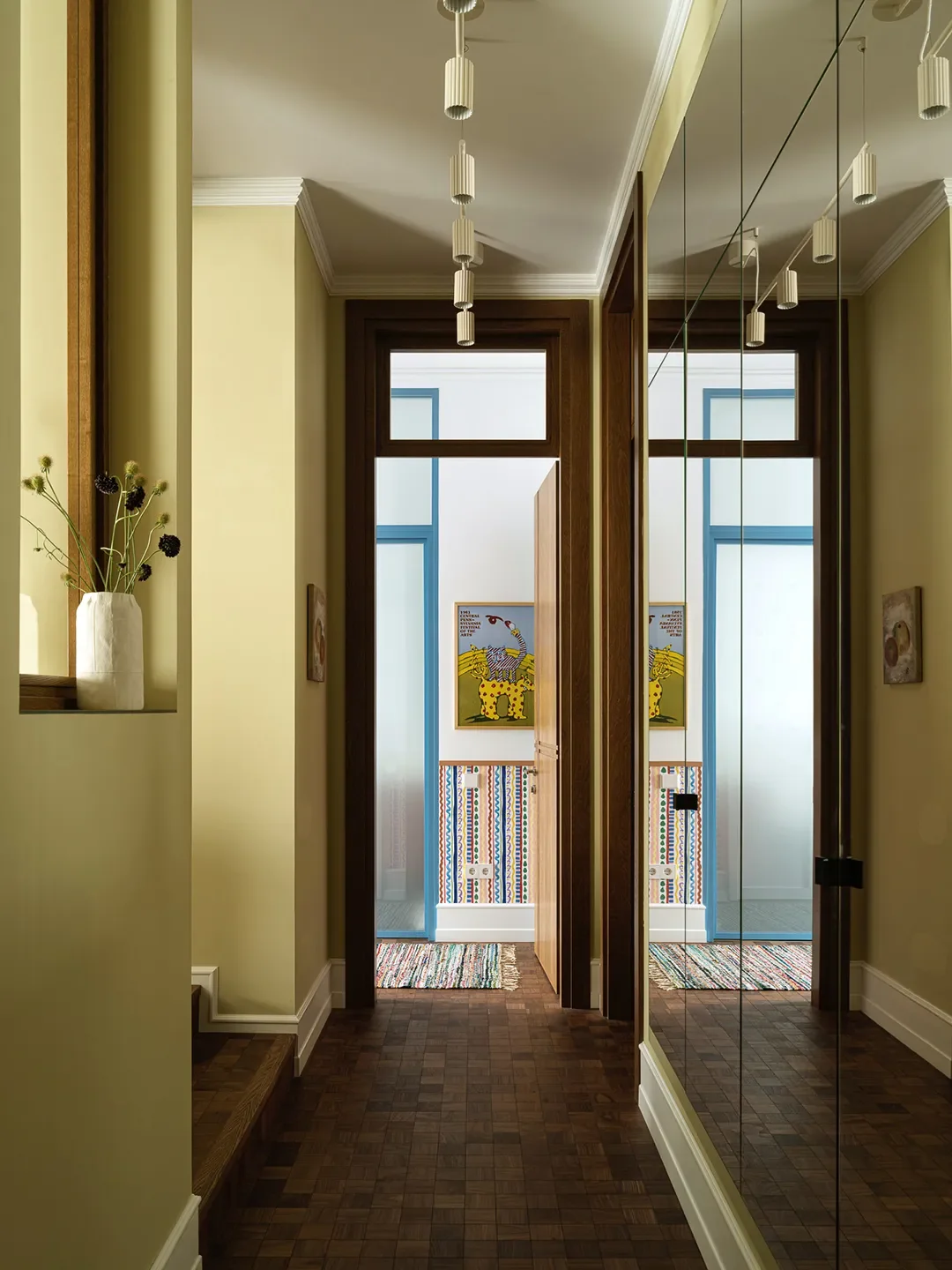
A Platform Kitchen and Fearless Color Transform This Kazakhstan Apartment Into a Warm, Artful Retreat
FM-9316
FM-9316 · Retreat
A Platform Kitchen and Fearless Color Transform This Kazakhstan Apartment Into a Warm, Artful Retreat
 ML-8709
 · Retreat
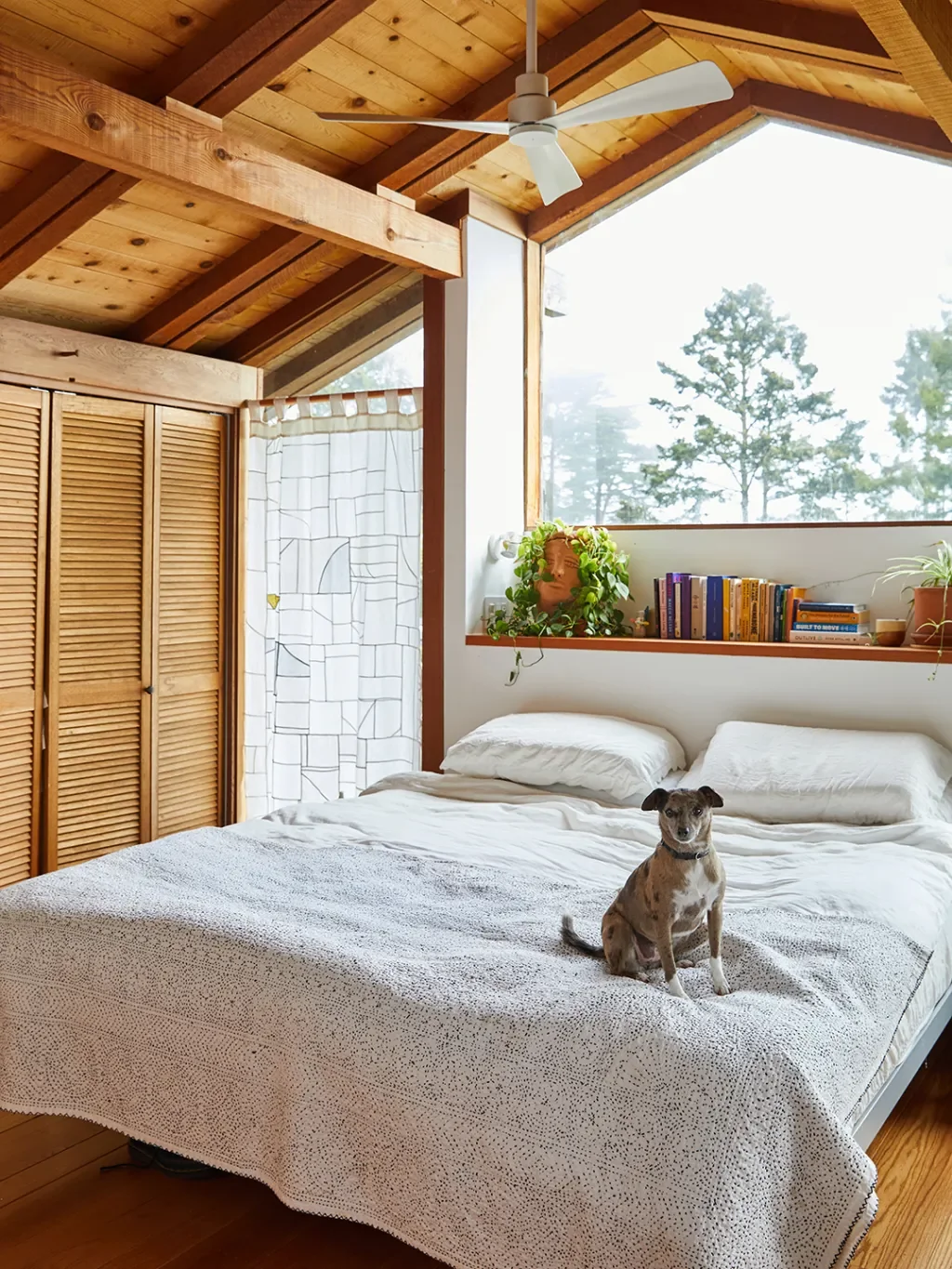
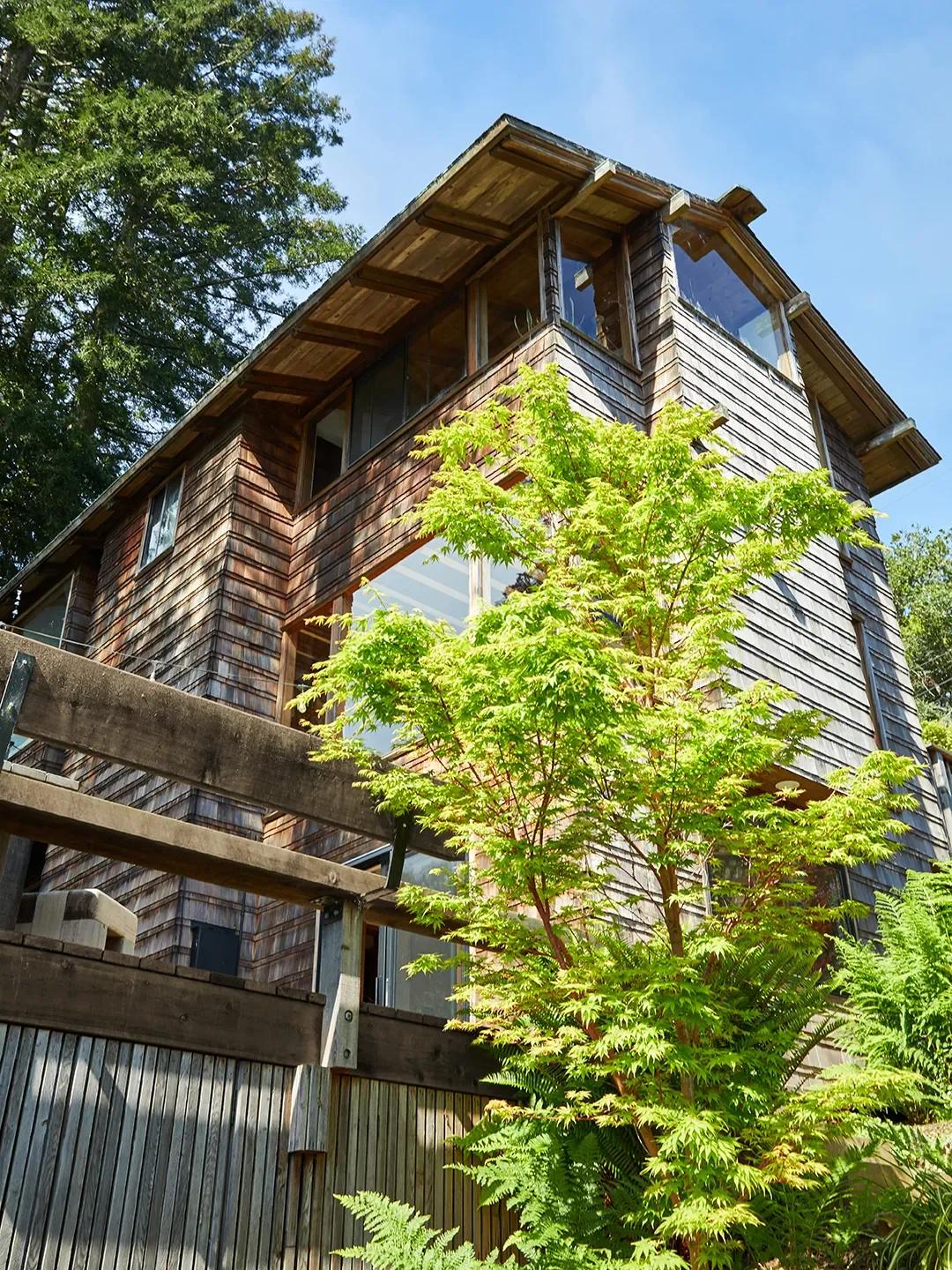
A Cedar-Shake Retreat From the '70s, Reimagined Among Northern California's Towering Redwoods
ML-8709
ML-8709 · Retreat
A Cedar-Shake Retreat From the '70s, Reimagined Among Northern California's Towering Redwoods
 FM-5981
 · Other
Before & After: Curated Auction Finds and Timeworn Brass Give This Connecticut Kitchen Its Soul
FM-5981
FM-5981 · Other
Before & After: Curated Auction Finds and Timeworn Brass Give This Connecticut Kitchen Its Soul