BySamantha Weiss-Hills,Photography byBelle Morizio
PublishedJan 9, 2026 11:21 AM EST
We may earn revenue from the products available on this page and participate in affiliate programs.
Domino Shopping: Worth-It Deals, Editor Picks, and Gift Guides
Join us for a weekly shopping trip right in your inbox.
By signing up, you confirm you are 16+, will receive newsletters and promotional content and agree to ourTerms of Useand acknowledge the data practices in ourPrivacy Policy. You may unsubscribe at any time.
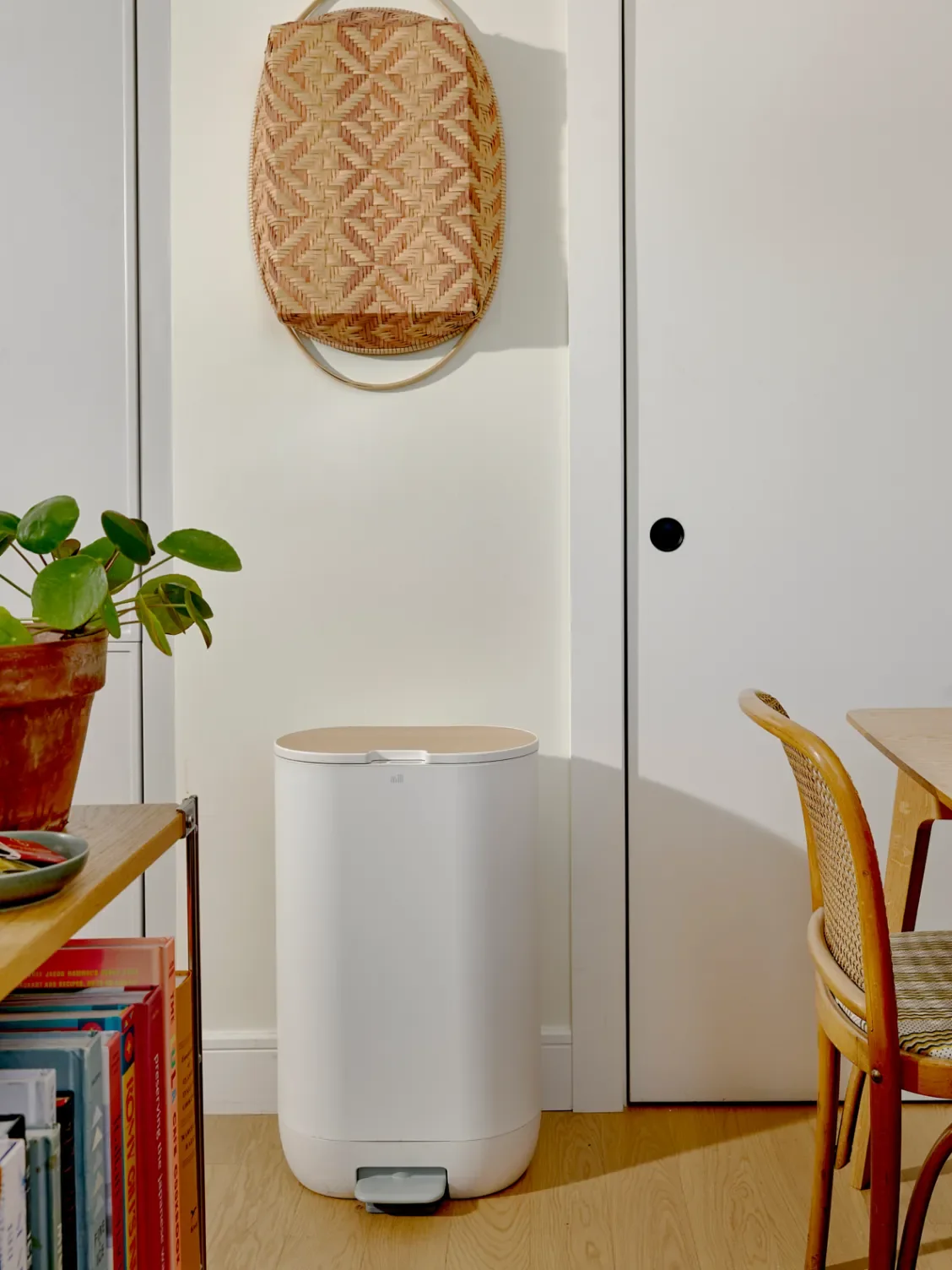
The lineup of appliances earning counter space in our one-bedroom apartment is short but deliberate: a Breville espresso machine, a Japanese toaster oven, a blender, and a touchless trash can. But a year ago, we decided one more deserved a permanent spot—something to solve a nagging problem we hadn't been able to crack: where does compost live in a compact kitchen?
After watching Mill's Food Recycler gain traction on the market, it became obvious this wasn't just a tech novelty—it was a design-forward solution. As enthusiastic cooks and entertainers, my husband and I generate serious kitchen waste. Carrot peels, citrus rinds, herb stems, avocado pits—we try to repurpose what we can, but some scraps simply have no second act. Over the years, our compost strategy has ranged from an outdoor tumbler to a tiny ceramic counter bin to biodegradable bags crammed into the freezer. We needed something genuinely functional: tidy, low-effort, odor-free, and aesthetically pleasing enough to live alongside our cabinetry.
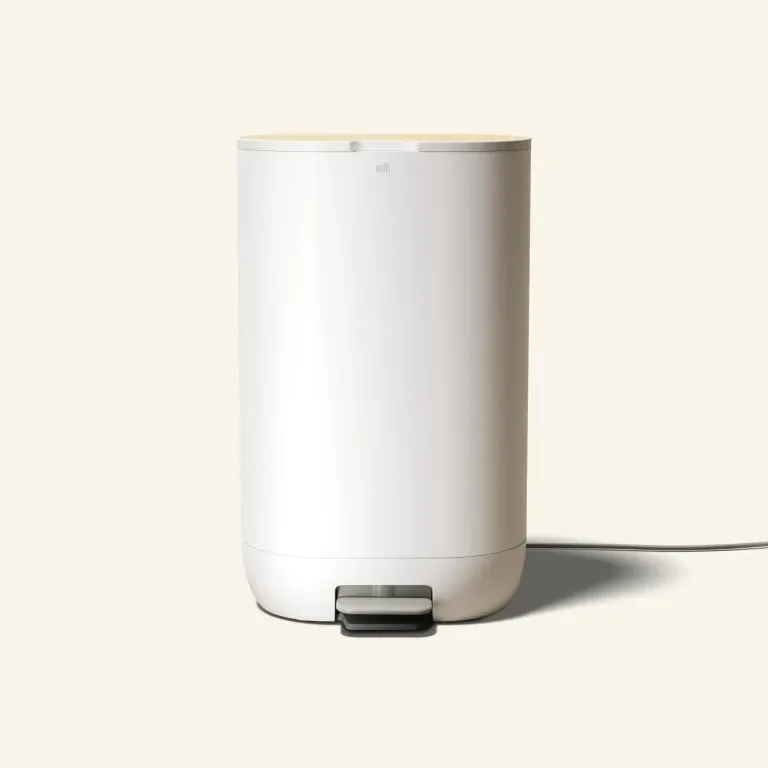
When the chance came to bring the Mill into our home, I committed to a full year of testing—enough time to uncover every strength, quirk, and unexpected delight. Here's the full breakdown.
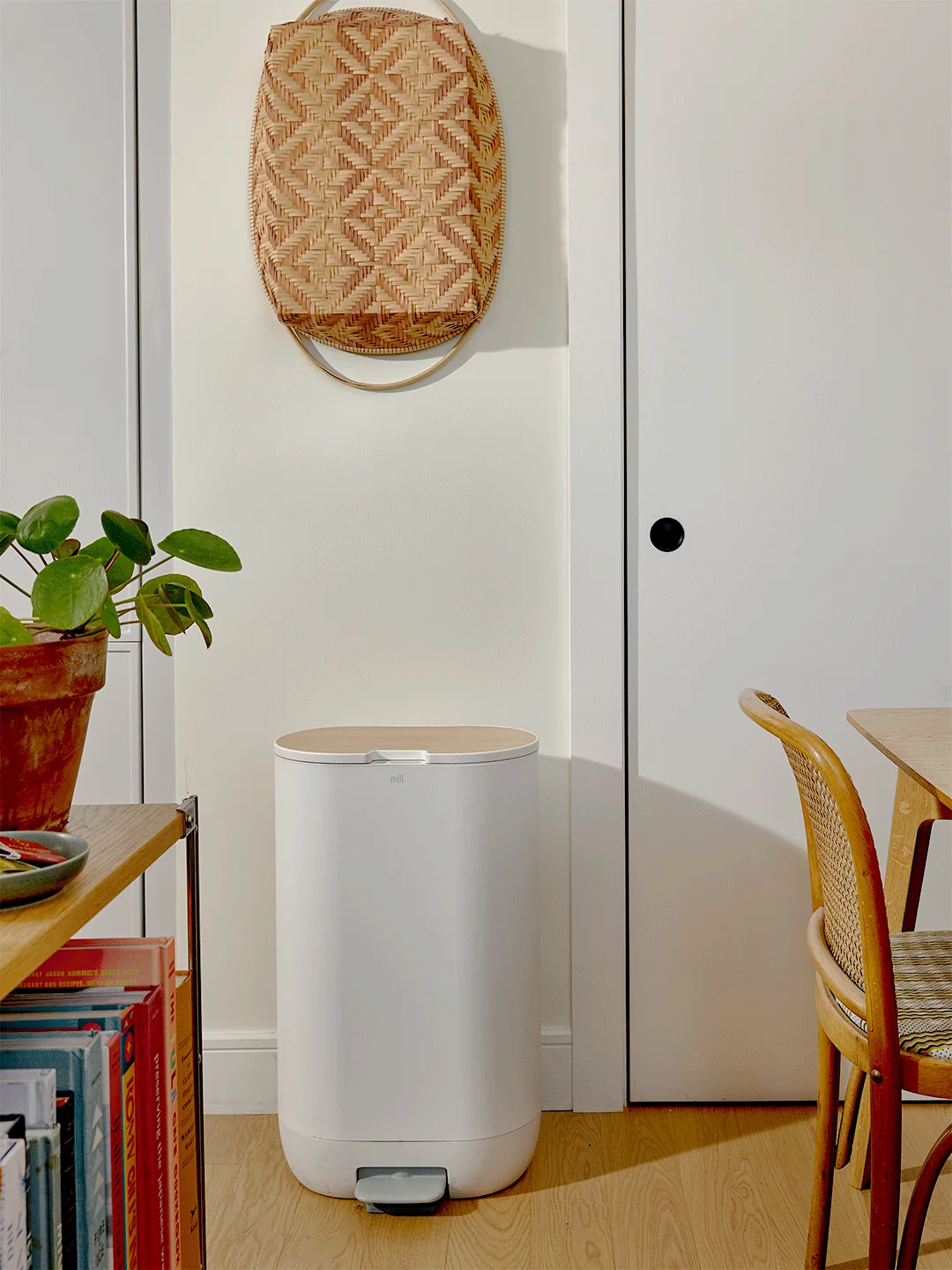
There's no denying the Mill was crafted with design-conscious homeowners in mind—myself very much included. Every detail speaks to intentional design: the crisp silhouette, the sculpted curves, the muted gray foot pedal. It makes sense when you learn the minds behind it also shaped the iPhone and Nest thermostat. My unit is finished in matte white, though the brand expanded its palette to stainless steel and matte black in fall 2025.
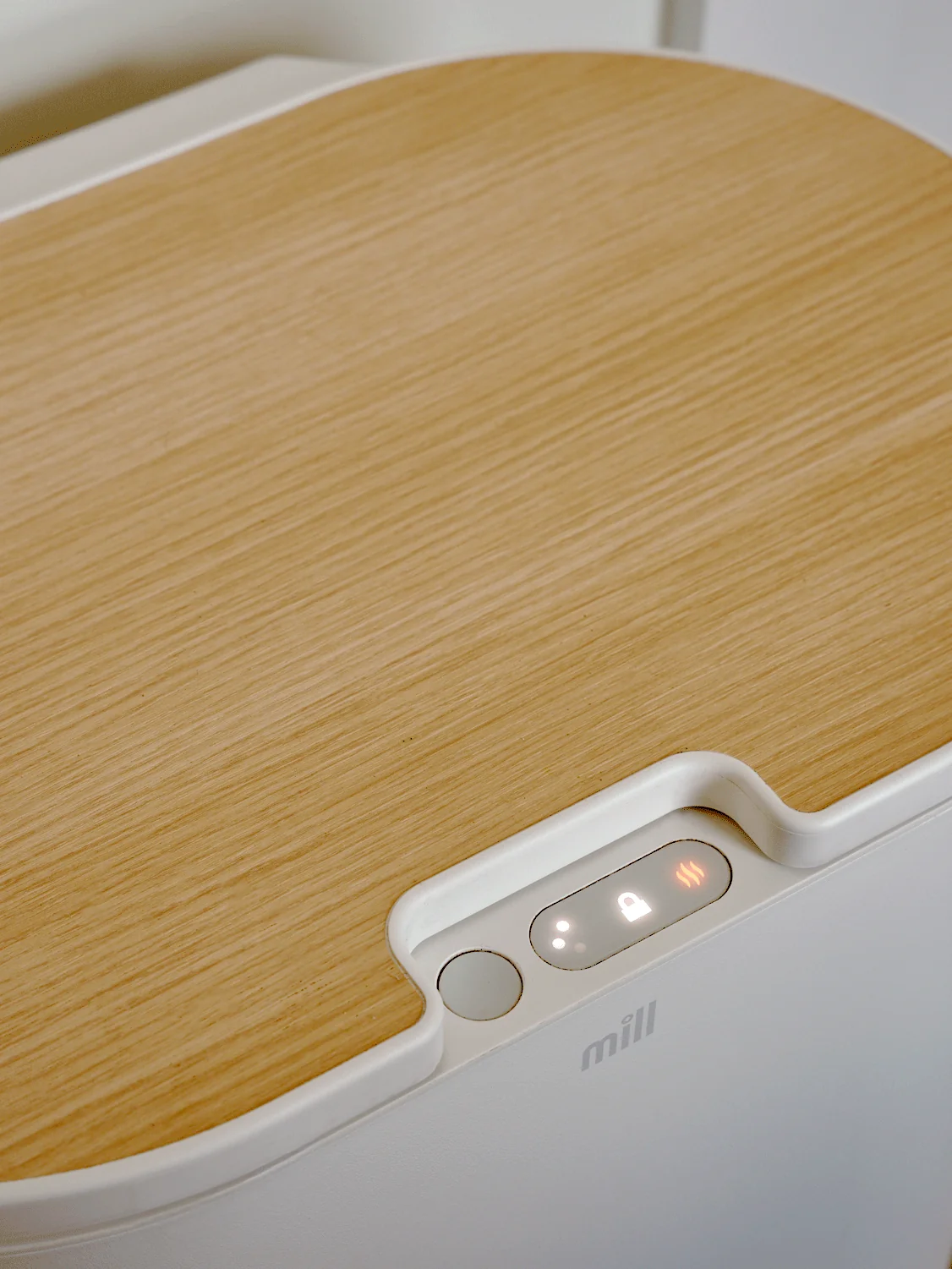
The interface is refreshingly minimal—three intuitive icons on the LED display that communicate everything at a glance. Even the interior bucket's Kelly green metal accents are a deliberate nod to the brand's signature color. In essence, it functions like a trash can, but presents like a piece of refined kitchen hardware.
Getting the Mill running is as straightforward as it gets—literally plug and play. Designed to stand in the kitchen like a standard tall waste bin, it's operational after just a few quick steps. Plug it in, download the companion app and pair it via Bluetooth, calibrate the internal scale, adjust a few preferences, and you're ready to start adding scraps. Even the charcoal filter—responsible for neutralizing odors—comes pre-installed (just remember to peel off the packaging before your first cycle).
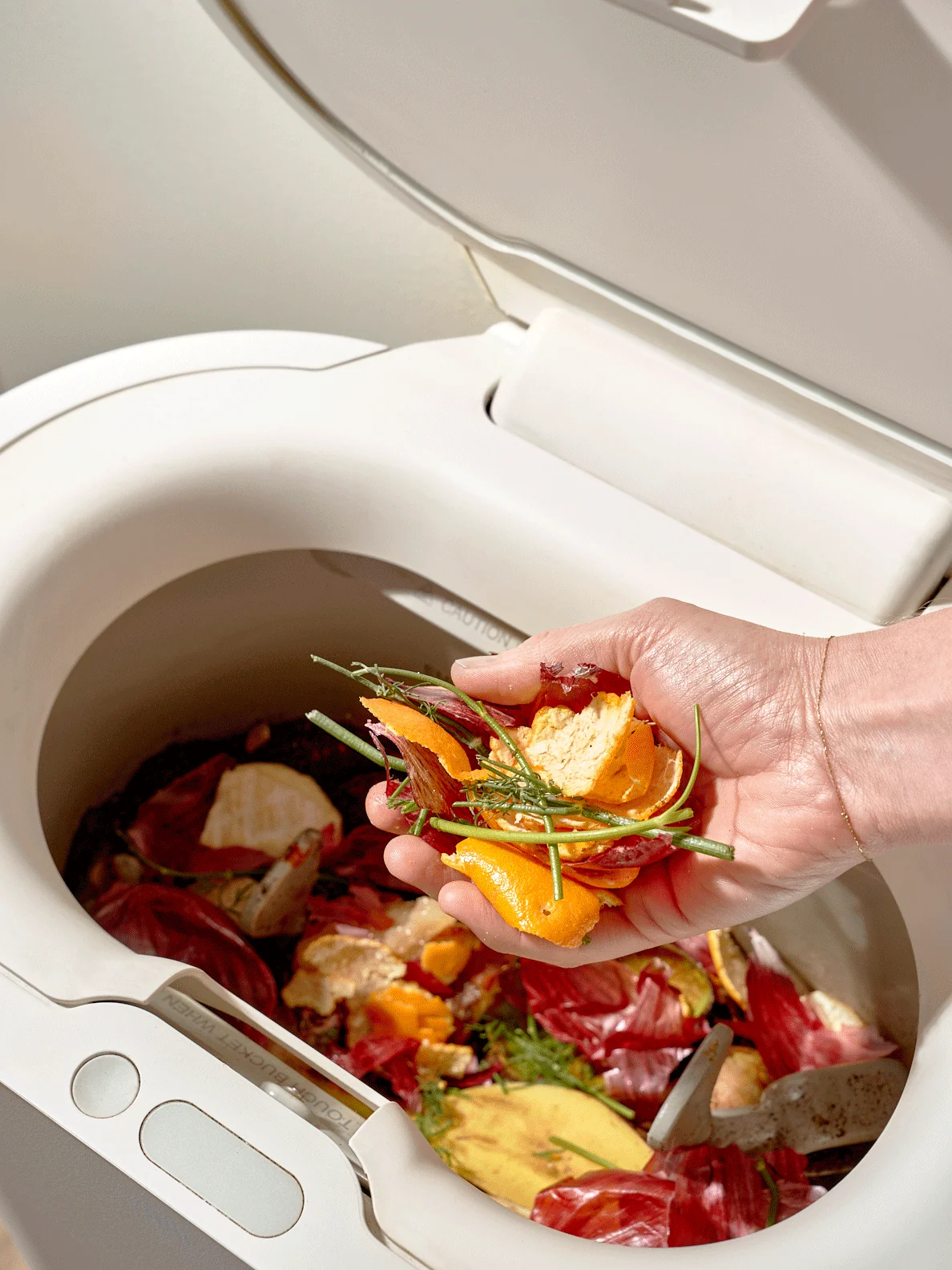
The interior steel bucket accommodates up to 12 pounds of food waste. Rather than tossing scraps into your regular trash, you simply redirect them into the Mill. The motion is identical: press the pedal with your foot, drop in a lemon peel or onion skin.
One of the app's most useful features is the ingredient library—a quick-reference guide to what belongs in the bin and what doesn't. Some surprising inclusions: infant formula, boba pearls, kibble, deli meat, raw fish, and even chicken bones. Fresh-cut flowers are also permitted, provided the grounds are headed to a compost bin rather than a chicken coop—certain blooms can be harmful to poultry.
On the flip side, compostable serviceware and biodegradable packaging aren't compatible. And you'll want to minimize high-sugar items and excess liquids, which can extend cycle times, draw more energy, and leave residue on internal components.
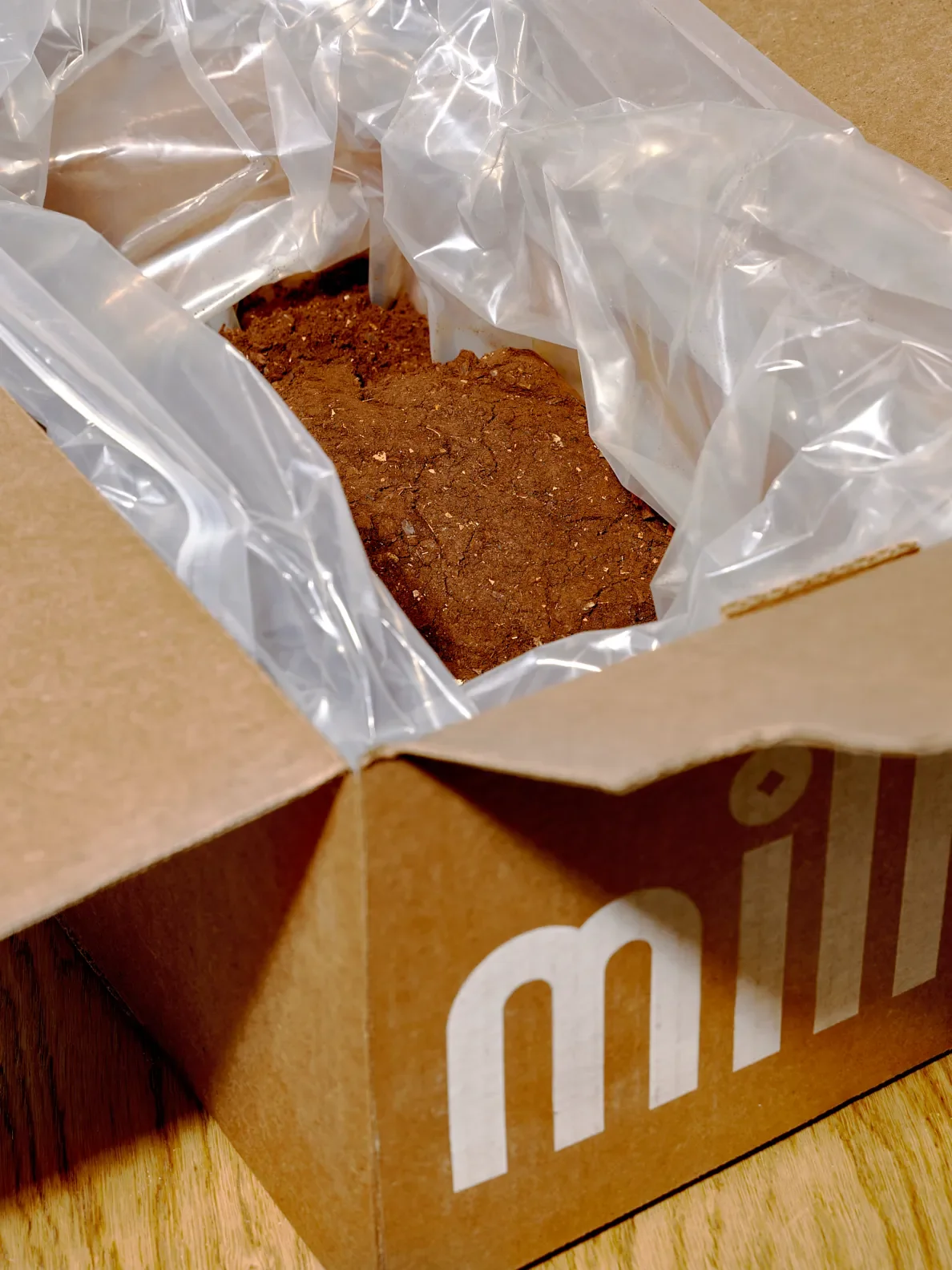
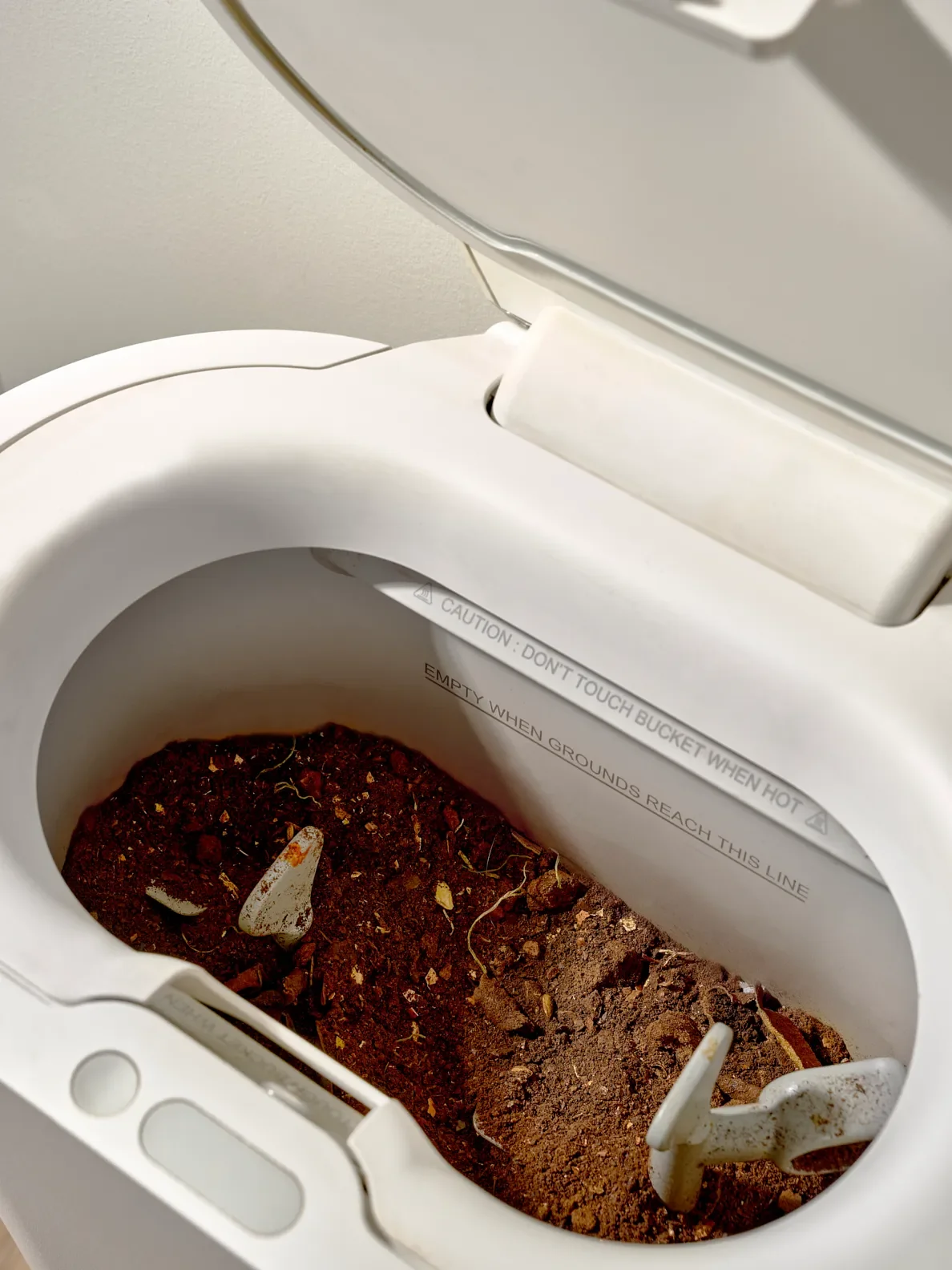
We set our Mill to run on an automatic overnight schedule regardless of fill level; that way it continuously reduces what's inside as we add more throughout the day. (If an unusually large batch accumulates mid-cycle, you can trigger an additional run from the app or by tapping the bin itself.) Inside, dual stainless-steel augers rotate and heat contents to 212°F, yielding germ-free, shelf-stable grounds. It's worth noting that Mill calls the output food grounds rather than compost—these are dehydrated, nutrient-rich crumbs. They can enrich garden beds, feed backyard chickens, go into municipal compost streams, or be shipped to a processing partner using prepaid boxes the brand supplies at no charge.
Our grind cycle kicks off at 10 p.m. each evening, and though we typically skip the lock function (I'm known to sneak in a banana peel as it starts churning), it's available for households with inquisitive toddlers or pets. The cycle can stretch on—after a dinner party or an ambitious cooking session, it's sometimes still running when we wake up.
You might assume that kind of daily operation means hefty energy bills. I asked cofounder Harry Tannenbaum directly, and he explained it's surprisingly modest. The app tracks consumption in kilowatt-hours (kWh)—roughly 0.7 kWh per day on average. Our lightest month clocked in around 11.5 kWh, comparable to running a dishwasher eight times. Our heaviest hit 32.1 kWh, or about 22.5 dishwasher cycles. In New York City, that translates to a monthly cost between $3 and $8.
With food scraps no longer sitting in our trash, the kitchen smells noticeably fresher overall. The Mill's snug lid and activated carbon filter do an admirable job containing any odors from the bin itself. Occasionally, when a heavy load is mid-cycle, the apartment carries a faint brownie-like aroma—understandable, given the heat and motion. It's not unpleasant, just momentarily bewildering when the oven is cold and there's nothing baking.
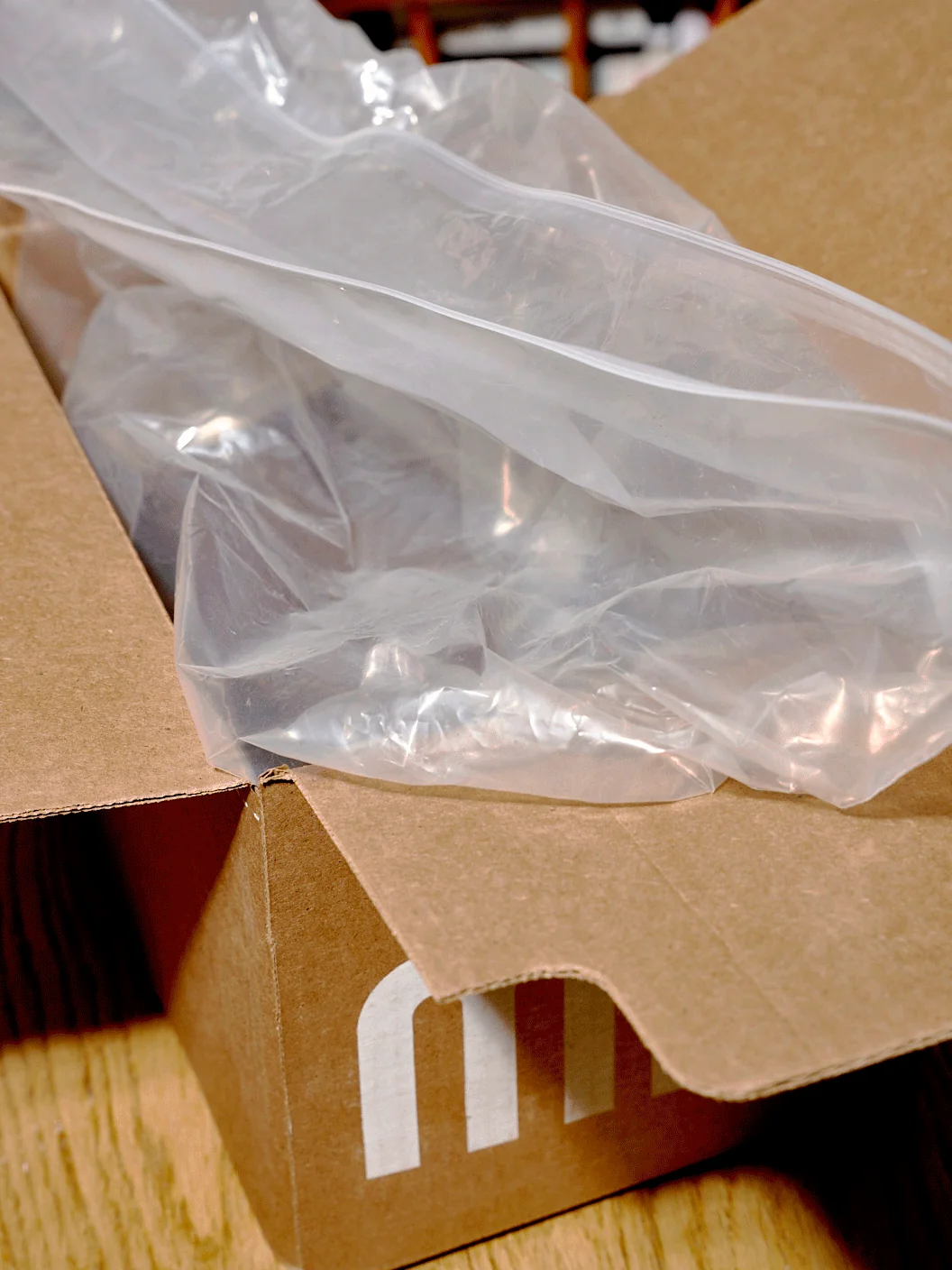
Over twelve months of daily cooking and consistent use, we've packed and shipped only five boxes of food grounds. Yet according to the bin's own tracking, we've kept more than 400 pounds of organic waste out of landfills. That's the real brilliance of the Mill—the overnight dehydration cycle collapses a full bucket of wet scraps into a fraction of its original volume. Compare that to our old countertop composter, which demanded emptying every few days. With the Mill, we're on a once-a-month schedule.
The trade-off is that the bucket isn't featherlight, especially when loaded with grounds. And the 13" x 8.25" x 7.5" shipping boxes do occupy real square footage once assembled.
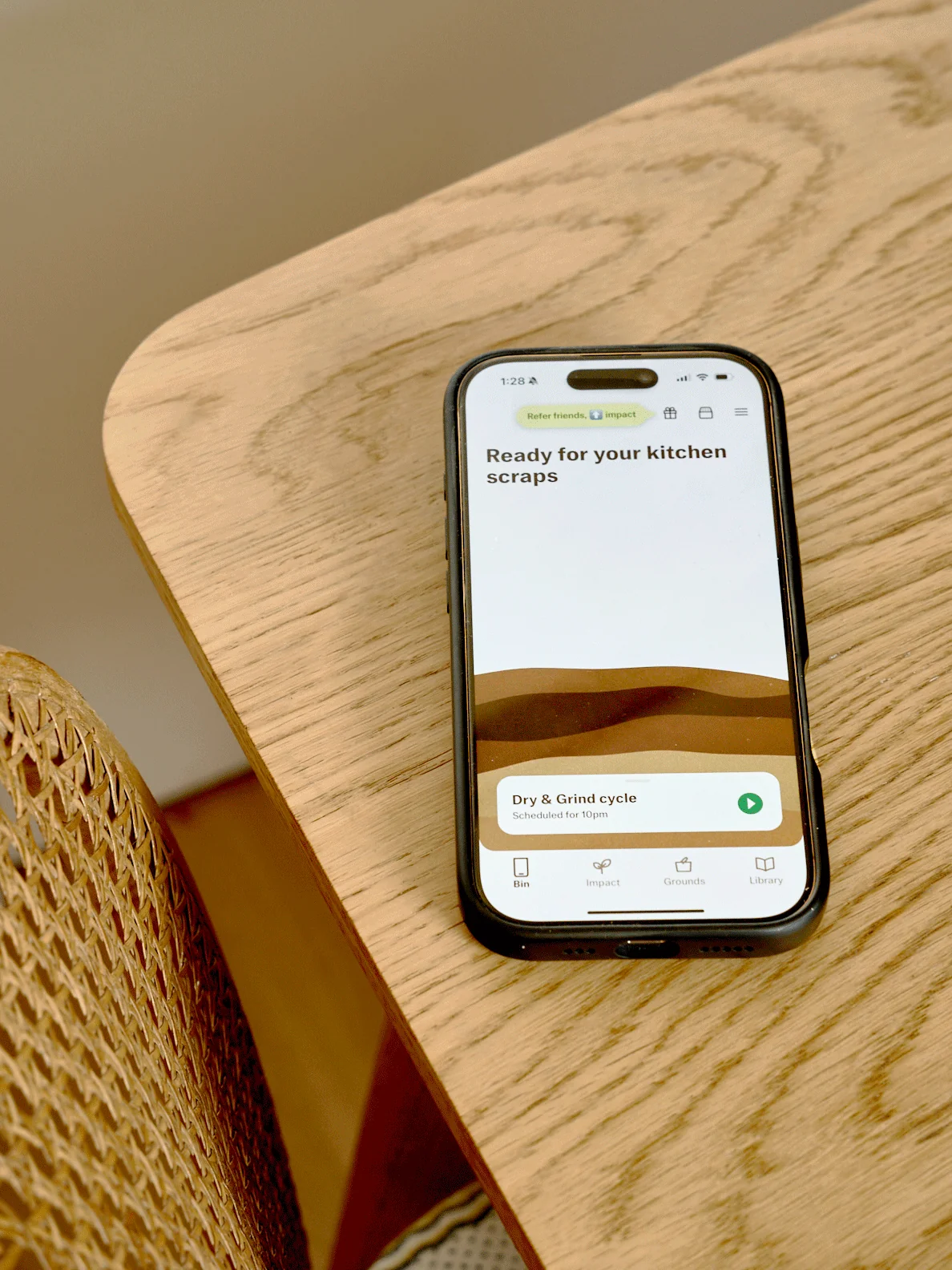
The companion app is a rich hub of data, logistics, and practical guidance. We can track whether our shipment arrived, monitor cumulative impact, and browse tips for using our grounds. Since we route ours to Mill's partner farms—where they're processed into animal feed—we can see that our contributions have supplied a month's food to over 40 chickens. Replacement boxes can be requested at no charge through the app, and new filters are available for purchase there as well.
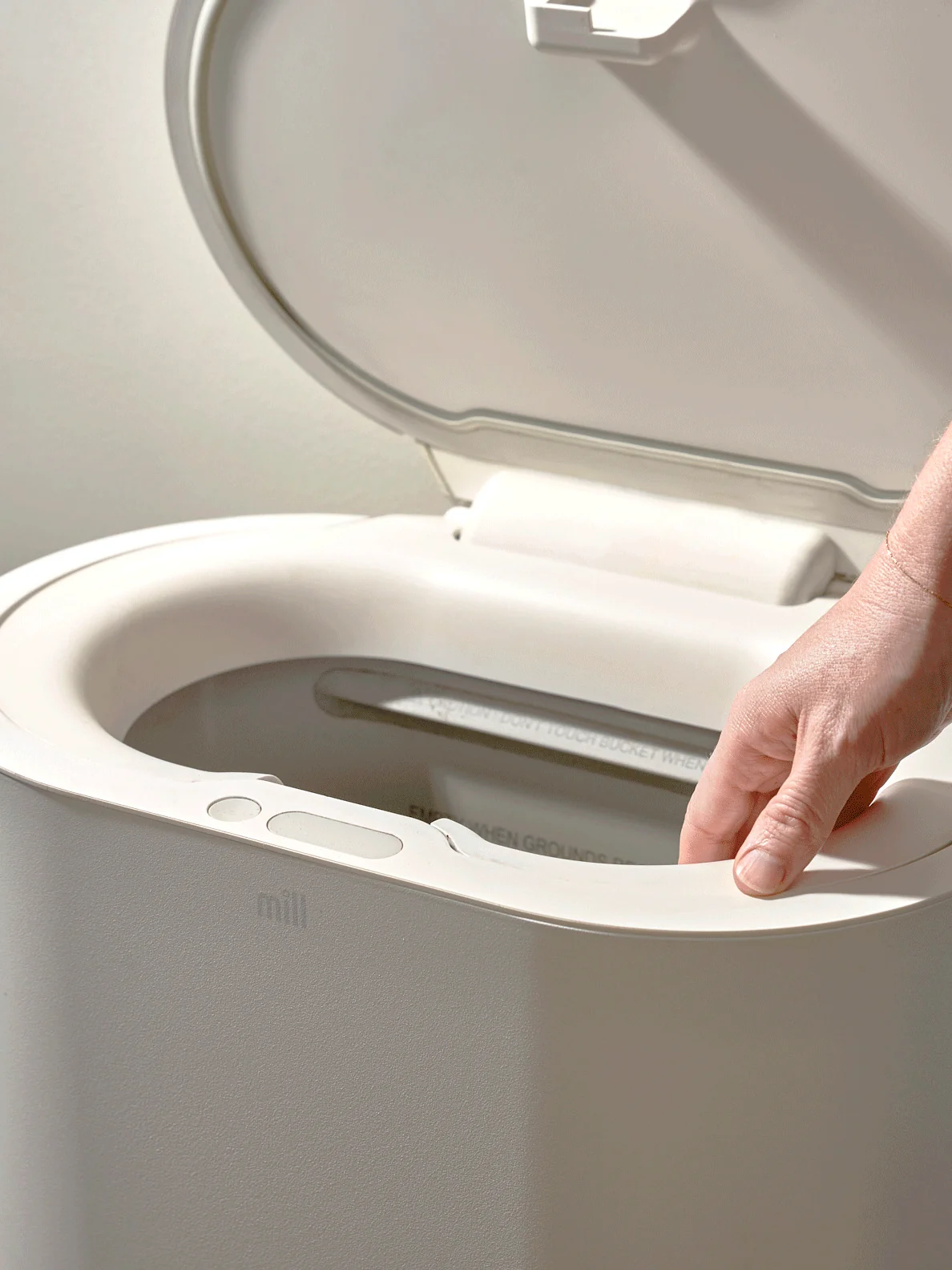
Residue does build up over time, so periodic wipe-downs are wise. A standard all-purpose spray handles fresh splatters on the exterior, but I found a melamine-foam eraser far more effective on baked-on interior stains. Mill advises replacing the carbon filter once a year, though I haven't yet and haven't noticed any lingering odors.
Let's be direct: the Mill Food Recycler retails at $999, with rental options between $30 and $35 per month. That's a significant leap from a basic countertop compost bin, but the engineering inside justifies the gap. (And the brand does run promotions periodically, if that helps soften the entry point.)
If you have a yard, access to robust municipal composting, and genuinely enjoy the ritual of tending a compost pile, the Mill probably isn't essential. A simple bin and some compostable bags will serve you just fine.
But if you've tried that route and found yourself overwhelmed by the mess, the smell, the time, and the logistical hurdles, this could be the answer. The same goes for avid cooks who care deeply about reducing food waste but lack access to a reliable composting system. I recommend it wholeheartedly. The refined aesthetic, the real-time data on my environmental impact, and the sheer convenience of discarding scraps instantly rather than hoarding them for a weekend drop-off are genuinely transformative. Finding room for it in our compact kitchen was one of the easiest decisions we've made.

Samantha Weiss-Hills is the managing editor for Domino. She edits and writes home tours and features, and she's the friend who everyone texts for glassware, sofa, and sheet recommendations. She lives in Brooklyn with her husband, Alex, and their beagle-corgi, Elsa.

Belle is the in-house photographer and associate photo editor for Domino, capturing everything from home tours to gift guides, plus the occasional how-to project. She joined the photo team as an intern in 2018 and was brought on full time in January 2021.
Learn more about Domino.comEditorial Standards
More from this layout

 FM-5981
 · Other
Before & After: Curated Auction Finds and Timeworn Brass Give This Connecticut Kitchen Its Soul
FM-5981
FM-5981 · Other
Before & After: Curated Auction Finds and Timeworn Brass Give This Connecticut Kitchen Its Soul

 FM-4543
 · Other
The Alfresco Kitchen Has Finally Come Into Its Own This Season
FM-4543
FM-4543 · Other
The Alfresco Kitchen Has Finally Come Into Its Own This Season
 FM-8498
 · Other
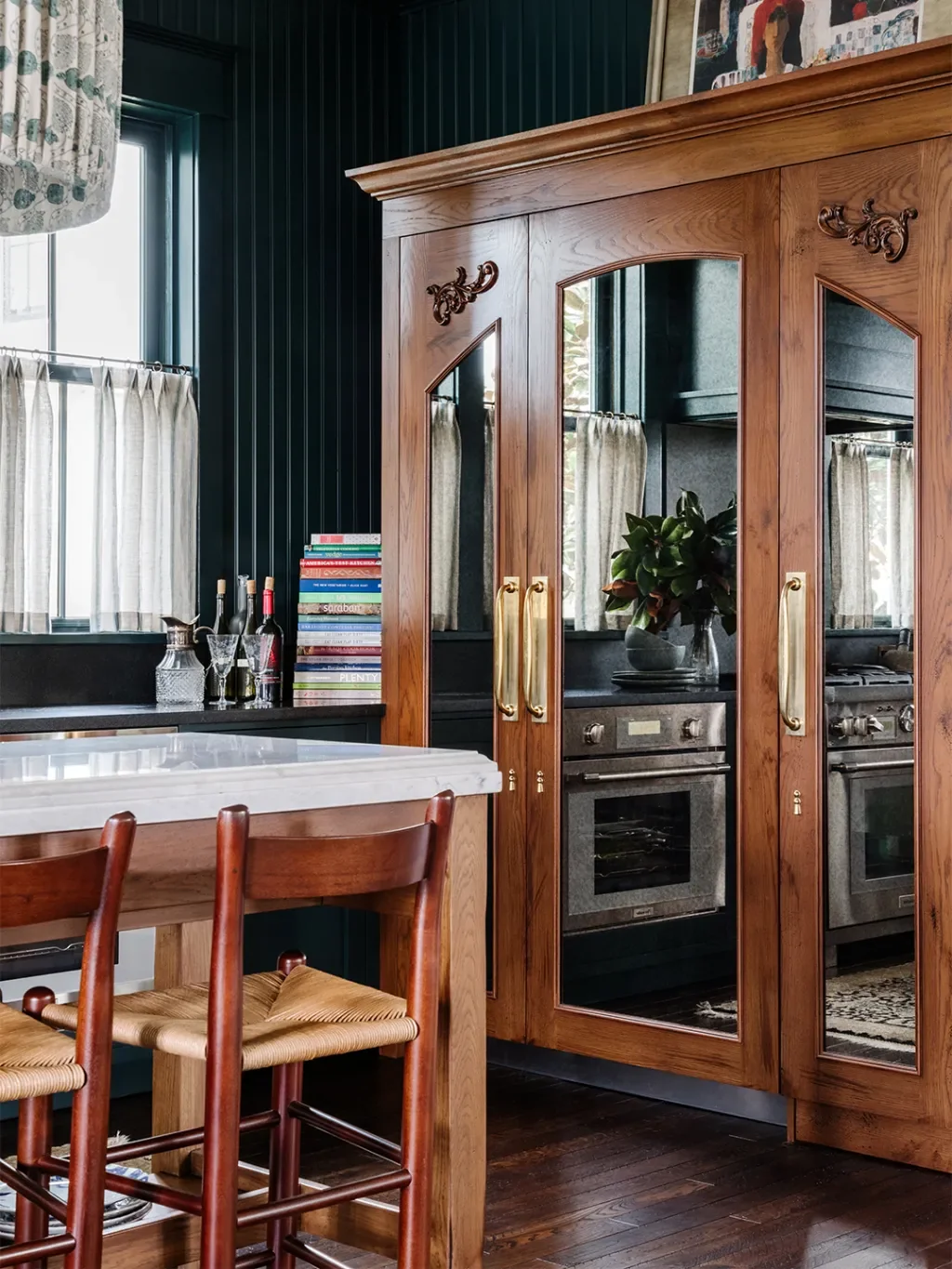
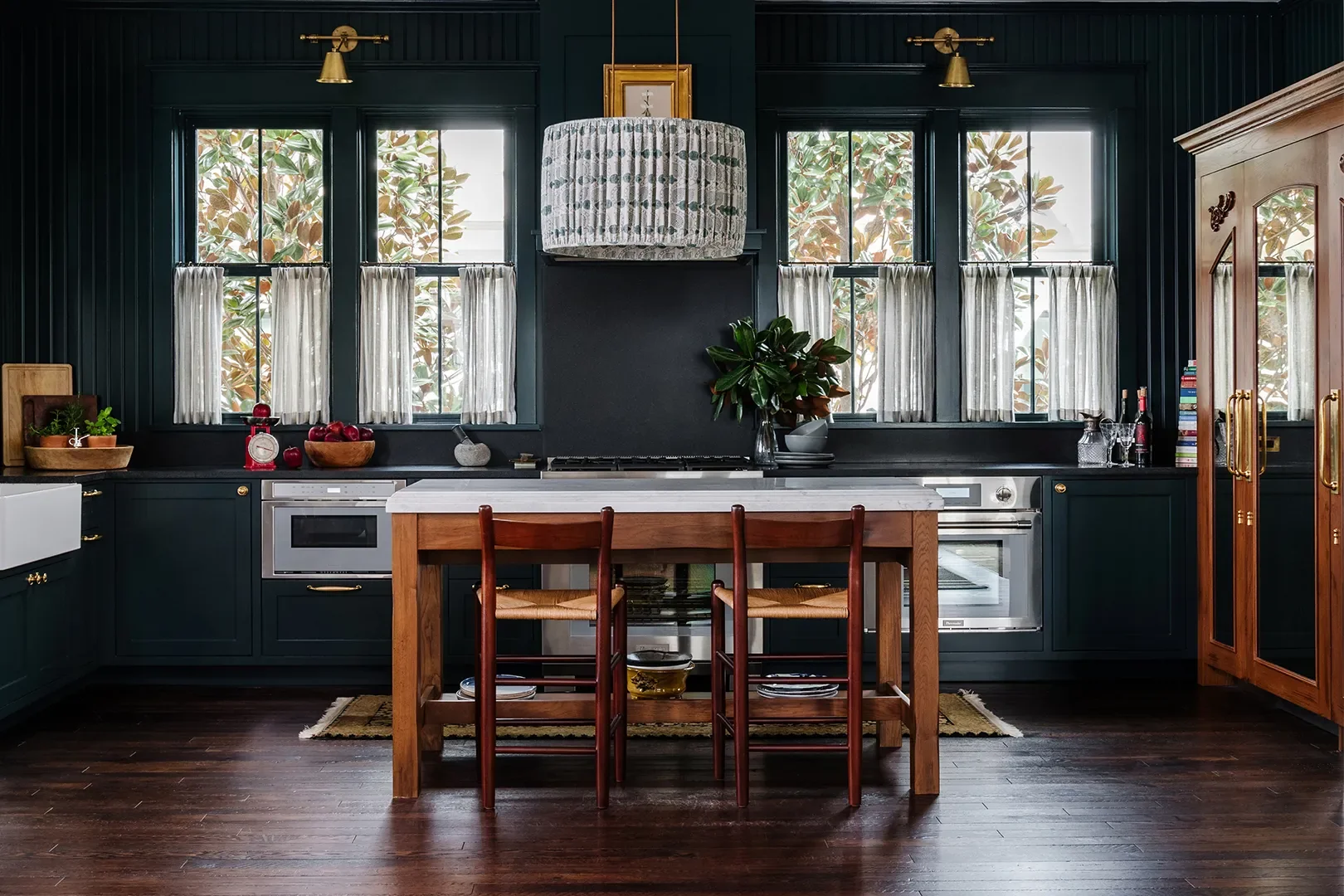
Inside a Florida Kitchen Whose Disguised Armoire Conceals a Refrigerator and a Hidden Pantry Passage
FM-8498
FM-8498 · Other
Inside a Florida Kitchen Whose Disguised Armoire Conceals a Refrigerator and a Hidden Pantry Passage