ByAnthony Earle,As Told ToElizabeth Kiefer
PublishedJan 12, 2026 11:36 AM EST
We may earn revenue from the products available on this page and participate in affiliate programs.
Sign Up for Domino’s Newsletter
By signing up, you confirm you are 16+, will receive newsletters and promotional content and agree to ourTerms of Useand acknowledge the data practices in ourPrivacy Policy. You may unsubscribe at any time.
A beautiful kitchen that doesn’t function flawlessly—or hold all of your belongings—simply isn’t defensible. Our driving ambition at Artichoke, the Somerset, U.K.–based studio where I’m lead concept designer, is to create spaces that work so well, and sit so naturally within the house, that you’d never feel the need to alter them. To that end, one of the most critical steps in our process is testing the layout against what we call the aid memoir: an itemized list of the hundreds of objects a homeowner owns, from saucepans to peelers to barware and beyond. A design doesn’t advance until we’ve accounted for where every last one of those pieces will live.
At the same time, we never want a kitchen to read as though storage dictated the design, with cabinetry sprawling everywhere. Over the years we’ve built up an arsenal of tricks for slipping smart storage into a space without sacrificing the aesthetics. Below, a selection of our greatest hits.
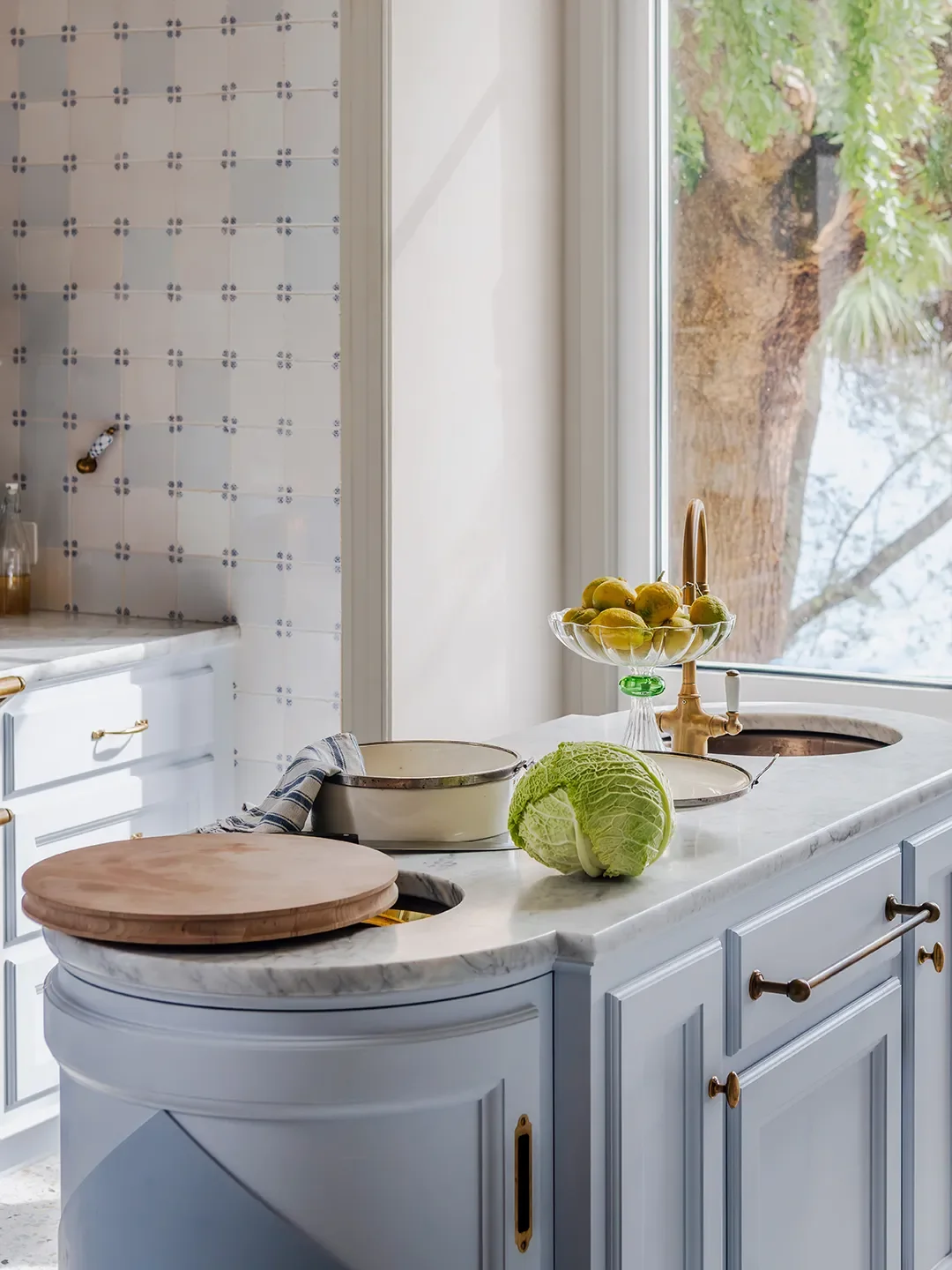
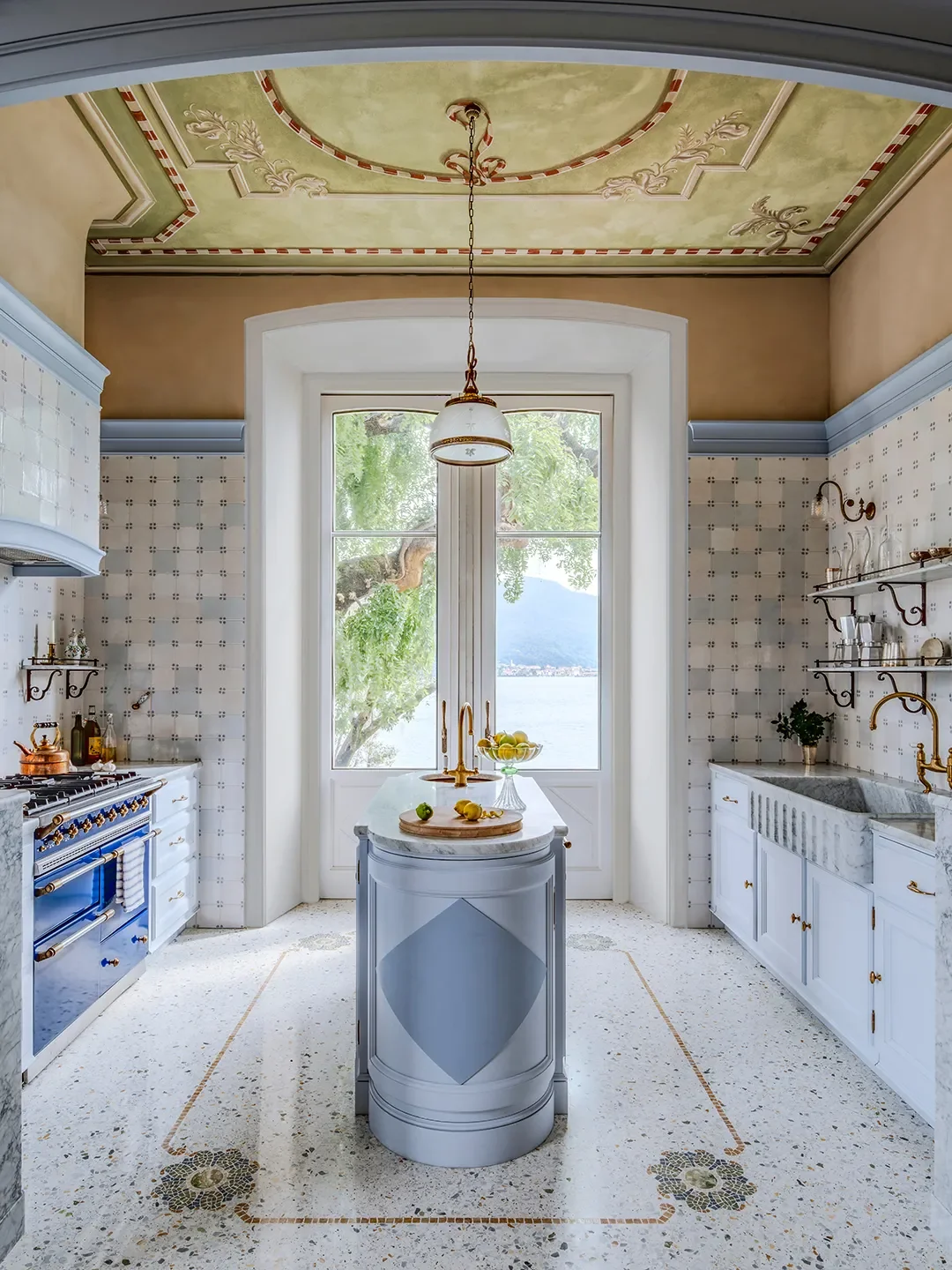
In this kitchen, the island was fairly compact and offered little prep room, so we shaped the ends into half-circles. The sink sits at one end and a round cutting board at the other—which also serves as the lid for the compost chute. We built a bespoke brass track that discreetly slides the board aside; it lifts out, too, so once you’ve chopped your tomatoes you simply tip the board and the scraps glide down a brass shoot into a melamine bin, with no awkward, drippy corners for debris to gather. To pull the bin, you open the curved door at that end of the island.
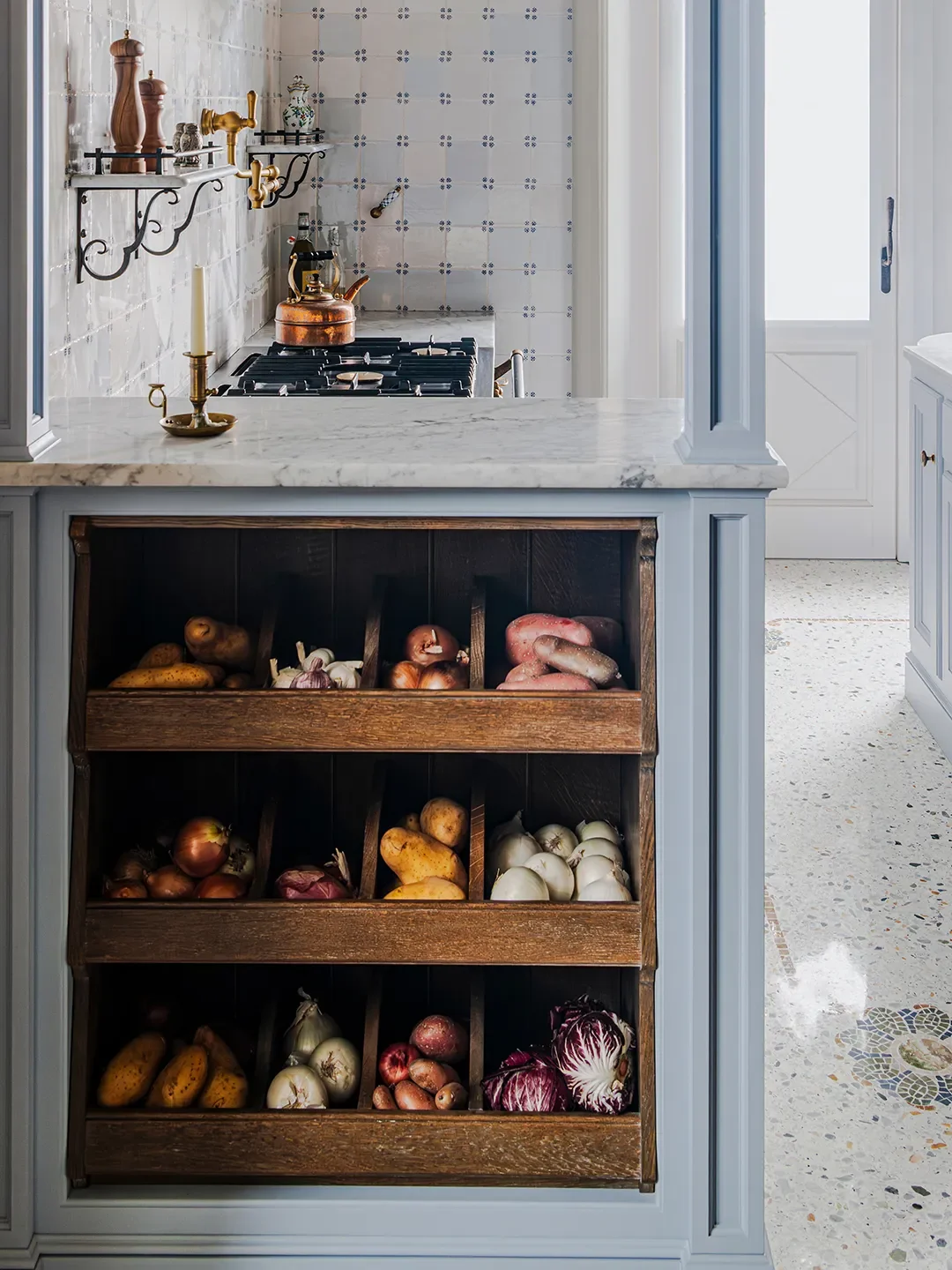
This comes from the same kitchen as the compost bin, a villa on Lake Maggiore, Italy. The client loves wandering down to the local market with a basket, returning with beautiful produce, and stowing it all in his oak vegetable rack. We designed the dividers to move—if you need a larger bay for potatoes and a smaller one for shallots, it’s simple to reconfigure. For someone who burns through fresh produce quickly, the rack is clearly practical, flexible storage. But there’s also something wonderfully painterly about this little corner: a spot to display lovely oranges with their leaves still attached beside a gorgeous burgundy radicchio.
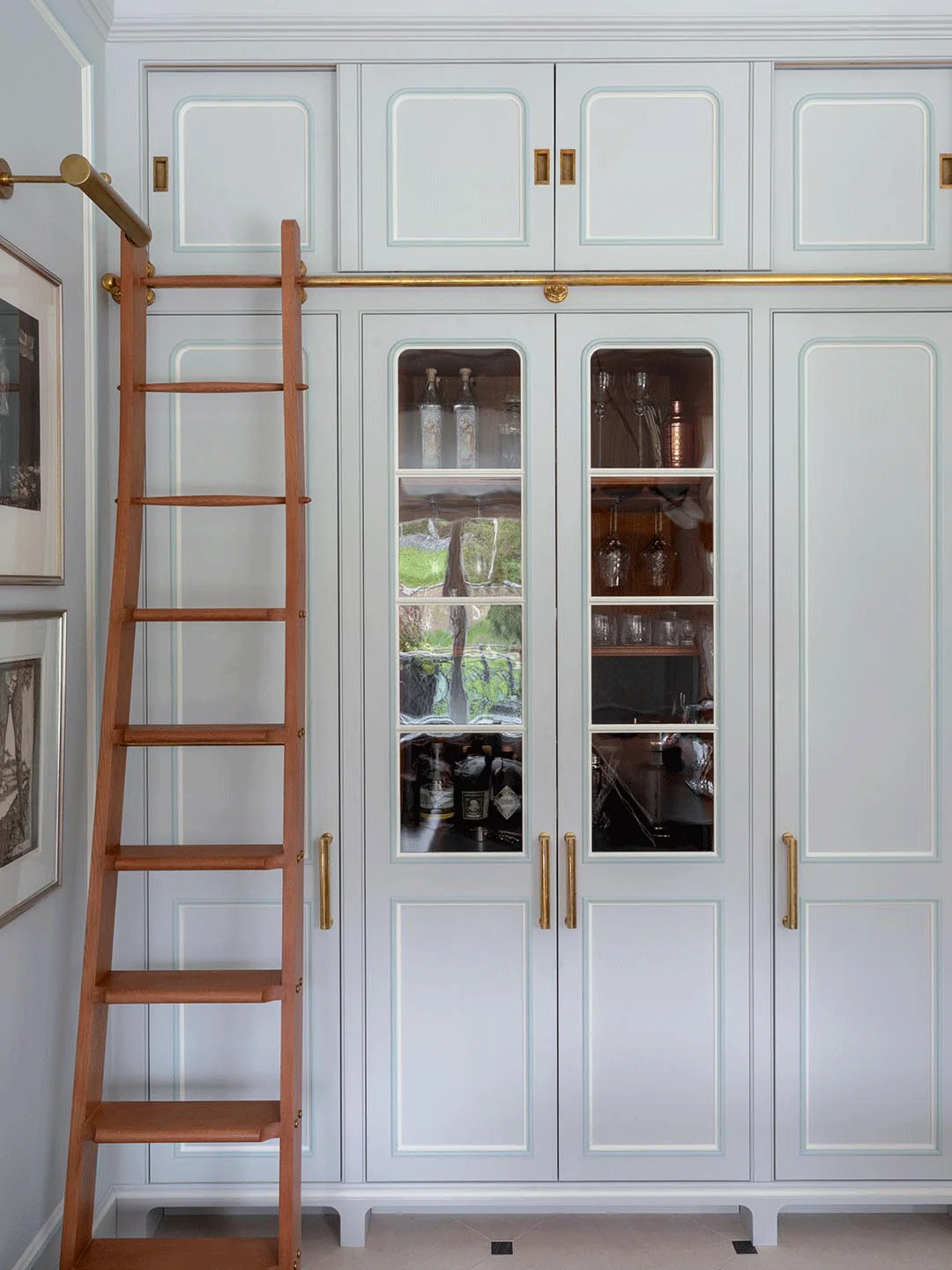
For this bar cabinet, in a historic Swiss estate, we chose glass fronts to break up the run of doors. And while a built-in bar with dedicated space for glassware and cocktail essentials is a storage solution in its own right, it’s the fold-back doors that are especially satisfying. “Flapping around” is a phrase you’ll hear around our office a fair bit—“that’s just going to flap around”—and giving the doors somewhere to disappear helps solve it. Here, though, you can simply leave them open when you want the bar within reach.
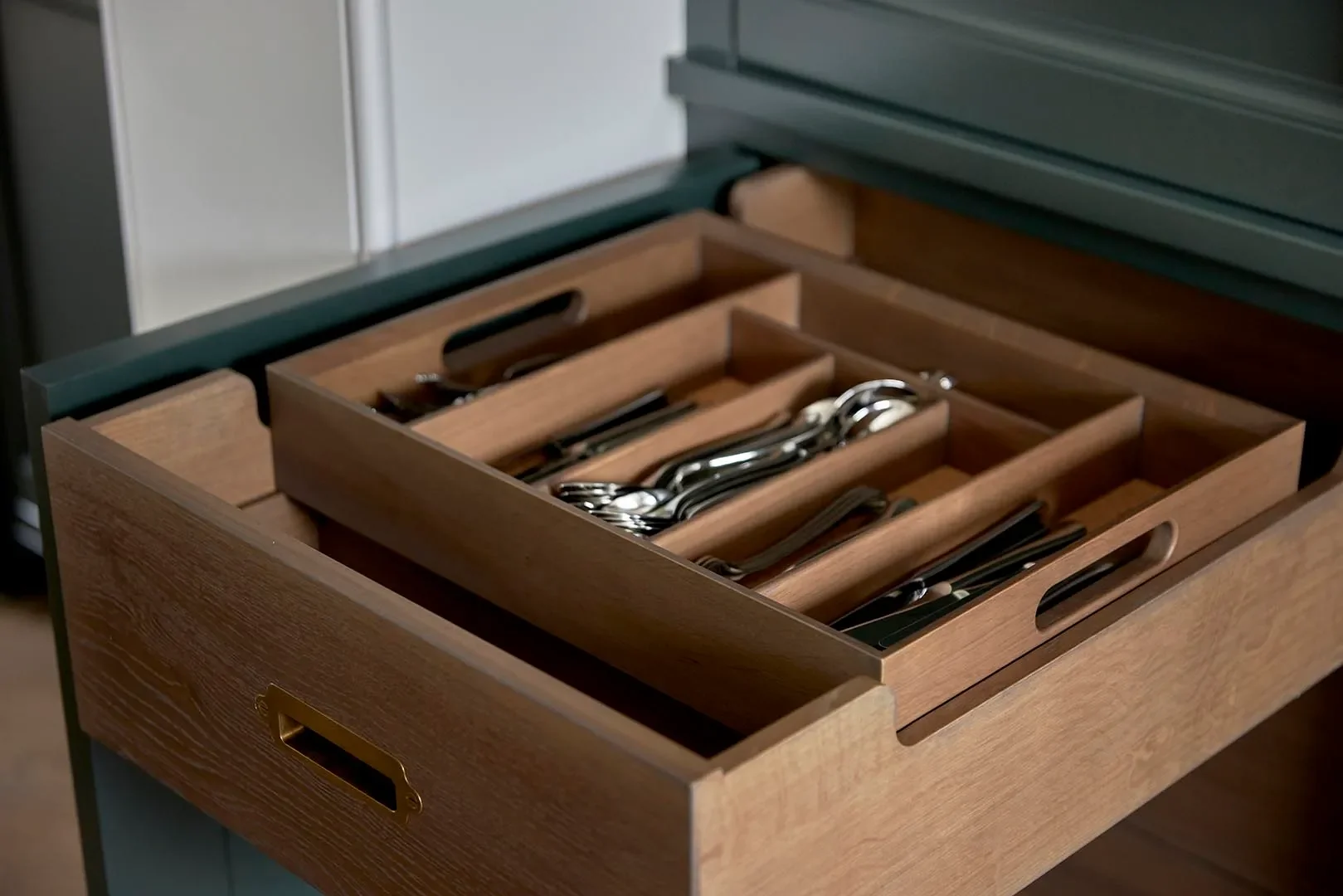
We lean on these trays constantly, particularly in islands and cook tables, which tend to have deep drawers. They function almost like a small mezzanine within the drawer: keep cutlery or silverware in the removable tray up top, then stow items beneath—foils and the like. A thin lip along the drawer side cradles the tray, making it easy to lift in and out. We do a variation on this, too: a knife block that slides within the drawer so you can reach the space below it.
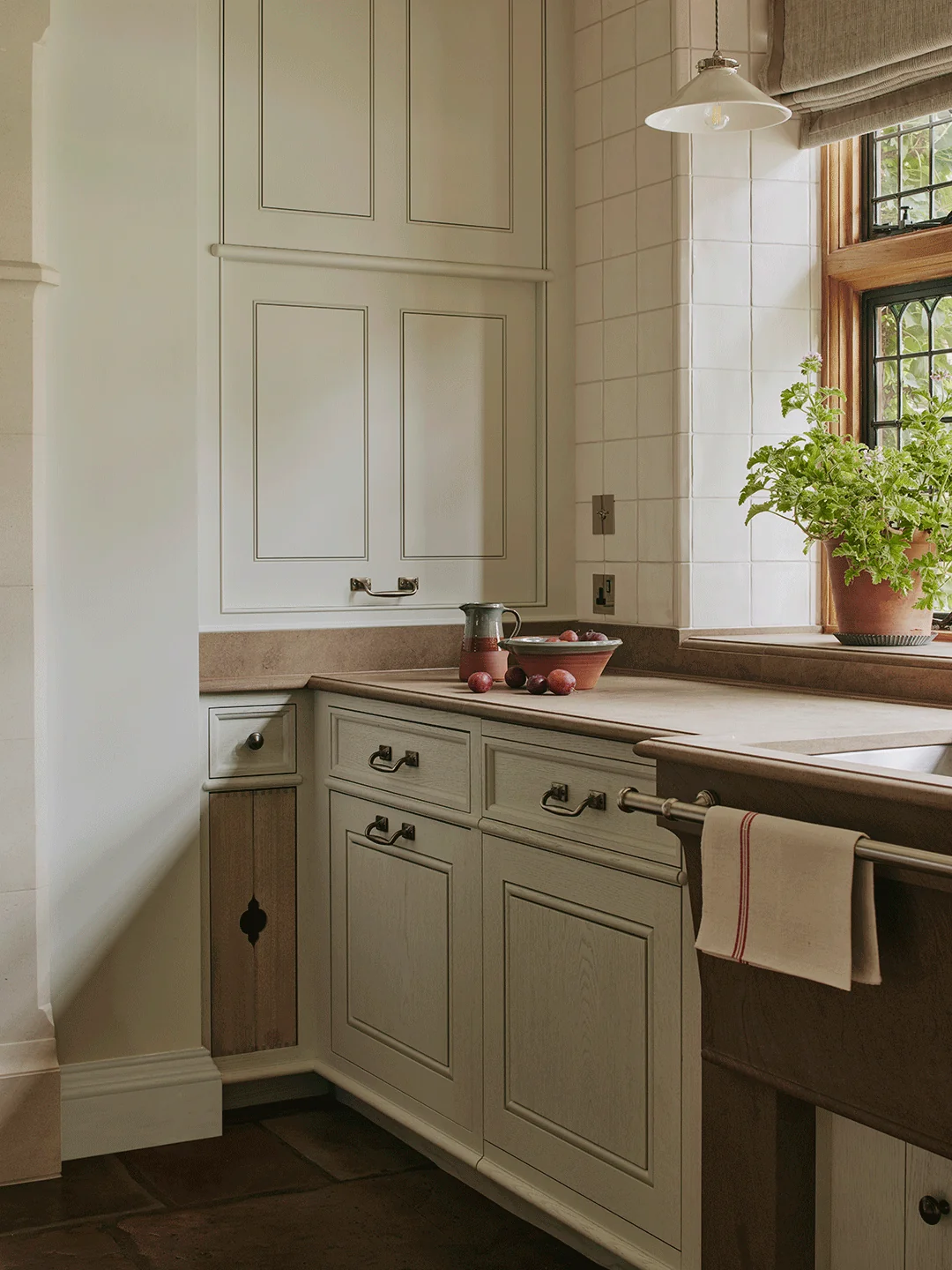
A dumb waiter is essentially a small elevator for moving food and drink between floors, and it’s common enough in grand historic estates like this grade II house in Cheshire. Here, we more or less merged the look of a dumb waiter with the function of an appliance garage. It suited the layout because we had cabinetry running along one wall and a counter returning at the corner, making smart use of otherwise dead space. Rather than a hinged door, which would have been intrusive, the coffee bar’s door slides upward—and when it drops back down, the coffee station simply disappears.
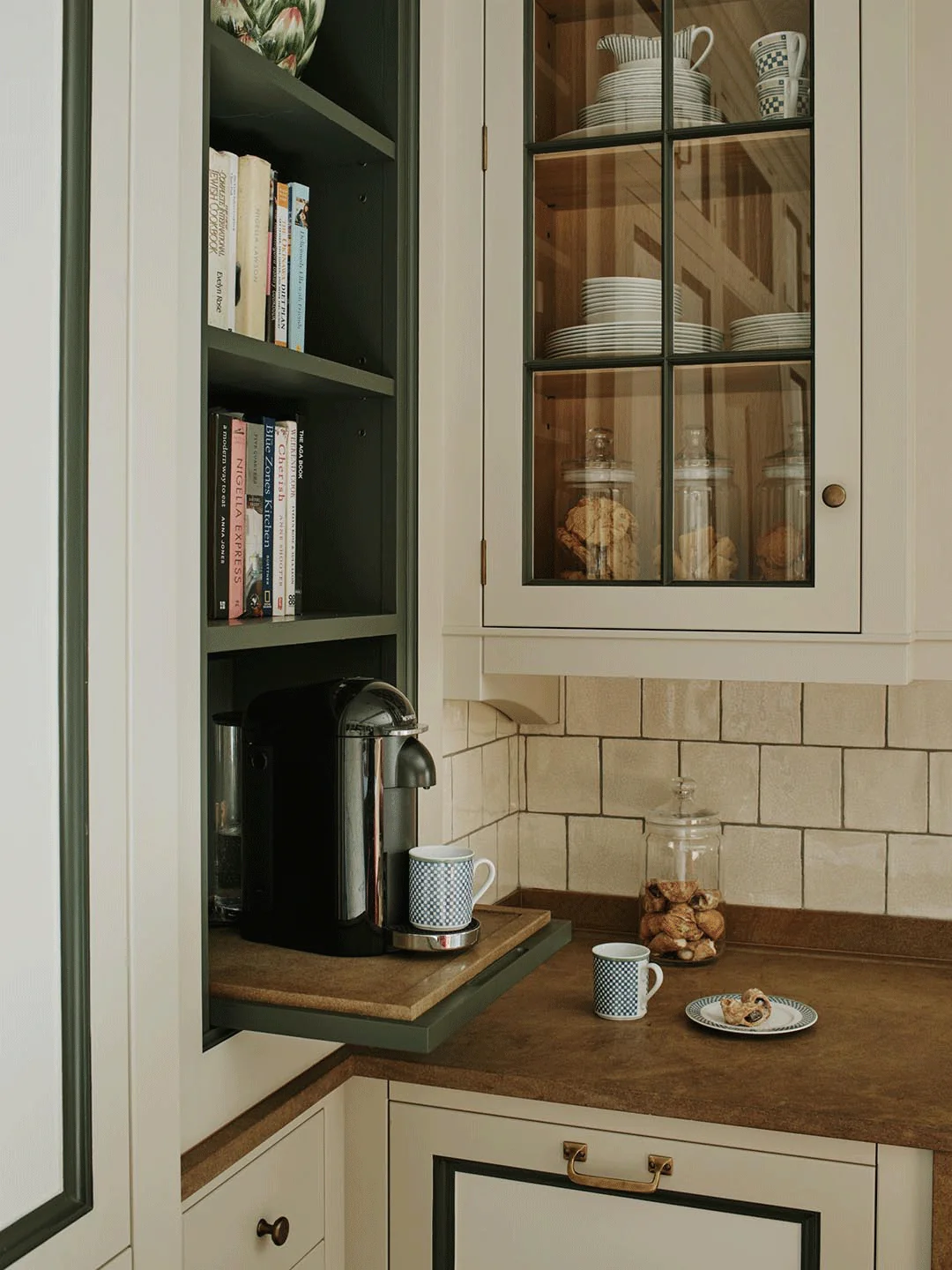
Whenever we carve out space for a small appliance, we’re also thinking through the everyday maintenance. With this little espresso machine, we considered how the client would refill the water—far simpler if the shelf simply slides out. And while it’s open storage, once the machine is stowed it recedes from view, with no flapping door to wrestle. In truth, eliminating “flappiness” might be the overarching theme of stealthy storage.
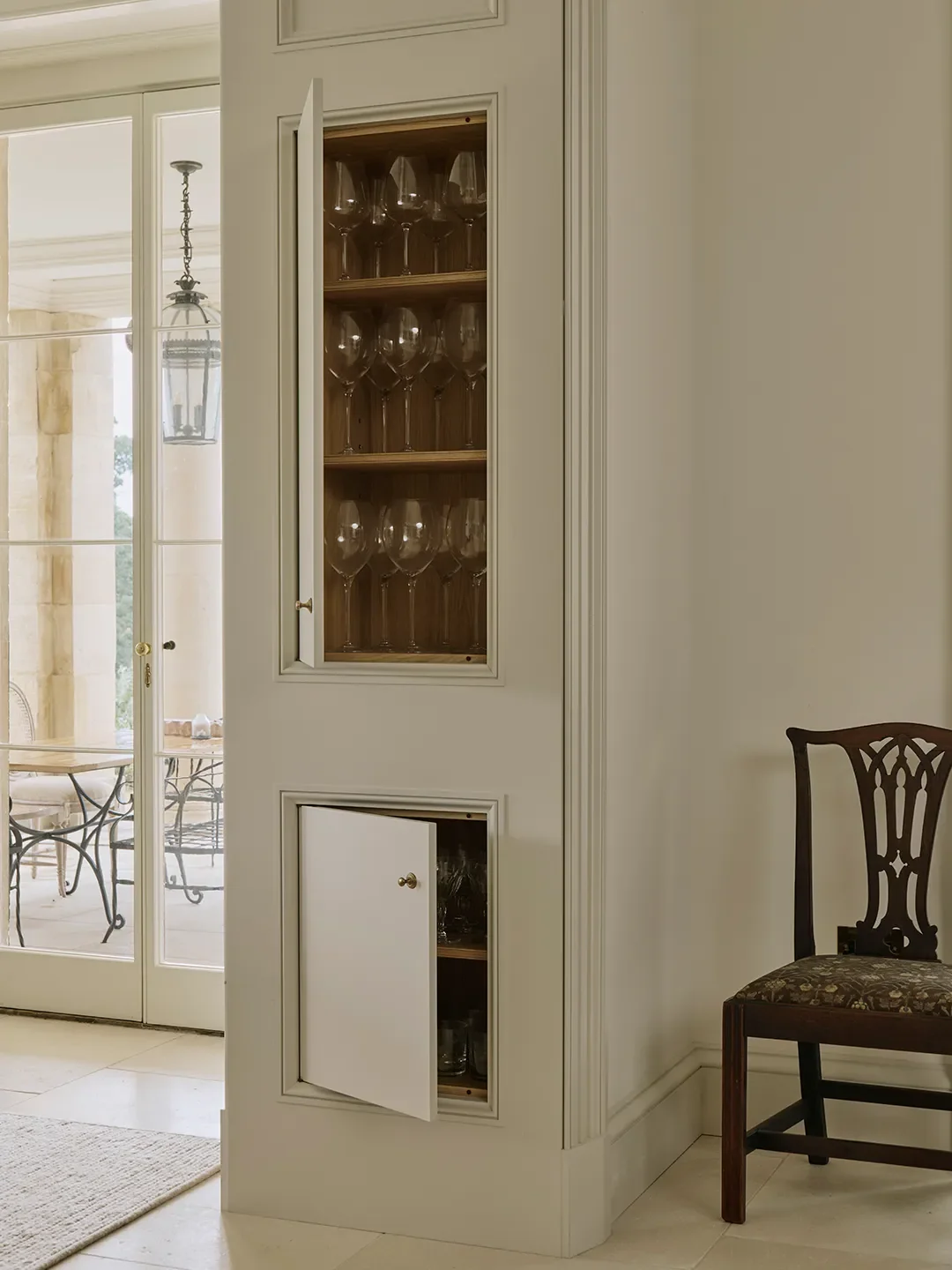
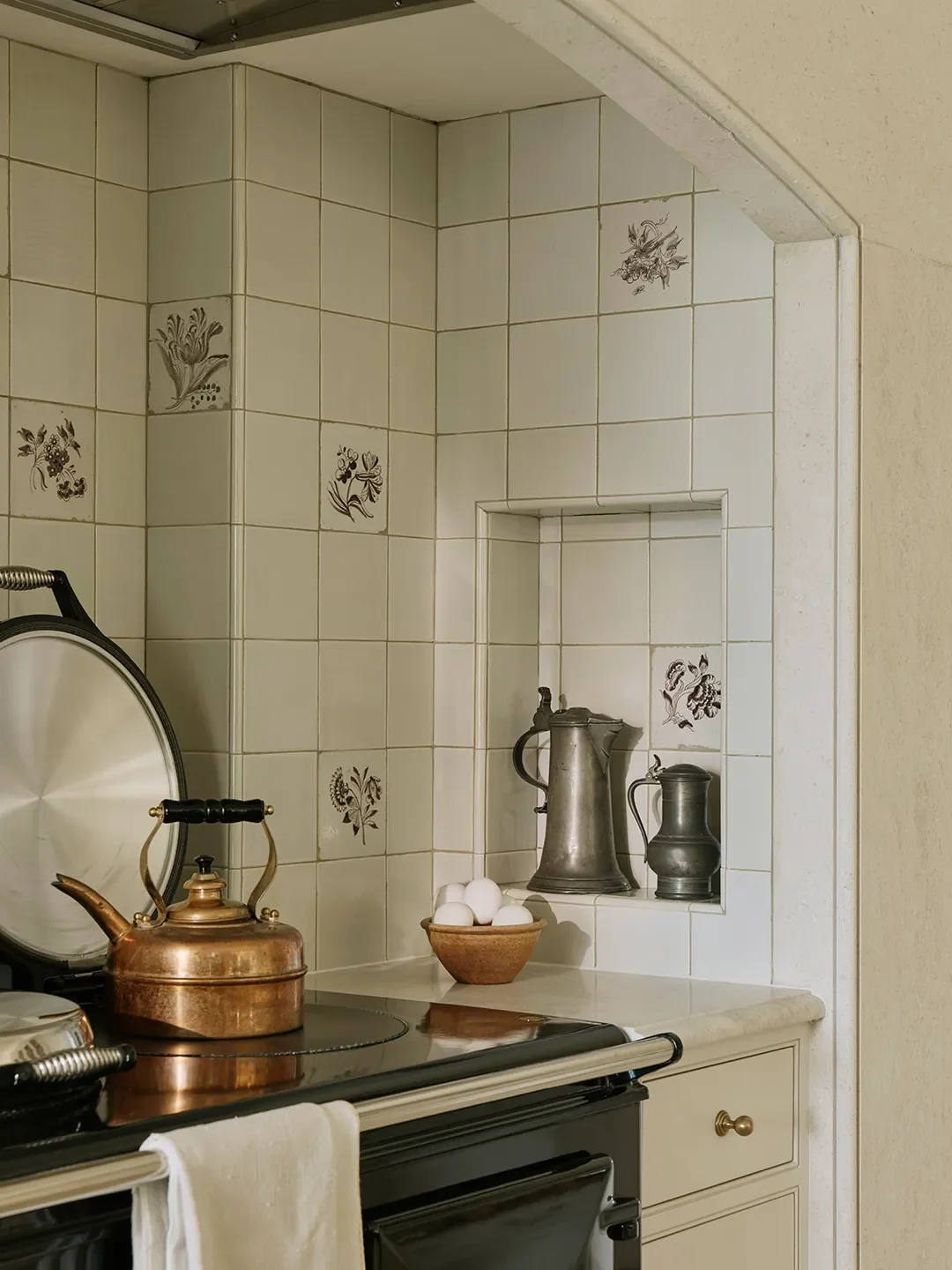
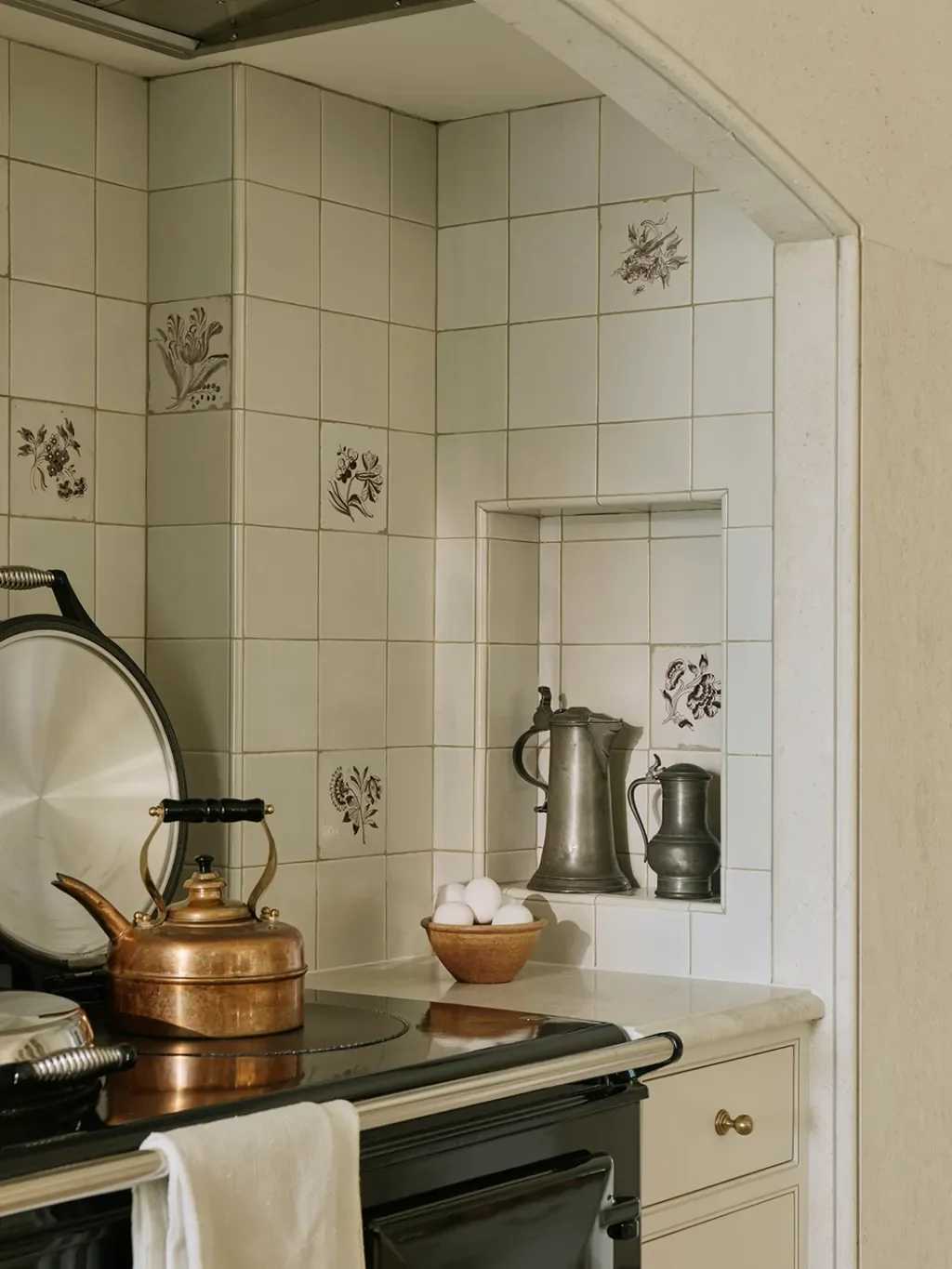
This circles back to the aid memoir approach. Our process is equally about making room for beautiful objects to be displayed without getting in the way, and about shaping storage that dissolves into the room. We always start from the architecture: here, for instance, we used the wall cavity within a range alcove as a small tiled niche for kettles and olive oil—things you want close at hand but partially tucked away.
In the case of the wine glass cabinets, a framed entryway to the room sets up a paneled passage. We were able to harness the passage’s cavity for cabinetry, and the cabinets all but vanish because the doors are fitted within the molding itself.
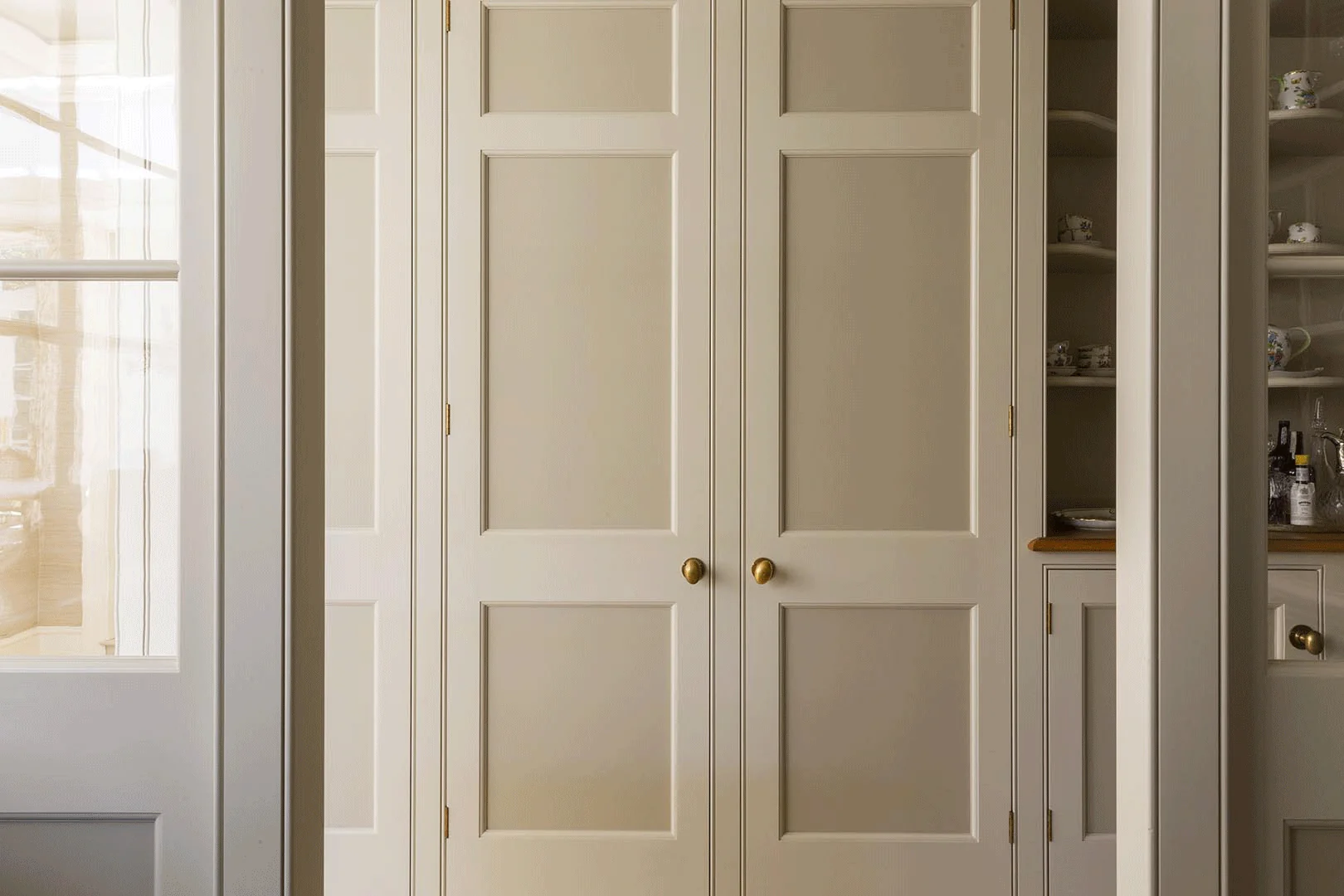
The single hardest thing when designing a beautiful kitchen is finding a home for the fridge. It’s like an enormous phone booth you have to accommodate, so one move we sometimes make is to split out the cold storage. If you carve out a dedicated spot for items that often land in the fridge but don’t strictly need refrigeration, the fridge itself can be slimmer. The shelves in this larder are lined in Corian—cool to the touch and easy to wipe down—though you could just as well tile them or use marble.
Elizabeth Kiefer is a veteran magazine writer and editor, as well as a gardening coach. She lives with her family in Upstate New York.
Learn more about Domino.comEditorial Standards
More from this layout
 FM-5981
 · Other
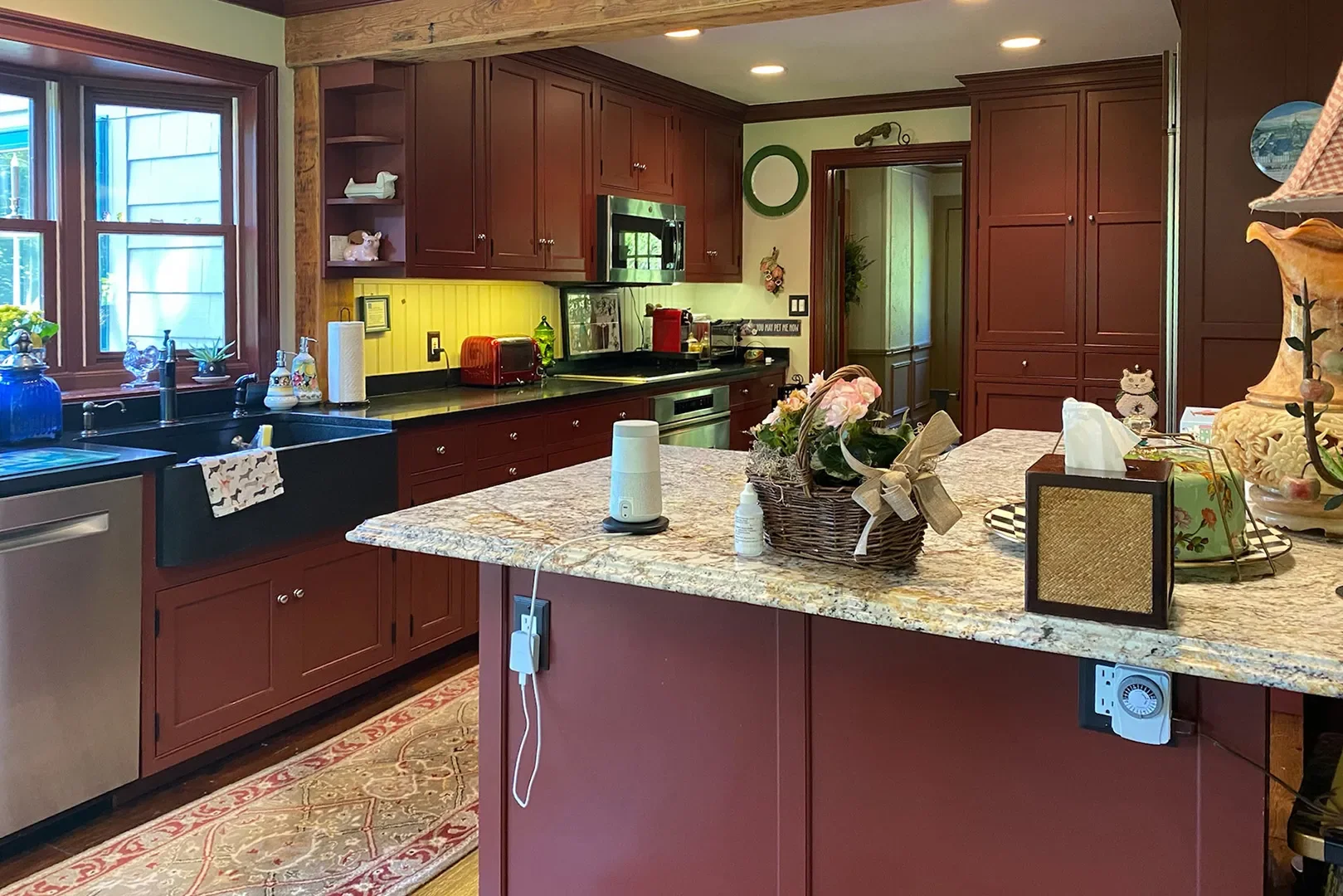
Before & After: Curated Auction Finds and Timeworn Brass Give This Connecticut Kitchen Its Soul
FM-5981
FM-5981 · Other
Before & After: Curated Auction Finds and Timeworn Brass Give This Connecticut Kitchen Its Soul
 FM-4543
 · Other
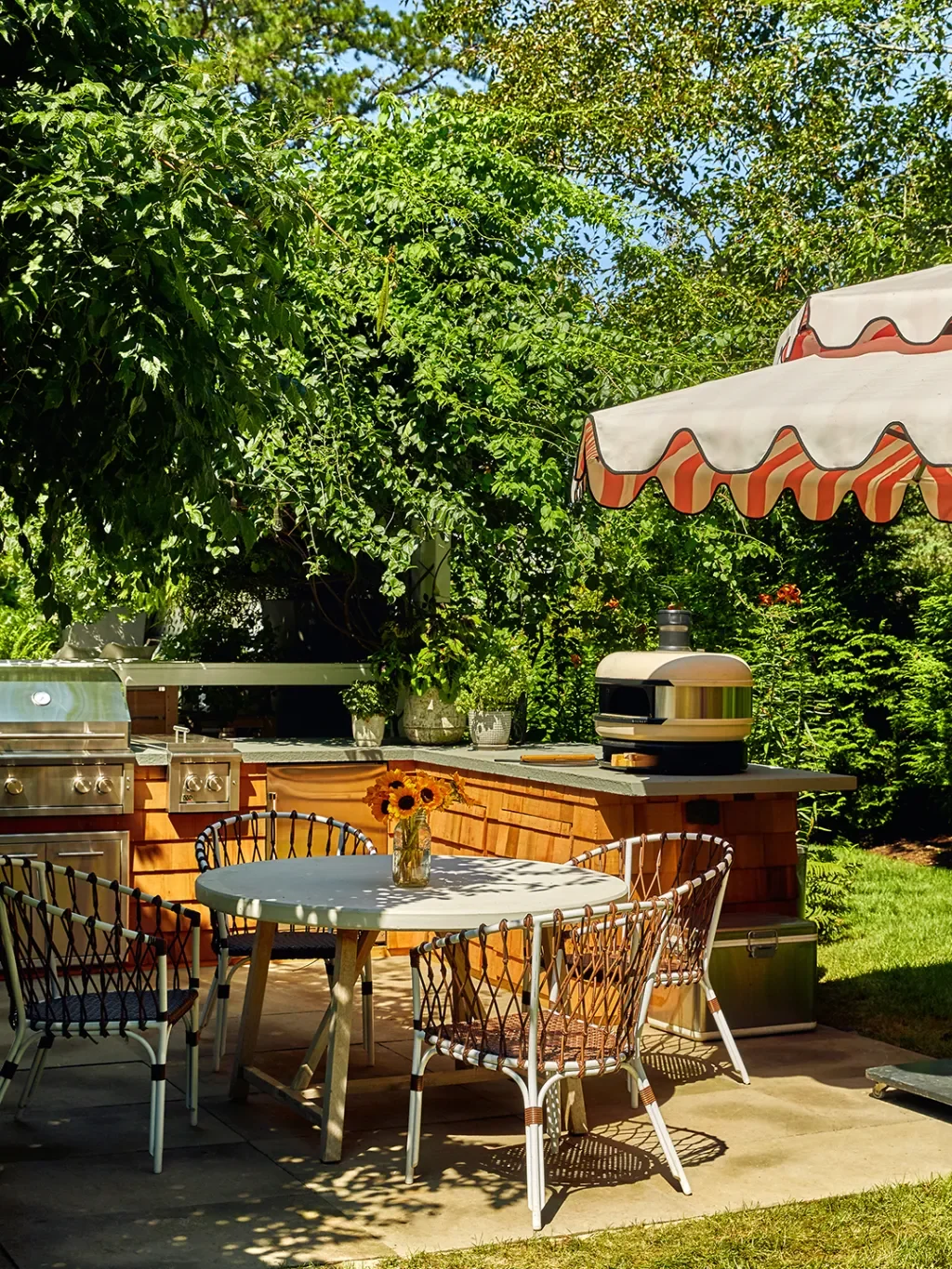
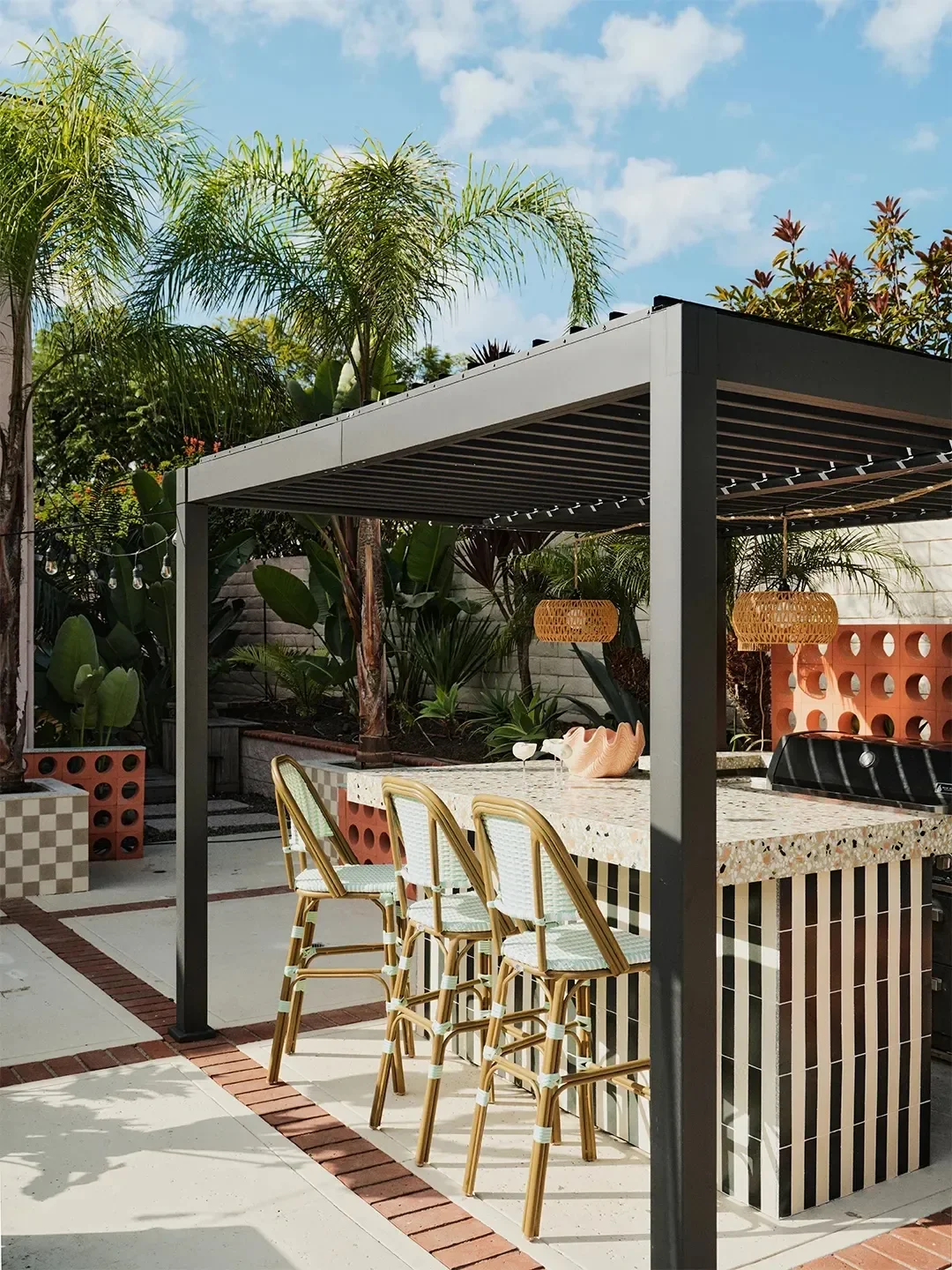
The Alfresco Kitchen Has Finally Come Into Its Own This Season
FM-4543
FM-4543 · Other
The Alfresco Kitchen Has Finally Come Into Its Own This Season
 FM-8498
 · Other
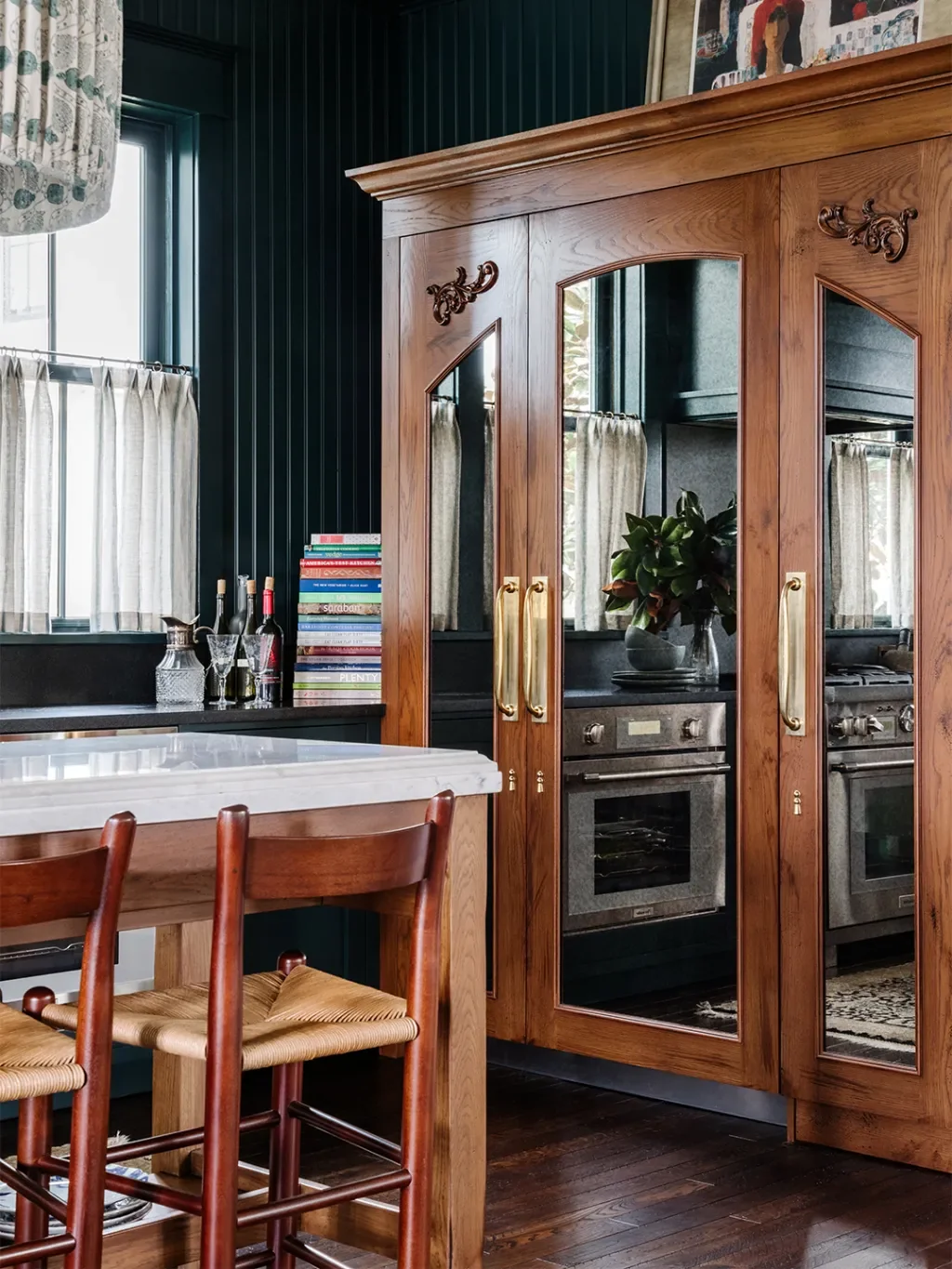
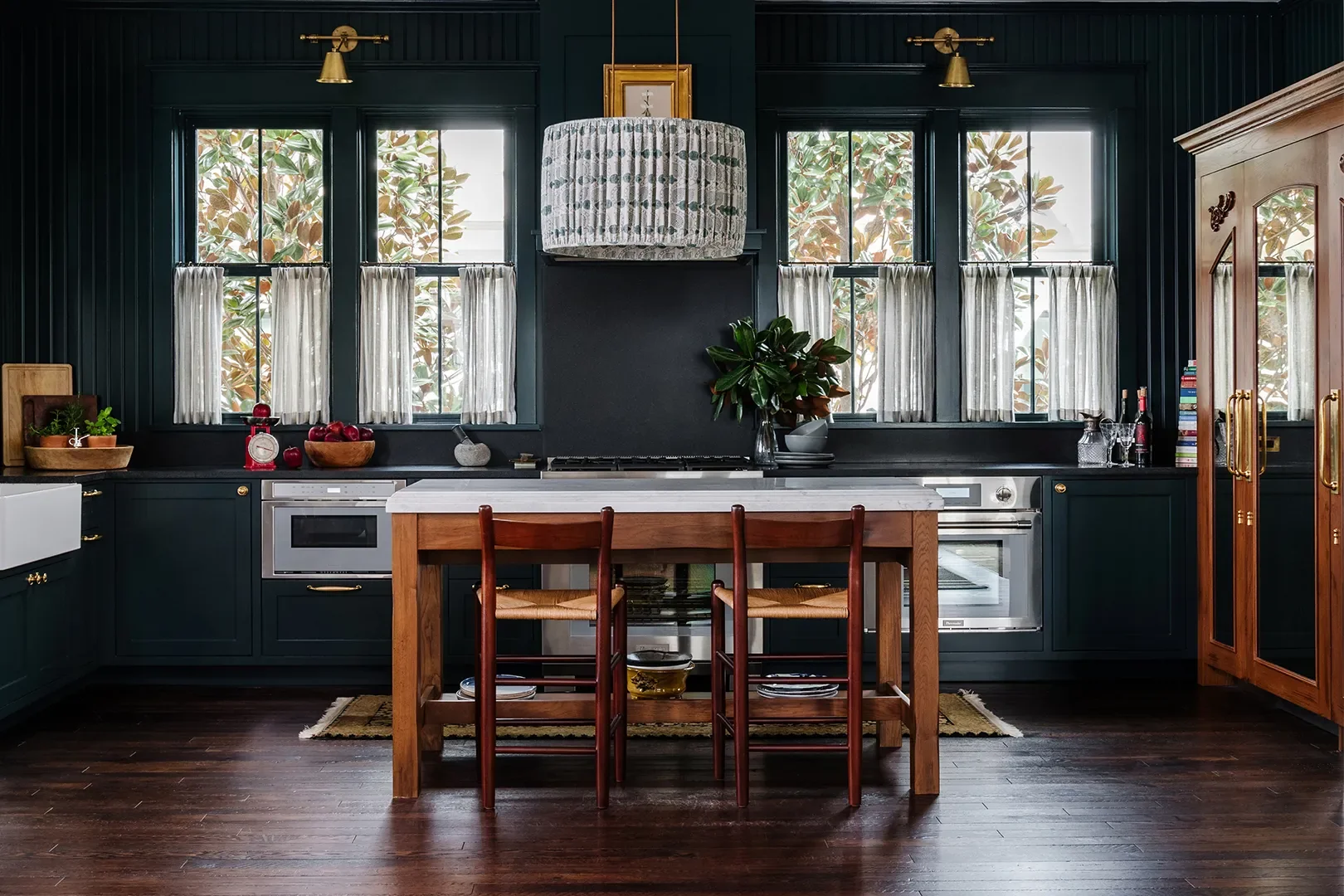
Inside a Florida Kitchen Whose Disguised Armoire Conceals a Refrigerator and a Hidden Pantry Passage
FM-8498
FM-8498 · Other
Inside a Florida Kitchen Whose Disguised Armoire Conceals a Refrigerator and a Hidden Pantry Passage